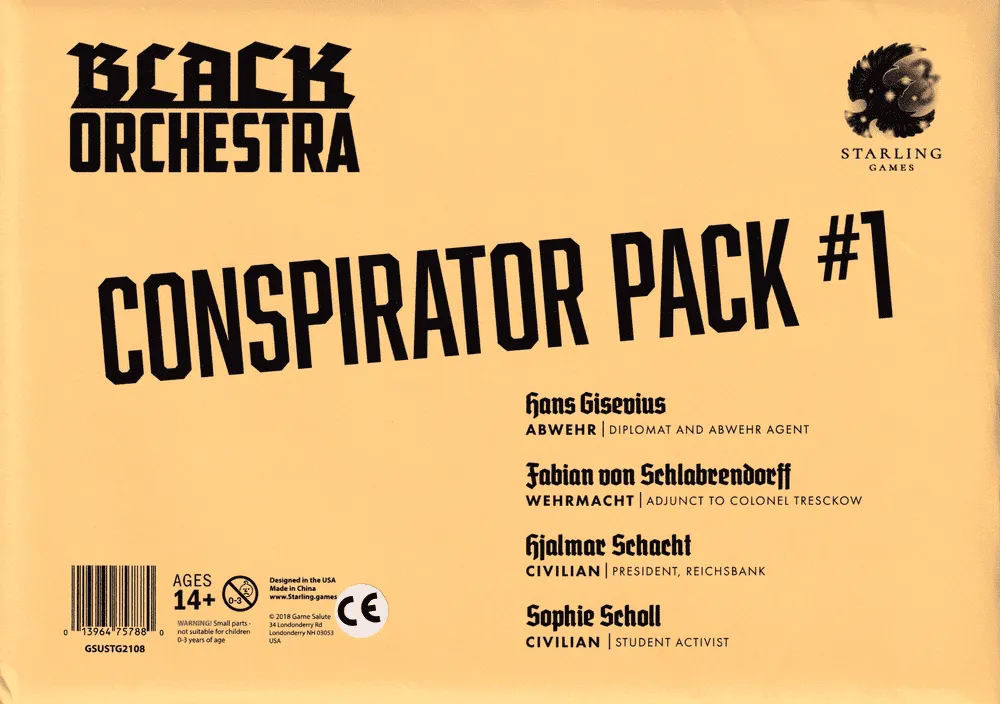
- BGG-Bewertung
- 7,7
Black Orchestra: Conspirator Pack #1
- 1–5 Spieler
- 90 Min.
- Komplexität 2,0/5
- 2019
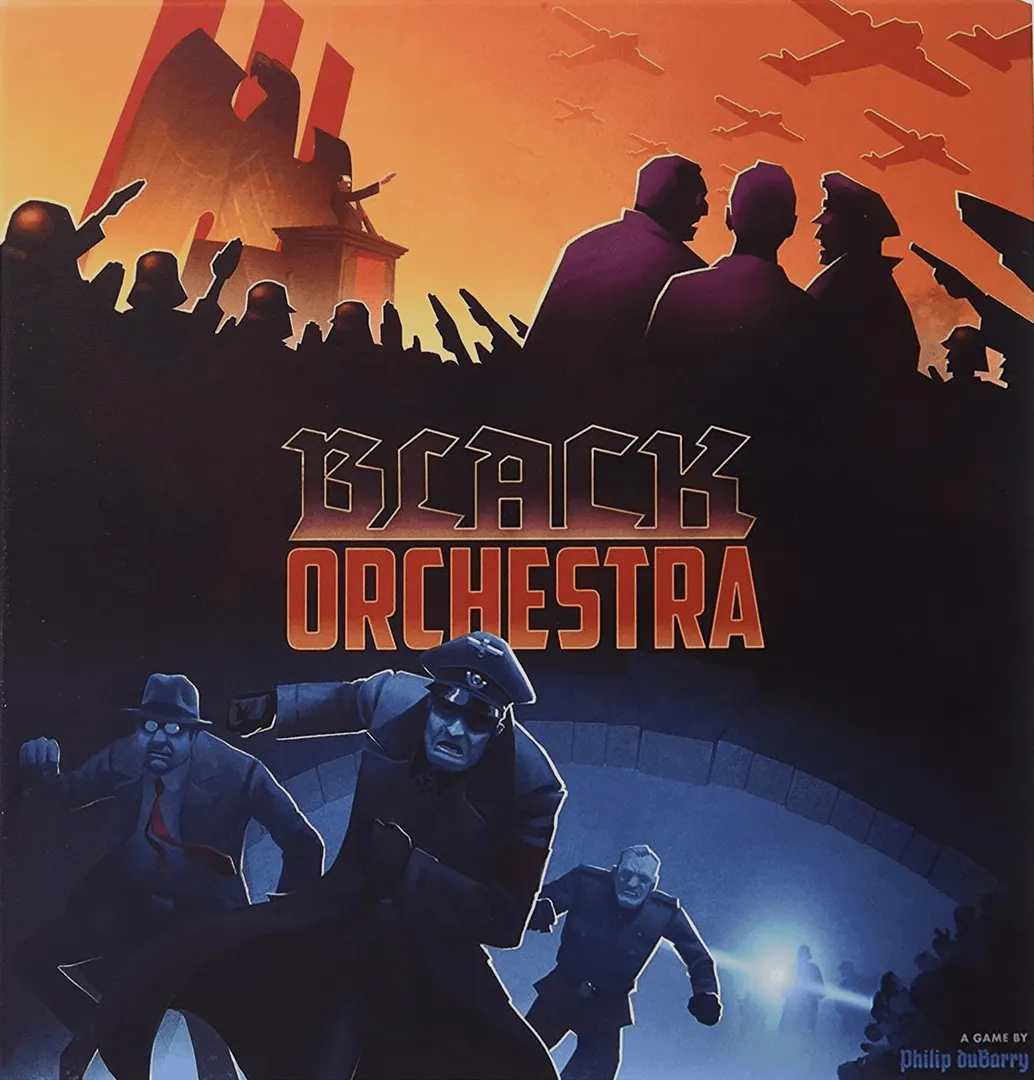
2016
Regelhilfe für Black Orchestra
Verständliche Erklärungen zu Spielzügen, Karteneffekten und strittigen Situationen mit Verweisen auf offizielle Quellen und gespeichertem Fragenverlauf.
Für 1 Person
Was möchtest du wissen?
Antworten stammen aus dem offiziellen Regelheft, mit Seitenangabe zum Nachprüfen.
Black Orchestra ist ein Brettspiel aus dem Jahr 2016 für 1–5 Personen, mit 90 Minuten pro Partie und ab 14 Jahren. Entwickelt wurde es von Philip duBarry; die wichtigsten Mechaniken sind Variable Player Powers, Hand Management und Set Collection.




Auf Englisch
As Hitler's grasp on Germany tightens and his maniacal fervor is unmasked, men from the highest levels of the Reich begin to plot his assassination. As the clock ticks and Hitler's ambitions grow, these daring few must build their strength and prepare for the perfect moment to strike. The Gestapo hound their trail, calling these conspirators "Schwarze Kapelle", the Black Orchestra. Will this band of daring patriots save their country from utter ruin before it is too late? Black Orchestra begins with each player choosing a historic figure involved in the conspiracy against Hitler. In this dark and dangerous pursuit, motivation is perhaps your greatest weapon. If you can stay true to your convictions in the face of overwhelming threat and inspire your comrades, then you will be able to use your special ability, attempt plots, and even become zealous (necessary for some extremely daring plots). But every move you make may also increase the suspicion of the authorities. The Gestapo will make routine sweeps, and any players with high suspicion will be arrested and interrogated (possibly resulting in other players being arrested). If you are all arrested or if the Gestapo finds your secret papers, you lose. And the suspicion placed on each conspirator will increase the chances their plots are detected. On a turn, players may take three actions, such as moving, searching for an item, or drawing a card; or, at the cost of one action per die, roll the dice in an attempt to gain even more actions — at the risk of attracting the suspicion of the gestapo. This dice rolling "Conspire" action allows players to make bold moves when most needed. After the actions have been taken, an event card is drawn. The game is played over seven stages of World War 2, represented by seven stacks of event cards. These cards walk you through the events of WWII in a roughly (but not strictly) chronological order. New stages open up new areas of the board, cause Hitler and his deputies to interact with the Conspirators, and present various opportunities or threats. During the final stage, many board spaces become off-limits, as the Allies move closer to Germany. To win, players must collect a plot card and fulfill all necessary requirements listed (such as having Hitler be in a certain space and possessing certain items--detonator & fuse, etc.). The active player may then attempt the plot by rolling the indicated dice, including all additional modifiers and helpful Action cards. The total of number of "Target" symbols needed to kill Hitler is based on Hitler's military support, but a Conspirator's security level decides if any "Eagles" rolled will see them detected, and foil the plot regardless. Players must consider their ability to successfully complete a plot and the relative suspicion levels of the different Conspirators involved. Players will need to work together and agree on the wisest course of action, as well as have a little luck, to succeed. The phenomenon of one player dominating the game because of its cooperative nature is mitigated by the fact that there are no certainties, and often a player will need to make a bold or reckless move to keep the conspiracy alive. Cool heads often prevail, but play it too cool and you may miss your chance. The co-operative dynamic gets really interesting if a player is ever arrested, and fails to resist interrogation, then they will need to make a big decision all by themselves, without revealing their options to the group. No one player can guarantee success. It is hoped that players will have tense conversations similar to those had by the real conspirators and enjoy a truly unique historical experience.
Laut Katalog unterstützt Black Orchestra 1–5 Personen. Diese Spanne entspricht der vom Verlag angegebenen Spielerzahl, das Spiel lässt sich also für jede Gruppengröße innerhalb dieser Spanne aufbauen. Aufbau, einzelne Regeln und Wertungsdetails können je nach Personenzahl trotzdem abweichen; prüfe daher die genaue Konfiguration in der Anleitung deiner Ausgabe.
Die angegebene Spieldauer für Black Orchestra beträgt 90 Minuten. Das ist die Schätzung des Verlags für eine vollständige Partie. Die tatsächliche Dauer hängt von der Gruppe, der Personenzahl und der Regelkenntnis ab: Erste Partien dauern meist länger, erfahrene Gruppen sind oft schneller fertig. Aufbau und Regelerklärung sind in dieser Schätzung nicht enthalten.
Im Katalog wird Black Orchestra ab 14 Jahren empfohlen. Das ist die Empfehlung des Verlags und berücksichtigt Leseanforderungen, Regelkomplexität und Kleinteile, nicht nur das Thema. Jüngere Kinder können oft mit Hilfe eines Erwachsenen mitspielen; beachte die Altersangabe deiner Ausgabe und die Brettspielerfahrung deiner Gruppe.
Black Orchestra hat bei BoardGameGeek eine Komplexitätswertung von 2,4 von 5 und gilt damit als eher leichtes Spiel. Die Wertung zeigt, wie viel Regelwissen, Planung und Entscheidungen eine typische Partie verlangt. Schwerere Spiele brauchen bei der ersten Erklärung mehr Zeit, daher hilft vor dem Spieleabend eine Vorbereitungsanleitung.
Black Orchestra gehört zu diesen Kategorien: World War II und Spies / Secret Agents. Die wichtigsten Mechaniken sind Variable Player Powers, Hand Management und Set Collection. Kategorien beschreiben Thema und Setting eines Spiels, Mechaniken dagegen, was die Spielenden in ihrem Zug tatsächlich tun. Jede Mechanik führt zu einer Katalogseite mit ähnlichen Spielen, falls du etwas Vergleichbares suchst.
Als Autoren von Black Orchestra sind angegeben: Philip duBarry. Diese Angaben stammen aus den veröffentlichten Spieldaten und nennen die für das Spieldesign verantwortlichen Personen, nicht die Illustratoren oder Verlage. Die Autorenseiten auf MeepleRules sammeln weitere Titel derselben Autoren – praktisch, wenn dir ein Spiel gefällt und du ähnliche Spiele suchst.
Im Katalog ist Black Orchestra als Grundspiel aufgeführt. Es lässt sich eigenständig mit dem Material aus der Schachtel spielen und benötigt keinen weiteren Titel. Erweiterungen, sofern es welche gibt, ergänzen neues Material oder neue Regeln und sind im Katalog separat mit einem Verweis auf dieses Grundspiel aufgeführt.