

- BGG-Rang
- BGG #4.008
- BGG-Bewertung
- 8,1
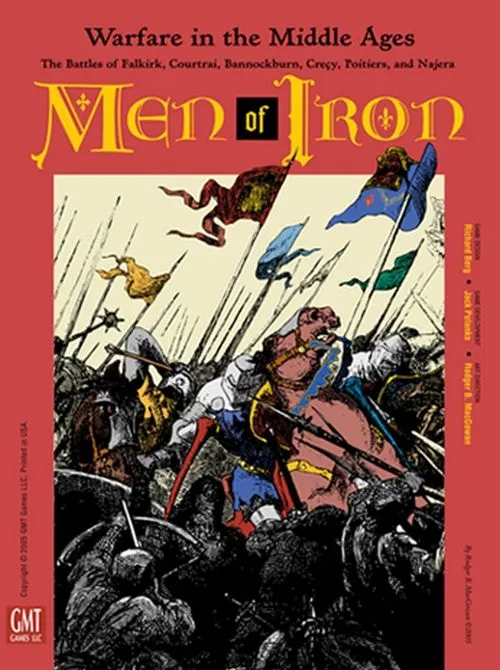
Men of Iron Battles Tri-Pack: Men of Iron, Infidel, Blood & Roses
- 1–2 Spieler
- 60–180 Min.
- Komplexität 3,2/5
- 2020
2014
Regelhilfe für Blood & Roses
Verständliche Erklärungen zu Spielzügen, Karteneffekten und strittigen Situationen mit Verweisen auf offizielle Quellen und gespeichertem Fragenverlauf.
Für 2 Personen
Was möchtest du wissen?
Antworten stammen aus dem offiziellen Regelheft, mit Seitenangabe zum Nachprüfen.
Blood & Roses ist ein Brettspiel aus dem Jahr 2014 für 2 Personen und mit 120–300 Minuten pro Partie. Entwickelt wurde es von Richard H. Berg; die wichtigsten Mechaniken sind Dice Rolling und Hexagon Grid.








Auf Englisch
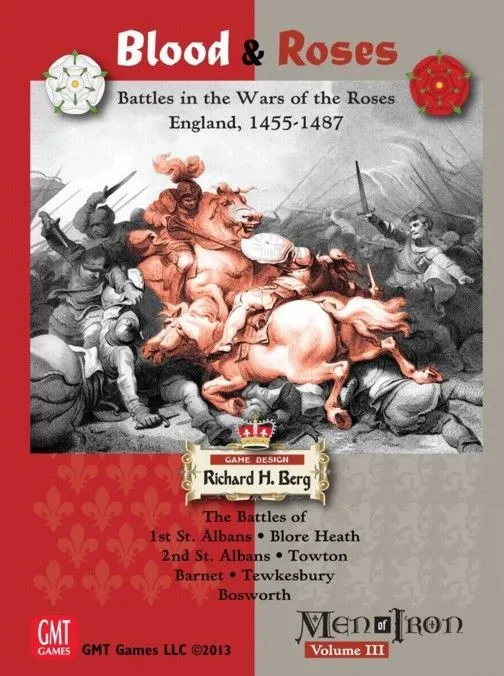
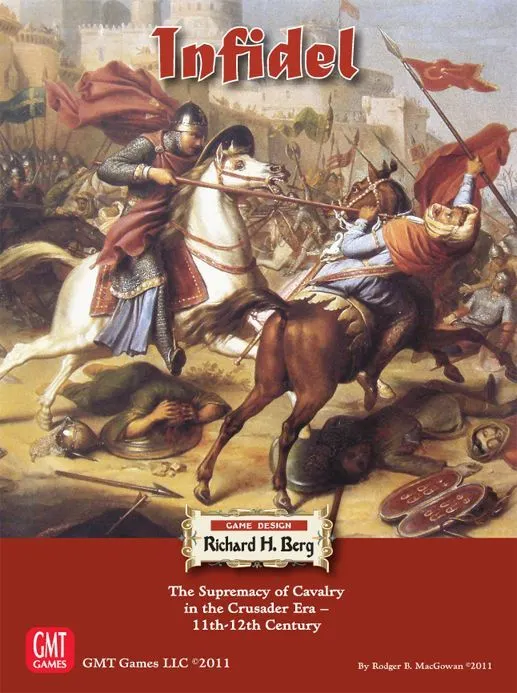
(from GMT website:) Blood & Roses focuses on the battles of the Wars of the Roses in England, between 1455 and 1487. This was warfare in which most men were truly "of iron", heavily and totally armored to such a point that their mobility was suspect. It was also the introduction of gunpowder – mostly field artillery – in noticeable numbers. And while many English men-at-arms were mounted, they did so almost entirely for transport. Most fighting was on foot … and it was quite vicious. Historical Note: The game’s title refers to the heavy casualty rates and the names given to many of the fields after the battles: Bloody Meadow, Bloody Field, et al. Blood & Roses is designed for quick learning and easy play. Game rules are short, there are no "turns" - play is Continual, with ample opportunities to steal play from your opponent - and combat resolution is a single dieroll. Playing time is about 1-2 hours, per battle. Battles: 1st St. Albans (22 May 1455) marks the first major engagement in the Wars of the Roses. Richard, Duke of York and his ally, Richard Neville, Earl of Warwick, defeated the Lancastrians under Edmund, Duke of Somerset, who was killed during the battle. York also captured Henry VI and forced Henry to appoint him Constable of England. Blore Heath (23 September, 1459) where greatly outnumbered Yorkist infantry used the longbow and a defensive position to drive off the Lancastrian Men-at-Arms. 2nd St. Albans (17 February, 1461) where the Lancastrians drove the Yorkists out of the town and then destroyed Warwick’s strangely deployed army, even when sturdily defended by hedges, caltrops and spiked netting. Towton (29 March, 1461) is easily biggest battle in the box and the biggest in the entire series. It uses over 200 combat units and, much like the actual battle, will probably take a long time to play. It is mostly crash and bash, with little room for maneuver, all fought in a blinding snowstorm!! Barnet (14 April, 1471) a classic battle of planned deployments, but overlapping wings, cries of treason in the lines, fog of war (actual fog), and the excellent use of reserves. Tewksbury (4 May, 1471) a battle that shows one of the key terrain features of the battles in this era, extensive hedges and thick underbrush in otherwise clear fields. Bosworth(22 August, 1485) the best-known battle of the wars and the tragic (I think) death of King Richard III in a battle he should have won. Using the latest information as to where the battle took place, let’s see if you can cancel out the Tudor dynasty. Each game includes: Two double-sided 22" x 32"game-maps 2.5 sheets of counters Rules Booklet Battle Book Charts and Play Aids 2 ten-sided dice Designer: RICHARD H. BERG Developer: Ralph Shelton MAP SCALE: 50 yards per hex. UNIT SCALE: 250 Infantry and Cavalry, 150 Handgunners, and several Cannons per counter.
Laut Katalog unterstützt Blood & Roses 2 Personen. Das ist die vom Verlag angegebene Spielerzahl, das Spiel ist also genau für diese Anzahl von Mitspielenden ausgelegt. Varianten für andere Gruppengrößen sind, sofern vorhanden, in der Anleitung deiner Ausgabe beschrieben; prüfe sie, bevor du eine andere Konfiguration aufbaust.
Die angegebene Spieldauer für Blood & Roses beträgt 120–300 Minuten. Das ist die Schätzung des Verlags für eine vollständige Partie. Die tatsächliche Dauer hängt von der Gruppe, der Personenzahl und der Regelkenntnis ab: Erste Partien dauern meist länger, erfahrene Gruppen sind oft schneller fertig. Aufbau und Regelerklärung sind in dieser Schätzung nicht enthalten.
Blood & Roses hat bei BoardGameGeek eine Komplexitätswertung von 2,9 von 5 und gilt damit als eher leichtes Spiel. Die Wertung zeigt, wie viel Regelwissen, Planung und Entscheidungen eine typische Partie verlangt. Schwerere Spiele brauchen bei der ersten Erklärung mehr Zeit, daher hilft vor dem Spieleabend eine Vorbereitungsanleitung.
Blood & Roses gehört zu diesen Kategorien: Wargame und Medieval. Die wichtigsten Mechaniken sind Dice Rolling und Hexagon Grid. Kategorien beschreiben Thema und Setting eines Spiels, Mechaniken dagegen, was die Spielenden in ihrem Zug tatsächlich tun. Jede Mechanik führt zu einer Katalogseite mit ähnlichen Spielen, falls du etwas Vergleichbares suchst.
Als Autoren von Blood & Roses sind angegeben: Richard H. Berg. Diese Angaben stammen aus den veröffentlichten Spieldaten und nennen die für das Spieldesign verantwortlichen Personen, nicht die Illustratoren oder Verlage. Die Autorenseiten auf MeepleRules sammeln weitere Titel derselben Autoren – praktisch, wenn dir ein Spiel gefällt und du ähnliche Spiele suchst.
Im Katalog ist Blood & Roses als Grundspiel aufgeführt. Es lässt sich eigenständig mit dem Material aus der Schachtel spielen und benötigt keinen weiteren Titel. Erweiterungen, sofern es welche gibt, ergänzen neues Material oder neue Regeln und sind im Katalog separat mit einem Verweis auf dieses Grundspiel aufgeführt.