
- BGG-Rang
- BGG #8.022
- BGG-Bewertung
- 7,2
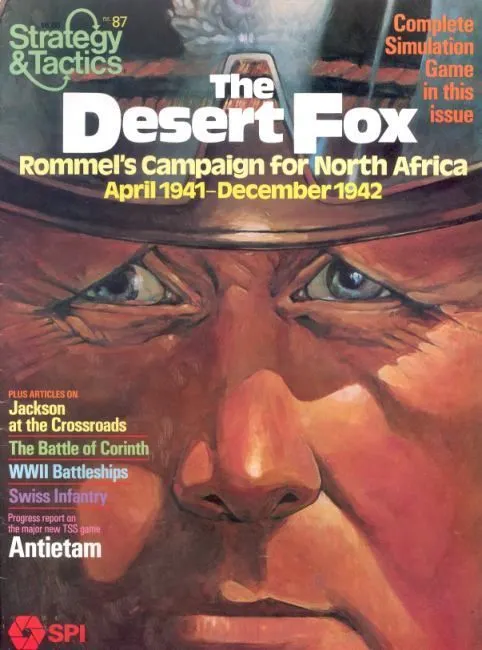
The Desert Fox: Rommel's Campaign for North Africa April 1941-December 1942
- 2 Spieler
- 120–1 Min.
- Komplexität 3,2/5
- 1981
2012
Regelhilfe für Blood & Sand
Verständliche Erklärungen zu Spielzügen, Karteneffekten und strittigen Situationen mit Verweisen auf offizielle Quellen und gespeichertem Fragenverlauf.
Für 2 Personen
Was möchtest du wissen?
Antworten stammen aus dem offiziellen Regelheft, mit Seitenangabe zum Nachprüfen.
Blood & Sand ist ein Brettspiel aus dem Jahr 2012 für 2 Personen, mit 120–300 Minuten pro Partie und ab 12 Jahren. Entwickelt wurde es von Richard H. Berg; die wichtigsten Mechaniken sind Dice Rolling, Hexagon Grid und Simulation.
Auf Englisch
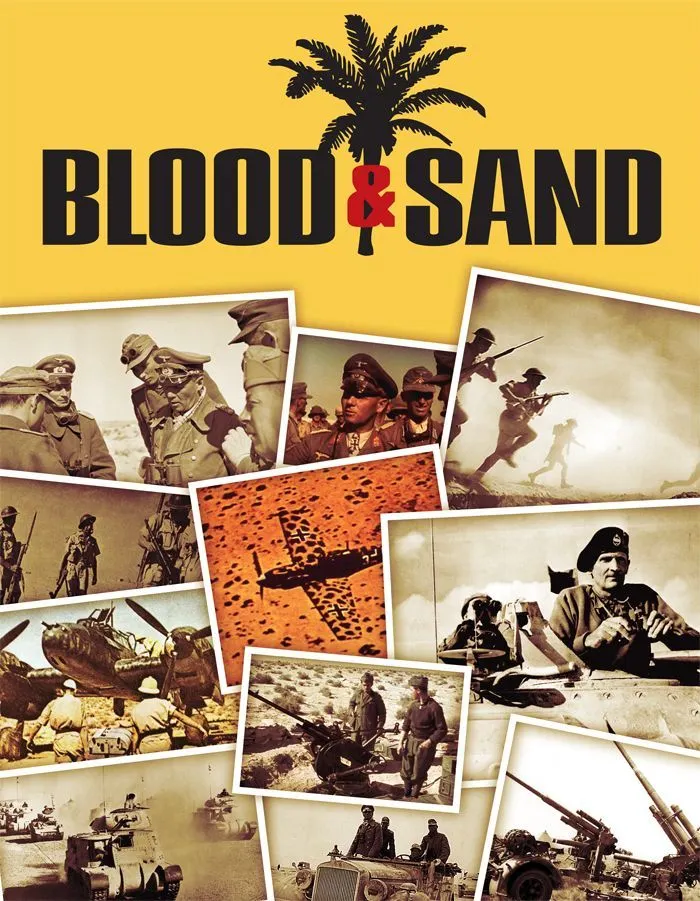
The Campaign for North Africa, 1941-42 What, another North Africa game? Yes but here is something almost completely different from any WWII Campaign game you've seen: no CRT (or any other tables), buckets o' dice, and cards all used in a totally new approach to gaming that can be learned in 5 minutes and played in a few hours. Most of the rules and mechanics for Blood & Sand will be familiar to anyone who has ever played a wargame. However, Designer Richard Berg, no stranger to this campaign, has added to this accessible simplicity a combat system that rates units for how many dice they get to roll on their behalf, as well as what kind of dice (small arms or Heavy Weapons). No CRTs, no sirree! The game also uses cards, one deck (of 27) for each player (whose cards are somewhat different from those of the other player) to enhance the game. (The cards don't "drive" the game and they can be left out, if you're so inclined.) The cards are part of a Resource system that gives the players a number of points which they can use to buy cards, rally units, build fortifications, or bring in Reinforcements. The RP choices are theirs, but there are far more choices than points. The cards, themselves, give the players "Opportunities", from using their (or negating their opponent's) tank capabilities, to getting more supplies, to special Breakthrough and Reaction movement, to forcing the Allies to Withdraw units, to the effects of Rommel and other leaders. What the Players are Saying: Here are some the reactions from the Blood & Sand play testers and rules readers: "Very simple and very easy. No one should have a problem with the rules." Adam Freitag "I would hope to use it as an introductory wargame, but I am optimistic that it would be sufficiently interesting to keep experienced wargames happy as well." Paul Marjoram "This looks like a fun game The added tension of the need to balance the use of RPs [Resource Points] for units, forts and cards is appealing - a good abstraction of the logistics concerns of the campaign." Edmund Hack "Using cards in this manner may make for some very agonizing decisions - a good thing in a game. I also think the combat system is clean and simple, yet effective." Jeff Paul The rules for Blood & Sand are only 8 pages, including rules for playing Solitaire, covering four scenarios, ranging in size (the two maps are used only in the full campaign game) and playing time Playing time for the Basic Game has averaged about 3 hours. 176 counters including the blanks).
Laut Katalog unterstützt Blood & Sand 2 Personen. Das ist die vom Verlag angegebene Spielerzahl, das Spiel ist also genau für diese Anzahl von Mitspielenden ausgelegt. Varianten für andere Gruppengrößen sind, sofern vorhanden, in der Anleitung deiner Ausgabe beschrieben; prüfe sie, bevor du eine andere Konfiguration aufbaust.
Die angegebene Spieldauer für Blood & Sand beträgt 120–300 Minuten. Das ist die Schätzung des Verlags für eine vollständige Partie. Die tatsächliche Dauer hängt von der Gruppe, der Personenzahl und der Regelkenntnis ab: Erste Partien dauern meist länger, erfahrene Gruppen sind oft schneller fertig. Aufbau und Regelerklärung sind in dieser Schätzung nicht enthalten.
Im Katalog wird Blood & Sand ab 12 Jahren empfohlen. Das ist die Empfehlung des Verlags und berücksichtigt Leseanforderungen, Regelkomplexität und Kleinteile, nicht nur das Thema. Jüngere Kinder können oft mit Hilfe eines Erwachsenen mitspielen; beachte die Altersangabe deiner Ausgabe und die Brettspielerfahrung deiner Gruppe.
Blood & Sand hat bei BoardGameGeek eine Komplexitätswertung von 2,0 von 5 und gilt damit als eher leichtes Spiel. Die Wertung zeigt, wie viel Regelwissen, Planung und Entscheidungen eine typische Partie verlangt. Schwerere Spiele brauchen bei der ersten Erklärung mehr Zeit, daher hilft vor dem Spieleabend eine Vorbereitungsanleitung.
Blood & Sand gehört zu diesen Kategorien: Wargame und World War II. Die wichtigsten Mechaniken sind Dice Rolling, Hexagon Grid und Simulation. Kategorien beschreiben Thema und Setting eines Spiels, Mechaniken dagegen, was die Spielenden in ihrem Zug tatsächlich tun. Jede Mechanik führt zu einer Katalogseite mit ähnlichen Spielen, falls du etwas Vergleichbares suchst.
Als Autoren von Blood & Sand sind angegeben: Richard H. Berg. Diese Angaben stammen aus den veröffentlichten Spieldaten und nennen die für das Spieldesign verantwortlichen Personen, nicht die Illustratoren oder Verlage. Die Autorenseiten auf MeepleRules sammeln weitere Titel derselben Autoren – praktisch, wenn dir ein Spiel gefällt und du ähnliche Spiele suchst.
Im Katalog ist Blood & Sand als Grundspiel aufgeführt. Es lässt sich eigenständig mit dem Material aus der Schachtel spielen und benötigt keinen weiteren Titel. Erweiterungen, sofern es welche gibt, ergänzen neues Material oder neue Regeln und sind im Katalog separat mit einem Verweis auf dieses Grundspiel aufgeführt.