
- BGG-Bewertung
- 7,1
Blue Moon: The Flit
- 2 Spieler
- 30 Min.
- Komplexität 2,3/5
- 2004
2004
Regelhilfe für Blue Moon
Verständliche Erklärungen zu Spielzügen, Karteneffekten und strittigen Situationen mit Verweisen auf offizielle Quellen und gespeichertem Fragenverlauf.
Für 2 Personen
Was möchtest du wissen?
Antworten stammen aus dem offiziellen Regelheft, mit Seitenangabe zum Nachprüfen.
Blue Moon ist ein Brettspiel aus dem Jahr 2004 für 2 Personen, mit 30 Minuten pro Partie und ab 12 Jahren. Entwickelt wurde es von Reiner Knizia; die wichtigsten Mechaniken sind Variable Player Powers, Hand Management und Auction / Bidding.
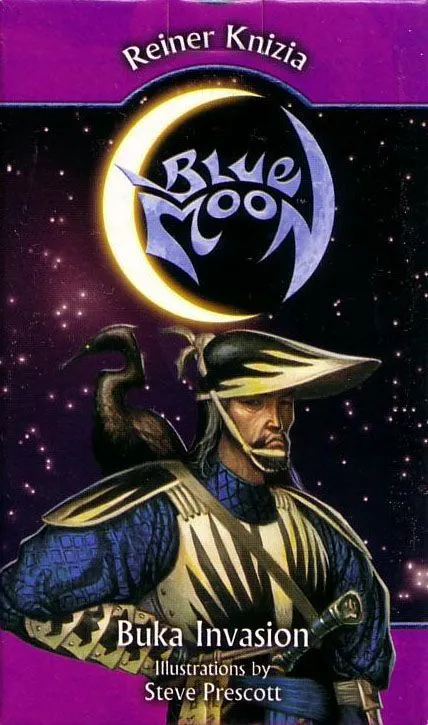
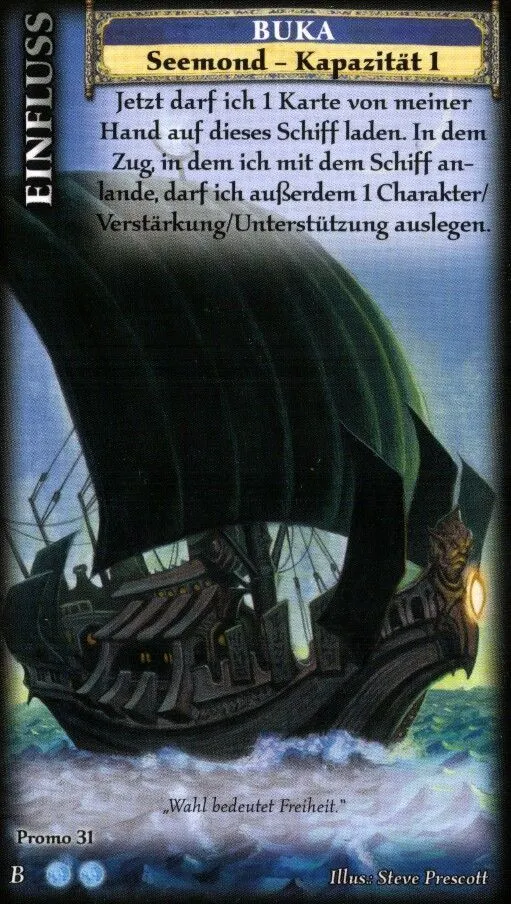
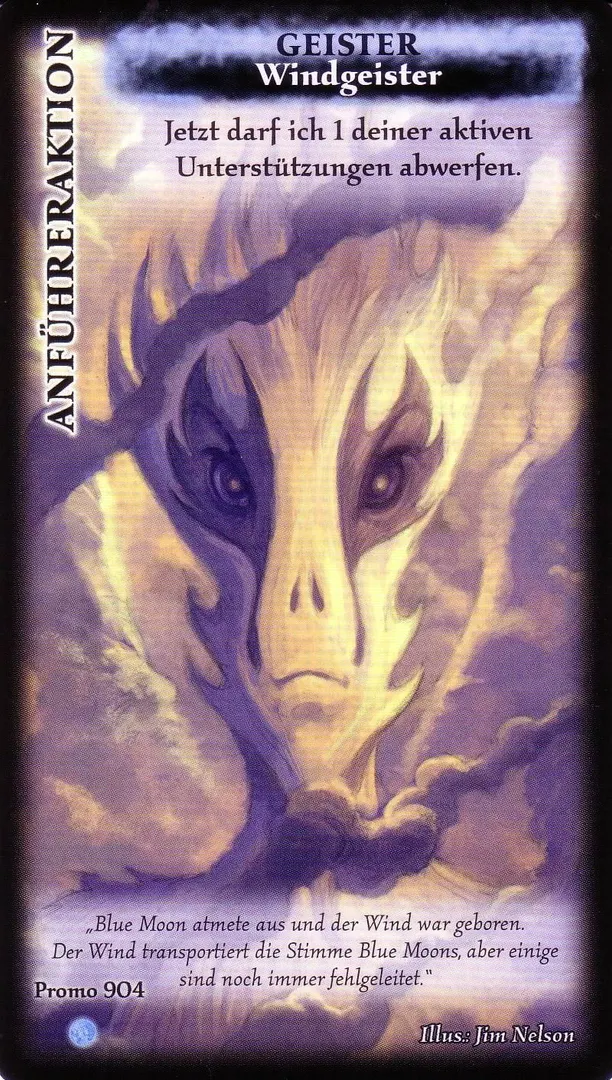
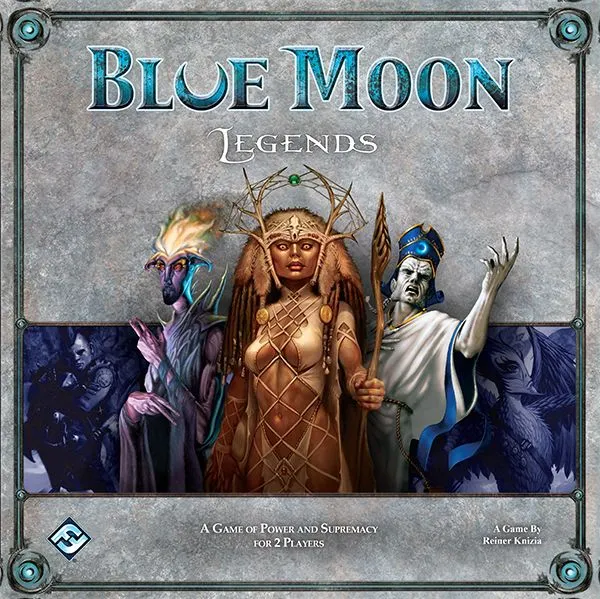

Auf Englisch
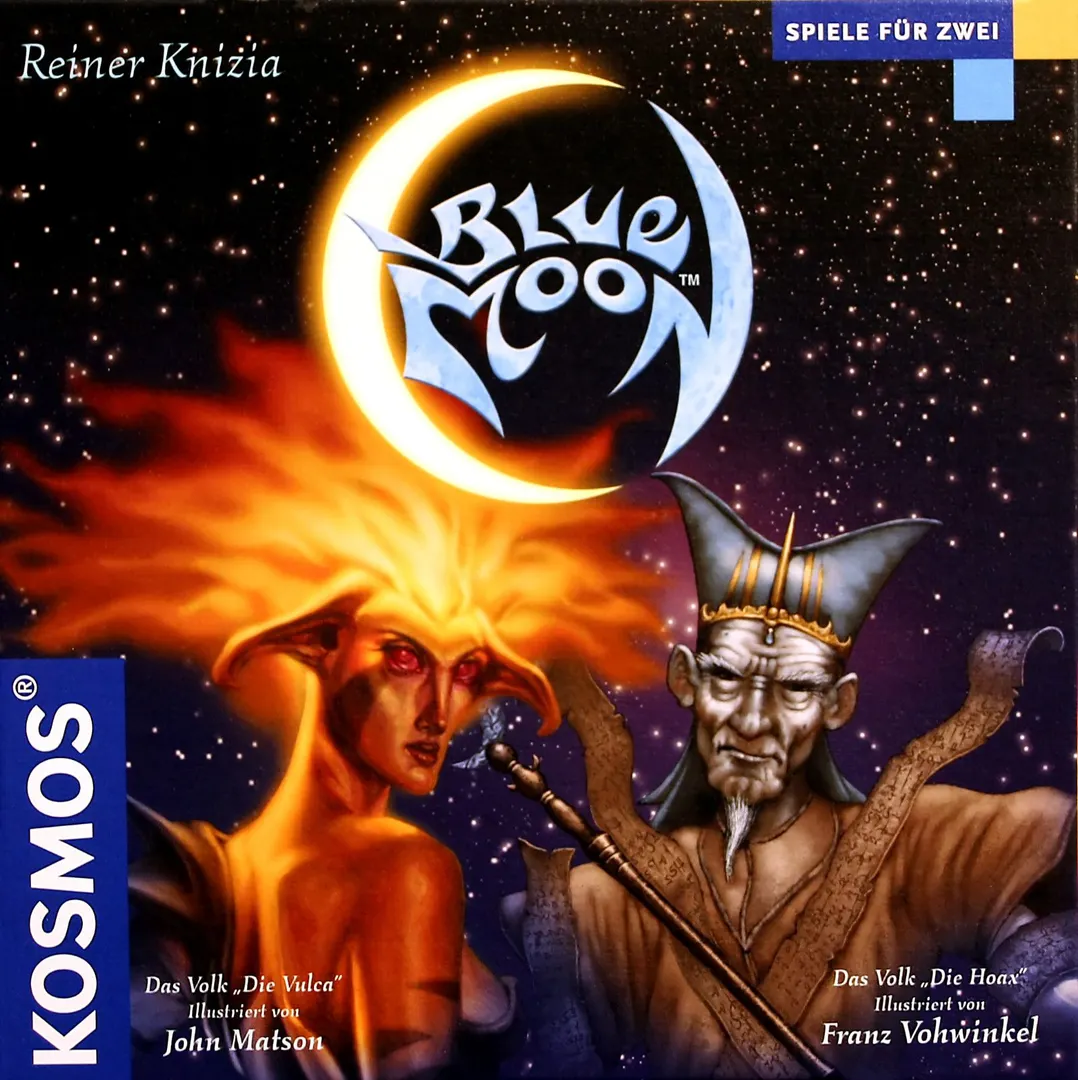
Blue Moon is a card game for two players, which has often been compared to Magic: The Gathering, although it has considerably different game mechanics. Particularly, it is not a CCG: There are no random cards in any expansion. It can thus be regarded as the first LCG, although it doesn't use that term yet. It is set in the fictional world of Blue Moon, where different peoples fight for dominance of the world and the favor of the Dragons. Each people has its own unique traits and gameplay mechanics, and is represented by a 30 card deck. The standard game box contains the 'Vulca' and the 'Hoax' decks, a small gameboard and three small plastic dragon miniatures, used as scoring counters in the game. Other decks can be bought separately as expansions with 31 or 30 cards each. Rules overview from the official rules: The game consists of independent consecutive fights. The starting player begins the first fight. Each fight is contested in one of two elements, either fire or earth, as announced by the starting player of the fight. During each fight, players take alternate turns to play their cards building up power in their combat and support areas. Basically, each turn the players play a character card and possibly some additional cards to at least match the total power of their opponent, who must then in turn match his opponent’s power, and so on. – If a player is unable to do this, he must retreat from the fight. A fight ends when one of the players retreats. The other player is the winner of the fight and attracts a number of dragons. Both players remove all their cards from their combat and support areas and place them onto their face up discard pile. The retreating player then starts the next fight. Usually, the game ends when one player runs out of cards and retreats from the last fight. Then the player with dragons on his side is the victor and scores some victory points (crystals). A player wins the game instantly if he has all three dragons on his side and then attracts further dragons. Description from the publisher. The world of Blue Moon is in chaos. Its god has abandoned it, and its people are in open war against each other, while the ruling power of three elemental dragons reigns above all! In this original 2-player game designed by Reiner Knizia, each player takes control over one of the Blue Moon peoples - the creative machinations of the Mimix, the fiery Vulca, the lofty Flit, and the clever Hoax - in their quest for dominance. The Blue Moon Legends basic set provides all the material needed to play, including details on the various peoples, a game board, full-color rules, and three plastic dragon figures. Expansion packs contain additional people cards. Blue Moon is part of the Kosmos two-player series.
Laut Katalog unterstützt Blue Moon 2 Personen. Das ist die vom Verlag angegebene Spielerzahl, das Spiel ist also genau für diese Anzahl von Mitspielenden ausgelegt. Varianten für andere Gruppengrößen sind, sofern vorhanden, in der Anleitung deiner Ausgabe beschrieben; prüfe sie, bevor du eine andere Konfiguration aufbaust.
Die angegebene Spieldauer für Blue Moon beträgt 30 Minuten. Das ist die Schätzung des Verlags für eine vollständige Partie. Die tatsächliche Dauer hängt von der Gruppe, der Personenzahl und der Regelkenntnis ab: Erste Partien dauern meist länger, erfahrene Gruppen sind oft schneller fertig. Aufbau und Regelerklärung sind in dieser Schätzung nicht enthalten.
Im Katalog wird Blue Moon ab 12 Jahren empfohlen. Das ist die Empfehlung des Verlags und berücksichtigt Leseanforderungen, Regelkomplexität und Kleinteile, nicht nur das Thema. Jüngere Kinder können oft mit Hilfe eines Erwachsenen mitspielen; beachte die Altersangabe deiner Ausgabe und die Brettspielerfahrung deiner Gruppe.
Blue Moon hat bei BoardGameGeek eine Komplexitätswertung von 2,2 von 5 und gilt damit als eher leichtes Spiel. Die Wertung zeigt, wie viel Regelwissen, Planung und Entscheidungen eine typische Partie verlangt. Schwerere Spiele brauchen bei der ersten Erklärung mehr Zeit, daher hilft vor dem Spieleabend eine Vorbereitungsanleitung.
Blue Moon gehört zu diesen Kategorien: Card Game, Fantasy und Fighting. Die wichtigsten Mechaniken sind Variable Player Powers, Hand Management und Auction / Bidding. Kategorien beschreiben Thema und Setting eines Spiels, Mechaniken dagegen, was die Spielenden in ihrem Zug tatsächlich tun. Jede Mechanik führt zu einer Katalogseite mit ähnlichen Spielen, falls du etwas Vergleichbares suchst.
Als Autoren von Blue Moon sind angegeben: Reiner Knizia. Diese Angaben stammen aus den veröffentlichten Spieldaten und nennen die für das Spieldesign verantwortlichen Personen, nicht die Illustratoren oder Verlage. Die Autorenseiten auf MeepleRules sammeln weitere Titel derselben Autoren – praktisch, wenn dir ein Spiel gefällt und du ähnliche Spiele suchst.
Im Katalog ist Blue Moon als Grundspiel aufgeführt. Es lässt sich eigenständig mit dem Material aus der Schachtel spielen und benötigt keinen weiteren Titel. Erweiterungen, sofern es welche gibt, ergänzen neues Material oder neue Regeln und sind im Katalog separat mit einem Verweis auf dieses Grundspiel aufgeführt.