
- BGG-Bewertung
- 7,7
Breaking the Chains: Supplements
- 1–2 Spieler
- 2014
2014
Regelhilfe für Breaking the Chains: War in the South China Sea
Verständliche Erklärungen zu Spielzügen, Karteneffekten und strittigen Situationen mit Verweisen auf offizielle Quellen und gespeichertem Fragenverlauf.
Für 1 Person
Was möchtest du wissen?
Antworten stammen aus dem offiziellen Regelheft, mit Seitenangabe zum Nachprüfen.
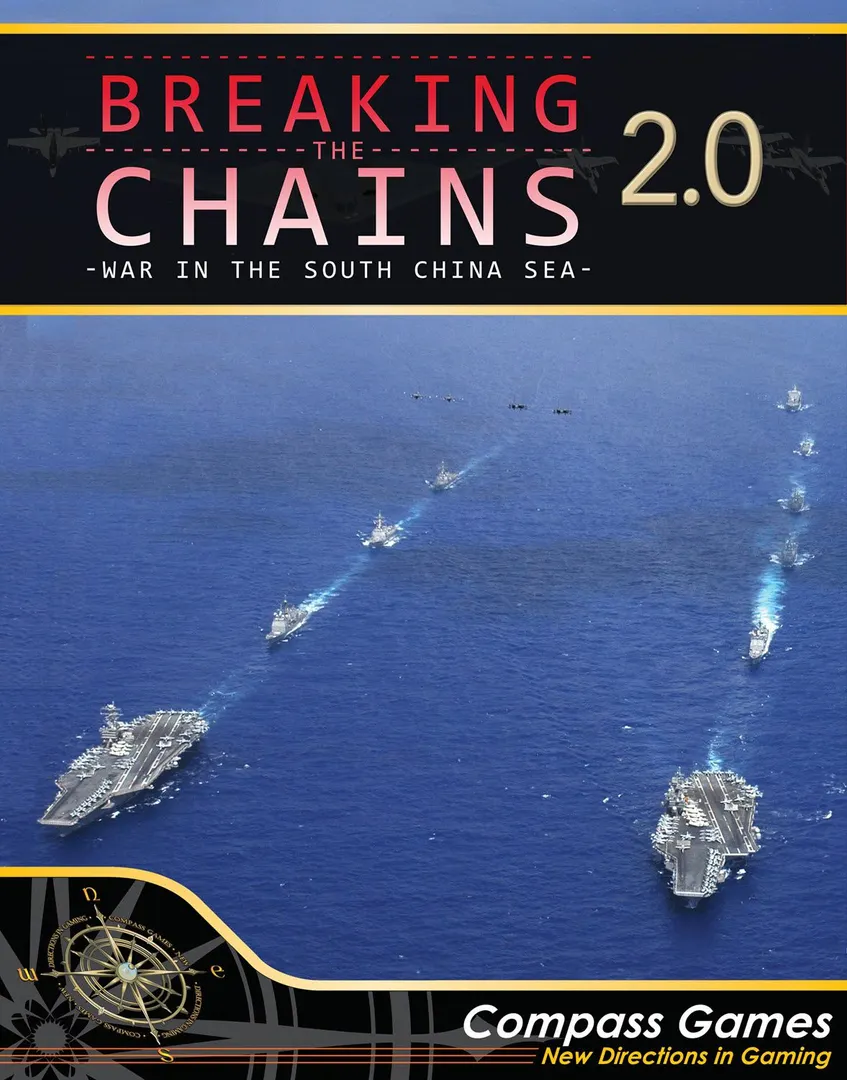
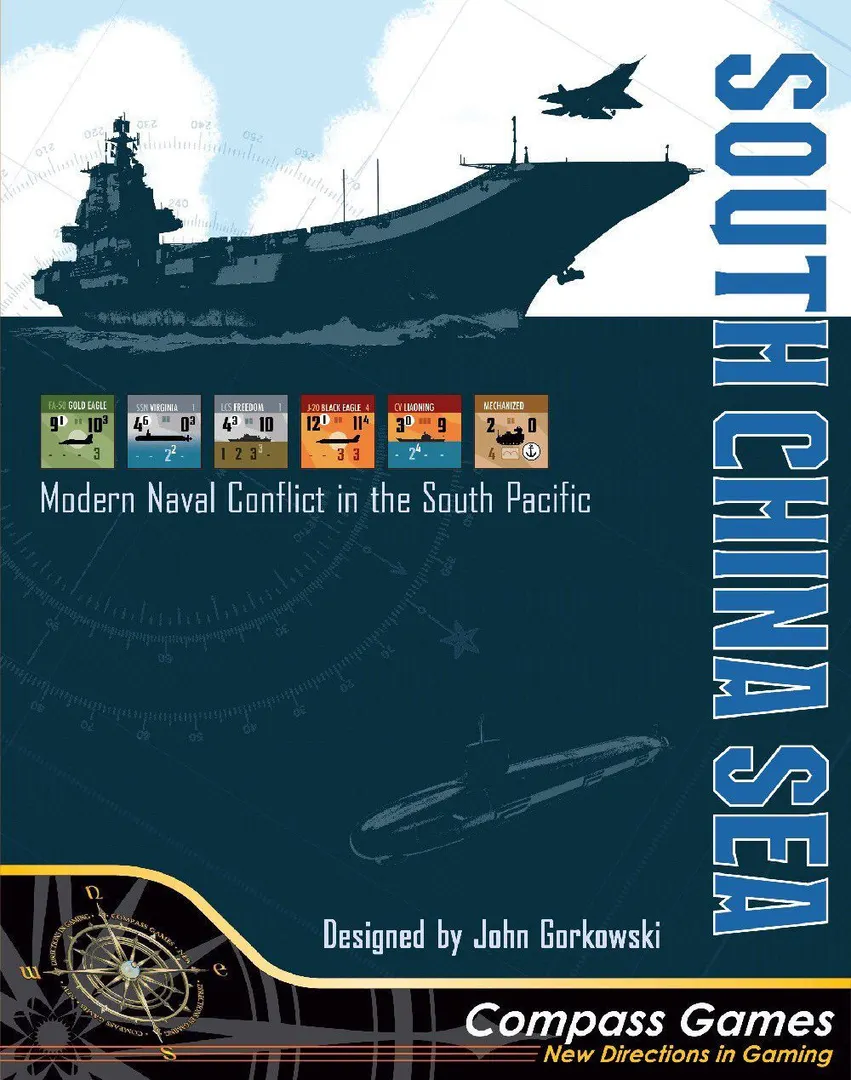
Breaking the Chains: War in the South China Sea ist ein Brettspiel aus dem Jahr 2014 für 1–10 Personen und mit 120–1200 Minuten pro Partie. Entwickelt wurde es von John Gorkowski; die wichtigsten Mechaniken sind Cooperative Game, Hexagon Grid und Simulation.


Auf Englisch
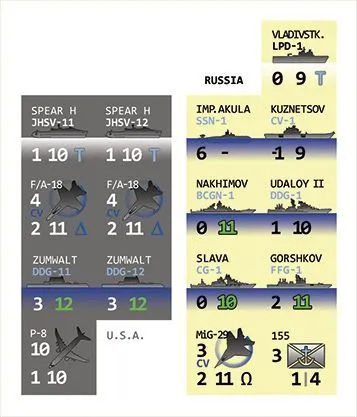
publisher's description Breaking the Chains (BtC) simulates a hypothetical future military conflict over the South China and East China Seas around the year 2021. Conflicting claims of sovereignty have roiled those "near seas" since the Cold War. After decades of patient diplomacy, Beijing's new navy could offer military options for finally asserting sovereignty over prizes within the First Island Chain - that string of islands which runs from the Ryukus south through Taiwan, the Philippines and then curls back to the mainland via Malaysia. BtC presumes that China comes to blows with a Southeast Asian country in a conflict that could expand to possibly include: Australia, India, Japan, the United States as well as a variety of Southeast Asian nations. However, beyond China and one South East Asian nation, the exact composition of opposing coalitions is not predetermined but rather a function of the decisions players make as the game unfolds. Two or more people play BtC with two reference cards, dice, and about 350 counters on a 22" X 34" map where each hex spans about 70 nautical miles (80 land miles) and each turn represents one day of real time. Players alternate maneuvering air, ground and naval units for up to 14 nations to resolve battles with a universal "strike" mechanism that applies across all types of combat; missile defense capabilities are central to survival. Air units represent from 30-90 aircraft each, most ground units are regiments, and naval units are small groups of surface ships/submarines or individual aircraft carriers. Specialized chit play simulates black ops, cyber warfare and various political developments. BtC is solitaire friendly. The naval operations which dominate play are based on a roll-to-evade model rather than search-to-find model. That means, owing to a battle space awash in electromagnetic emissions, enemy positions - except for motionless submarines - are assumed to be known unless a last-minute dice roll determines a potential target has evaded detection. So there is no “hidden movement” to stifle solitaire play; and the “hidden placement” of submarines can be forgone. Finally, the special chits that govern black ops can be played at random to further enable solo game play.
Laut Katalog unterstützt Breaking the Chains: War in the South China Sea 1–10 Personen. Diese Spanne entspricht der vom Verlag angegebenen Spielerzahl, das Spiel lässt sich also für jede Gruppengröße innerhalb dieser Spanne aufbauen. Aufbau, einzelne Regeln und Wertungsdetails können je nach Personenzahl trotzdem abweichen; prüfe daher die genaue Konfiguration in der Anleitung deiner Ausgabe.
Die angegebene Spieldauer für Breaking the Chains: War in the South China Sea beträgt 120–1200 Minuten. Das ist die Schätzung des Verlags für eine vollständige Partie. Die tatsächliche Dauer hängt von der Gruppe, der Personenzahl und der Regelkenntnis ab: Erste Partien dauern meist länger, erfahrene Gruppen sind oft schneller fertig. Aufbau und Regelerklärung sind in dieser Schätzung nicht enthalten.
Breaking the Chains: War in the South China Sea hat bei BoardGameGeek eine Komplexitätswertung von 3,1 von 5 und gilt damit als mittelschweres Spiel. Die Wertung zeigt, wie viel Regelwissen, Planung und Entscheidungen eine typische Partie verlangt. Schwerere Spiele brauchen bei der ersten Erklärung mehr Zeit, daher hilft vor dem Spieleabend eine Vorbereitungsanleitung.
Breaking the Chains: War in the South China Sea gehört zu diesen Kategorien: Wargame, Nautical und Political. Die wichtigsten Mechaniken sind Cooperative Game, Hexagon Grid und Simulation. Kategorien beschreiben Thema und Setting eines Spiels, Mechaniken dagegen, was die Spielenden in ihrem Zug tatsächlich tun. Jede Mechanik führt zu einer Katalogseite mit ähnlichen Spielen, falls du etwas Vergleichbares suchst.
Als Autoren von Breaking the Chains: War in the South China Sea sind angegeben: John Gorkowski. Diese Angaben stammen aus den veröffentlichten Spieldaten und nennen die für das Spieldesign verantwortlichen Personen, nicht die Illustratoren oder Verlage. Die Autorenseiten auf MeepleRules sammeln weitere Titel derselben Autoren – praktisch, wenn dir ein Spiel gefällt und du ähnliche Spiele suchst.
Im Katalog ist Breaking the Chains: War in the South China Sea als Grundspiel aufgeführt. Es lässt sich eigenständig mit dem Material aus der Schachtel spielen und benötigt keinen weiteren Titel. Erweiterungen, sofern es welche gibt, ergänzen neues Material oder neue Regeln und sind im Katalog separat mit einem Verweis auf dieses Grundspiel aufgeführt.