
- BGG-Rang
- BGG #10.274
- BGG-Bewertung
- 7,6
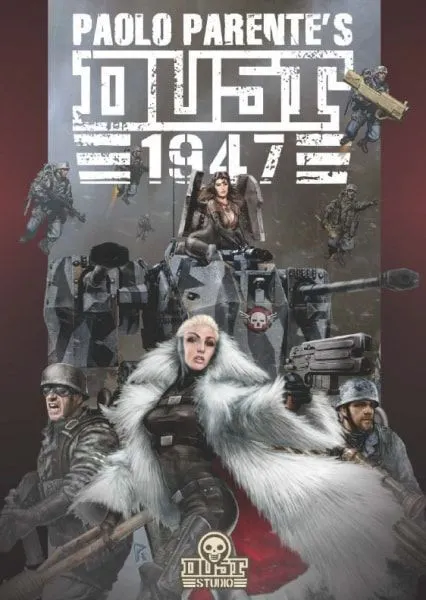
Dust 1947
- 2–8 Spieler
- 60–120 Min.
- Komplexität 2,7/5
- 2016
Regelhilfe für Buck Rogers 2.0
Verständliche Erklärungen zu Spielzügen, Karteneffekten und strittigen Situationen mit Verweisen auf offizielle Quellen und gespeichertem Fragenverlauf.
Was möchtest du wissen?
Antworten stammen aus dem offiziellen Regelheft, mit Seitenangabe zum Nachprüfen.
Buck Rogers 2.0 ist eine Erweiterung für Buck Rogers: Battle for the 25th Century Game aus dem Jahr 2008 für 2–6 Personen und mit 180 Minuten pro Partie. Entwickelt wurde es von Peet Smith; die wichtigsten Mechaniken sind Variable Player Powers, Area Movement und Dice Rolling.

Auf Englisch
This is an expansion and upgrade to the game "Buck Rogers: Battle for the 25th Century" published by TSR in 1988 and requires a copy of that game in order to play. If you have that game, just print out these components and you can play Buck Rogers 2.0. It is a game of conquest set in the inner solar system in the 25th century; the board features the planets Mercury, Venus, Earth, and Mars, along with the Asteroid belt. Players build armies and space fleets and struggle to control these territories; whoever has the most territory at game end wins. Each player controls a character from the Buck Rogers universe, who grants the pieces around him or her special abilities. These special powers will often dictate that player's strategy. Each game turn begins with each player bidding for turn order and then building new units. They can build these units at factories, and can also buy mercenaries from the black market. They can build ground units, which are vital for controlling planets, and spaceships which are necessary for traveling from one world to another. Then, in turn order each player moves his or her units; they may move as many or as few of their units as they like. At the end of this phase, combat will occur if any player's units are in the same zone as another's, though combat can happen during movement if one player tries to move units through or out of a zone containing enemy units. In combat, units are moved to a "battle board" which allows the players to make tactical choices for their units. The front section is the "battle line" where units may fire but are vulnerable to enemy fire, while the rear section is the "reserve line," where units may not fire but are protected from enemy fire by units in the battle line. Each unit has a set of numbers it needs to roll on a d10 in order to hit; which number it needs depends on the unit it is firing at. Once only units from one faction remain the battle is over. Once all battles are complete, if no player has won the game the planets and asteroids all move forward one zone in orbit around the sun. Since different planets complete orbits in different amounts of time, players need to watch for "conjunctions" where planets are close to one another and the opportunity exists for players to move from one planet to another quickly. Changes to the original game include: Balanced Leader Abilities 9 new leaders - including 3 from the 1930's serial films Turn order decided by bidding instead of randomly Expanded Territory-Based Black Market Production Use of the Cards During the Game (not just for setup) Expanded Pass-through Fire Rules The Tactical Battle Board for Combat Offensive Gennie Variant (no more gennie turtling!) Upgrades: Buck Rogers: Battle for the 25th Century Game
Laut Katalog unterstützt Buck Rogers 2.0 2–6 Personen. Diese Spanne entspricht der vom Verlag angegebenen Spielerzahl, das Spiel lässt sich also für jede Gruppengröße innerhalb dieser Spanne aufbauen. Aufbau, einzelne Regeln und Wertungsdetails können je nach Personenzahl trotzdem abweichen; prüfe daher die genaue Konfiguration in der Anleitung deiner Ausgabe.
Die angegebene Spieldauer für Buck Rogers 2.0 beträgt 180 Minuten. Das ist die Schätzung des Verlags für eine vollständige Partie. Die tatsächliche Dauer hängt von der Gruppe, der Personenzahl und der Regelkenntnis ab: Erste Partien dauern meist länger, erfahrene Gruppen sind oft schneller fertig. Aufbau und Regelerklärung sind in dieser Schätzung nicht enthalten.
Buck Rogers 2.0 hat bei BoardGameGeek eine Komplexitätswertung von 2,7 von 5 und gilt damit als eher leichtes Spiel. Die Wertung zeigt, wie viel Regelwissen, Planung und Entscheidungen eine typische Partie verlangt. Schwerere Spiele brauchen bei der ersten Erklärung mehr Zeit, daher hilft vor dem Spieleabend eine Vorbereitungsanleitung.
Buck Rogers 2.0 gehört zu diesen Kategorien: Fighting, Comic Book / Strip und Economic. Die wichtigsten Mechaniken sind Variable Player Powers, Area Movement und Dice Rolling. Kategorien beschreiben Thema und Setting eines Spiels, Mechaniken dagegen, was die Spielenden in ihrem Zug tatsächlich tun. Jede Mechanik führt zu einer Katalogseite mit ähnlichen Spielen, falls du etwas Vergleichbares suchst.
Als Autoren von Buck Rogers 2.0 sind angegeben: Peet Smith. Diese Angaben stammen aus den veröffentlichten Spieldaten und nennen die für das Spieldesign verantwortlichen Personen, nicht die Illustratoren oder Verlage. Die Autorenseiten auf MeepleRules sammeln weitere Titel derselben Autoren – praktisch, wenn dir ein Spiel gefällt und du ähnliche Spiele suchst.
Im Katalog ist Buck Rogers 2.0 als Erweiterung zu Buck Rogers: Battle for the 25th Century Game aufgeführt. Erweiterungen ergänzen das Grundspiel um neues Material, neue Regeln oder Szenarien und sind meist nicht eigenständig spielbar; du brauchst also Buck Rogers: Battle for the 25th Century Game, um sie zu nutzen. Prüfe, ob deine Ausgabe von Buck Rogers: Battle for the 25th Century Game kompatibel ist, da manche Erweiterungen zwischen den Auflagen überarbeitet wurden.