

- BGG-Rang
- BGG #8.797
- BGG-Bewertung
- 7,8
Antietam 1862
- 1–2 Spieler
- 60–300 Min.
- Komplexität 2,5/5
- 2019
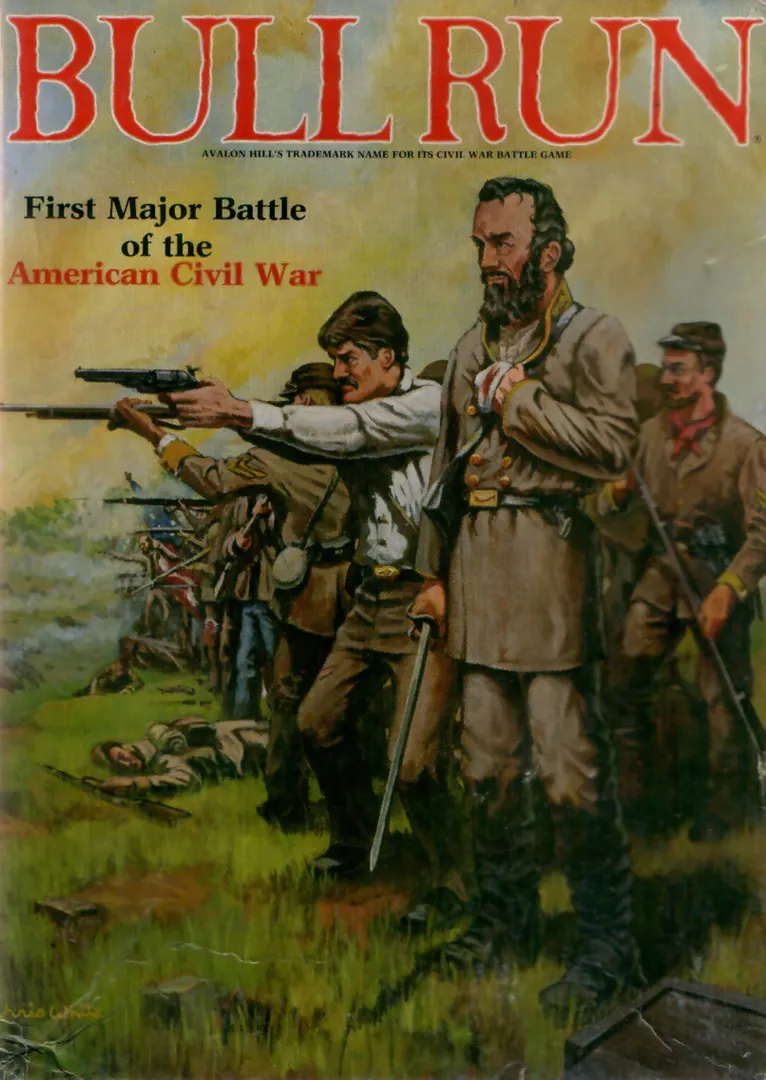
1983
Regelhilfe für Bull Run: The First Major Battle of the American Civil War
Verständliche Erklärungen zu Spielzügen, Karteneffekten und strittigen Situationen mit Verweisen auf offizielle Quellen und gespeichertem Fragenverlauf.
Für 2 Personen
Was möchtest du wissen?
Antworten stammen aus dem offiziellen Regelheft, mit Seitenangabe zum Nachprüfen.
Bull Run: The First Major Battle of the American Civil War ist ein Brettspiel aus dem Jahr 1983 für 2 Personen, mit 240 Minuten pro Partie und ab 12 Jahren. Entwickelt wurde es von Richard Hamblen; die wichtigsten Mechaniken sind Dice Rolling, Variable Set-up und Grid Movement.






Auf Englisch
"Bull Run: The First Major Battle of the American Civil War" is a tactical combat wargame of the first battle of Bull Run. The game is played on a map of the area over which the battle was fought overlaid with a hexagonal grid. Units are infantry, cavalry, and artillery, with brigade, division, and army leaders. Each turn is 30 minutes, and each hex represents 1000 ft. Units are basically regiments and batteries. Some infantry regiments with their brigade leader are capable of forming brigades, increasing offensive power at the expense of movement. Batteries can be limbered for increased movement at the expense of firepower, or unlimbered with full firepower and limited movement. Combat is a modified version of the classic system adopted by the earlier Avalon Hill games. However, rules for leader command activation, infantry screening of artillery, and infantry forming brigades to prevent soak-off attacks, ranged artillery, rally of losses are give the game a unique flavour. The major terrain obstacle is Bull Run which provides the Confederate with defensive advantages and hinders Union movement. The game begins with the Union troops approaching partially hidden, unsuspecting Confederate forces. As the Union attack develops, additional Confederate leaders and combat units are activated and are rushed to stem the Union advance. The Union player wins if he is able to capture any of three objective hexes by the end of the game or takes Manassas at any time. The Confederate player wins if he takes Centreville at any time or prevents the Union player from holding any of objective hexes at the game end. The game consists of a 32" by 22" mapboard, 260 counters, various charts, a 12 page rulebook and 1 die. Magazine References: The GENERAL Index Article List: The GENERAL Vol.20,No.5 Series Replay - Bull Run: The First Major Battle of the American Civil War, Rex A. Martin, Paul O'Neil, Richard Hamblen Bull Run: The First Major Battle of the American Civil War – “West Point's Finest, The Commanders at Bull Run” (Historical) A. Blumberg & Richard Hamblen Bull Run: The First Major Battle of the American Civil War – “Rebel Yell, Opening placement for Confederate Players” (Strategy) Rex A. Martin Bull Run: The First Major Battle of the American Civil War – “First Blood, The Battle of First Bull Run” (Historical) Michael Craighead The Question Box - Bull Run: The First Major Battle of the American Civil War Contest #117 - Bull Run: The First Major Battle of the American Civil War The GENERAL Vol.20,No.6 Series Replay - Bull Run: The First Major Battle of the American Civil War, Rex A. Martin, Paul O'Neil, Richard Hamblen The GENERAL Vol.25,No.5 Bull Run: The First Major Battle of the American Civil War – “Risky Business -A designer's look at Bull Run: The First Major Battle of the American Civil War” (Designer notes) Richard Hamblen
Laut Katalog unterstützt Bull Run: The First Major Battle of the American Civil War 2 Personen. Das ist die vom Verlag angegebene Spielerzahl, das Spiel ist also genau für diese Anzahl von Mitspielenden ausgelegt. Varianten für andere Gruppengrößen sind, sofern vorhanden, in der Anleitung deiner Ausgabe beschrieben; prüfe sie, bevor du eine andere Konfiguration aufbaust.
Die angegebene Spieldauer für Bull Run: The First Major Battle of the American Civil War beträgt 240 Minuten. Das ist die Schätzung des Verlags für eine vollständige Partie. Die tatsächliche Dauer hängt von der Gruppe, der Personenzahl und der Regelkenntnis ab: Erste Partien dauern meist länger, erfahrene Gruppen sind oft schneller fertig. Aufbau und Regelerklärung sind in dieser Schätzung nicht enthalten.
Im Katalog wird Bull Run: The First Major Battle of the American Civil War ab 12 Jahren empfohlen. Das ist die Empfehlung des Verlags und berücksichtigt Leseanforderungen, Regelkomplexität und Kleinteile, nicht nur das Thema. Jüngere Kinder können oft mit Hilfe eines Erwachsenen mitspielen; beachte die Altersangabe deiner Ausgabe und die Brettspielerfahrung deiner Gruppe.
Bull Run: The First Major Battle of the American Civil War hat bei BoardGameGeek eine Komplexitätswertung von 2,8 von 5 und gilt damit als eher leichtes Spiel. Die Wertung zeigt, wie viel Regelwissen, Planung und Entscheidungen eine typische Partie verlangt. Schwerere Spiele brauchen bei der ersten Erklärung mehr Zeit, daher hilft vor dem Spieleabend eine Vorbereitungsanleitung.
Bull Run: The First Major Battle of the American Civil War gehört zu diesen Kategorien: Wargame, Civil War und Post-Napoleonic. Die wichtigsten Mechaniken sind Dice Rolling, Variable Set-up und Grid Movement. Kategorien beschreiben Thema und Setting eines Spiels, Mechaniken dagegen, was die Spielenden in ihrem Zug tatsächlich tun. Jede Mechanik führt zu einer Katalogseite mit ähnlichen Spielen, falls du etwas Vergleichbares suchst.
Als Autoren von Bull Run: The First Major Battle of the American Civil War sind angegeben: Richard Hamblen. Diese Angaben stammen aus den veröffentlichten Spieldaten und nennen die für das Spieldesign verantwortlichen Personen, nicht die Illustratoren oder Verlage. Die Autorenseiten auf MeepleRules sammeln weitere Titel derselben Autoren – praktisch, wenn dir ein Spiel gefällt und du ähnliche Spiele suchst.
Im Katalog ist Bull Run: The First Major Battle of the American Civil War als Grundspiel aufgeführt. Es lässt sich eigenständig mit dem Material aus der Schachtel spielen und benötigt keinen weiteren Titel. Erweiterungen, sofern es welche gibt, ergänzen neues Material oder neue Regeln und sind im Katalog separat mit einem Verweis auf dieses Grundspiel aufgeführt.