
- BGG-Rang
- BGG #13.278
- BGG-Bewertung
- 7,6
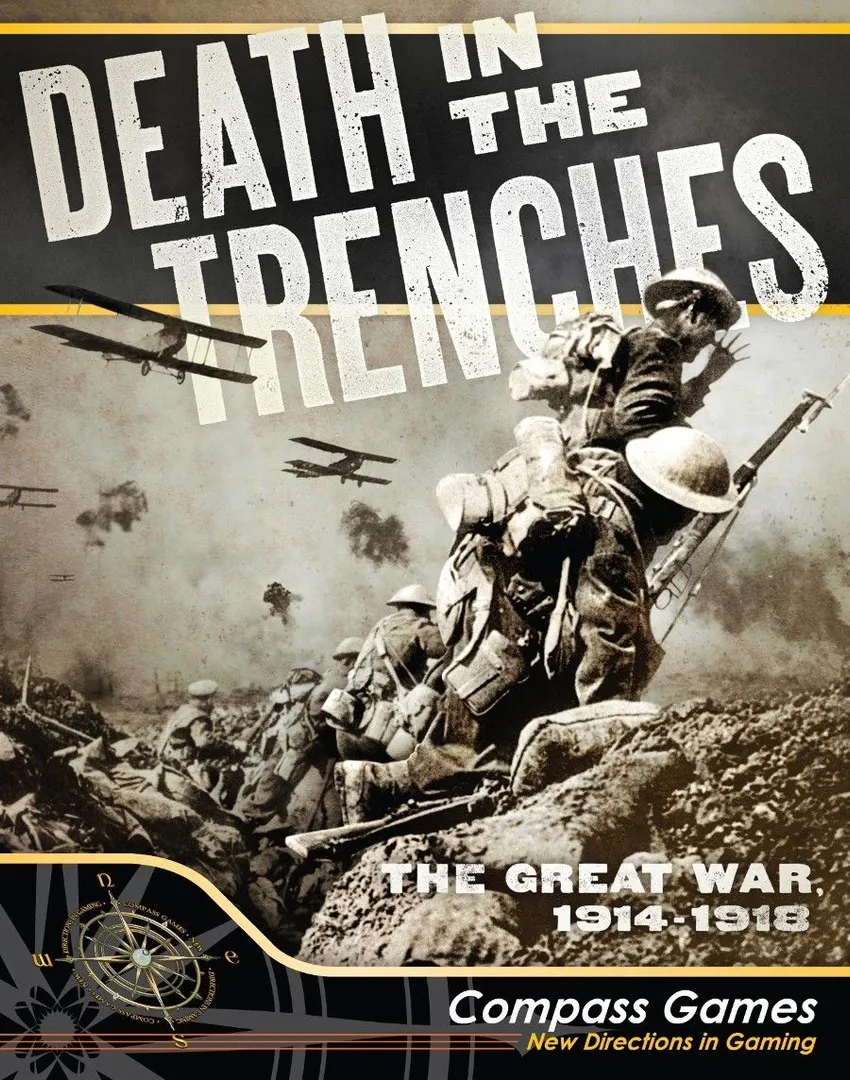
Death in the Trenches: The Great War 1914-1918 (Second Edition)
- 1–2 Spieler
- 300 Min.
- Komplexität 3,6/5
- 2022
2004
Regelhilfe für Byzantium Reborn
Verständliche Erklärungen zu Spielzügen, Karteneffekten und strittigen Situationen mit Verweisen auf offizielle Quellen und gespeichertem Fragenverlauf.
Für 2 Personen
Was möchtest du wissen?
Antworten stammen aus dem offiziellen Regelheft, mit Seitenangabe zum Nachprüfen.
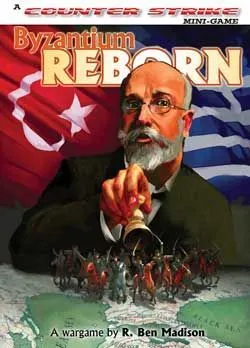
Byzantium Reborn ist ein Brettspiel aus dem Jahr 2004 für 2 Personen, mit 240 Minuten pro Partie und ab 12 Jahren. Entwickelt wurde es von Ben Madison und Wes Erni; die wichtigsten Mechaniken sind Variable Player Powers, Area Movement und Dice Rolling.






Auf Englisch
From the MicroDesign Group Website. THE GREAT IDEA World War I (1914-1918) left both Greece and Türkey near ruin. By 1920, Greece was emerging from what amounted to a civil war between supporters and opponents of the visionary but reckless prime minister, Elefthérios Venizélos. Türkey's civil war was still in progress, fought between the last, heartbroken Ottoman Sultan and the dynamic new insurgent, Mustapha Kemal (later called Atatürk). Each side in the wider struggle pursued its own vision of national rebirth. For Venizélos and Greece the dream was called "The Great Idea" and promised the renaissance of Greece as a great power through a restoration of the Byzantine Empire, the reconquest of Constantinople (lost to the Türks in 1453) and the reunion of all ethnic Greeks under the rule of Athens. For Kemal's Türks, their own "great idea" was the forging of a new, compact Türkish Republic united not by the outdated creed of Islam but by a new Türkish nationalism, modernized and empowered by Western culture and commerce. These two visions of national rebirth fought bitterly over the plains, deserts, and mountains of Anatolia for three long years. Western Anatolia was ethnically mixed, and neither side had an exclusive claim. The great prize was Smyrna, taken by Greece in 1919: a city which was home to more Greeks than Athens itself. The war had profound implications for the entire region. Greek victory would cement Greece as a regional power, and act as a beacon of hope to Orthodox Russians seeking to topple Lenin's Communists in the ongoing Russian Civil War. Türkish defeat would mean the collapse of Kemal's vision of a secular, democratic Türkey and would block the spread of Western values in the Near East, leaving Türkey battered and backward, and the rest of the Moslem world feeling victimized and enraged. As it happened, Türkey won and Greece lost. Kemal's vision prevailed; Türkey emerged victorious, united and profoundly westernized. Women gave up the veil and went to school. The Roman alphabet replaced the Arabic, and Islam was evicted from politics. For the Greeks, the end came in September of 1922 when the Türks captured Smyrna and burned the city to the ground. A million and a half Greeks fled or were expelled, and nearly 2,900 years of Hellenic civilization in Asia came to an abrupt and humiliating end. Greece, overwhelmed by refugees, collapsed into a series of coups and revolutions punctuated by all sorts of autocracy and spectacular misrule, from which, arguably, it has only recently recovered. Whose "great idea" will shape the modern Near East? Now you can make the decision by playing Byzantium Reborn! Byzantium Reborn is a simulation game on the Greek-Türkish War of 1920-22. The game is for two players, one representing the Kingdom of Greece and its allies (the Greek player), and the other the insurgent nationalist forces of Mustapha Kemal who opposed the Greek invasion (the Türkish player). The 11 x 17" map of Anatolia (Asia Minor) depicts the areas where the war took place. The scale is about 40 miles to the inch. The 280 counters represent the military formations including Turks, Greeks, French, Italians and many others.
Laut Katalog unterstützt Byzantium Reborn 2 Personen. Das ist die vom Verlag angegebene Spielerzahl, das Spiel ist also genau für diese Anzahl von Mitspielenden ausgelegt. Varianten für andere Gruppengrößen sind, sofern vorhanden, in der Anleitung deiner Ausgabe beschrieben; prüfe sie, bevor du eine andere Konfiguration aufbaust.
Die angegebene Spieldauer für Byzantium Reborn beträgt 240 Minuten. Das ist die Schätzung des Verlags für eine vollständige Partie. Die tatsächliche Dauer hängt von der Gruppe, der Personenzahl und der Regelkenntnis ab: Erste Partien dauern meist länger, erfahrene Gruppen sind oft schneller fertig. Aufbau und Regelerklärung sind in dieser Schätzung nicht enthalten.
Im Katalog wird Byzantium Reborn ab 12 Jahren empfohlen. Das ist die Empfehlung des Verlags und berücksichtigt Leseanforderungen, Regelkomplexität und Kleinteile, nicht nur das Thema. Jüngere Kinder können oft mit Hilfe eines Erwachsenen mitspielen; beachte die Altersangabe deiner Ausgabe und die Brettspielerfahrung deiner Gruppe.
Byzantium Reborn hat bei BoardGameGeek eine Komplexitätswertung von 2,9 von 5 und gilt damit als eher leichtes Spiel. Die Wertung zeigt, wie viel Regelwissen, Planung und Entscheidungen eine typische Partie verlangt. Schwerere Spiele brauchen bei der ersten Erklärung mehr Zeit, daher hilft vor dem Spieleabend eine Vorbereitungsanleitung.
Byzantium Reborn gehört zu diesen Kategorien: Wargame, Political und World War I. Die wichtigsten Mechaniken sind Variable Player Powers, Area Movement und Dice Rolling. Kategorien beschreiben Thema und Setting eines Spiels, Mechaniken dagegen, was die Spielenden in ihrem Zug tatsächlich tun. Jede Mechanik führt zu einer Katalogseite mit ähnlichen Spielen, falls du etwas Vergleichbares suchst.
Als Autoren von Byzantium Reborn sind angegeben: Ben Madison und Wes Erni. Diese Angaben stammen aus den veröffentlichten Spieldaten und nennen die für das Spieldesign verantwortlichen Personen, nicht die Illustratoren oder Verlage. Die Autorenseiten auf MeepleRules sammeln weitere Titel derselben Autoren – praktisch, wenn dir ein Spiel gefällt und du ähnliche Spiele suchst.
Im Katalog ist Byzantium Reborn als Grundspiel aufgeführt. Es lässt sich eigenständig mit dem Material aus der Schachtel spielen und benötigt keinen weiteren Titel. Erweiterungen, sofern es welche gibt, ergänzen neues Material oder neue Regeln und sind im Katalog separat mit einem Verweis auf dieses Grundspiel aufgeführt.