
- BGG-Rang
- BGG #1.313
- BGG-Bewertung
- 7,8
Star Trek: Frontiers
- 1–4 Spieler
- 60–240 Min.
- Komplexität 4,4/5
- 2016
2013
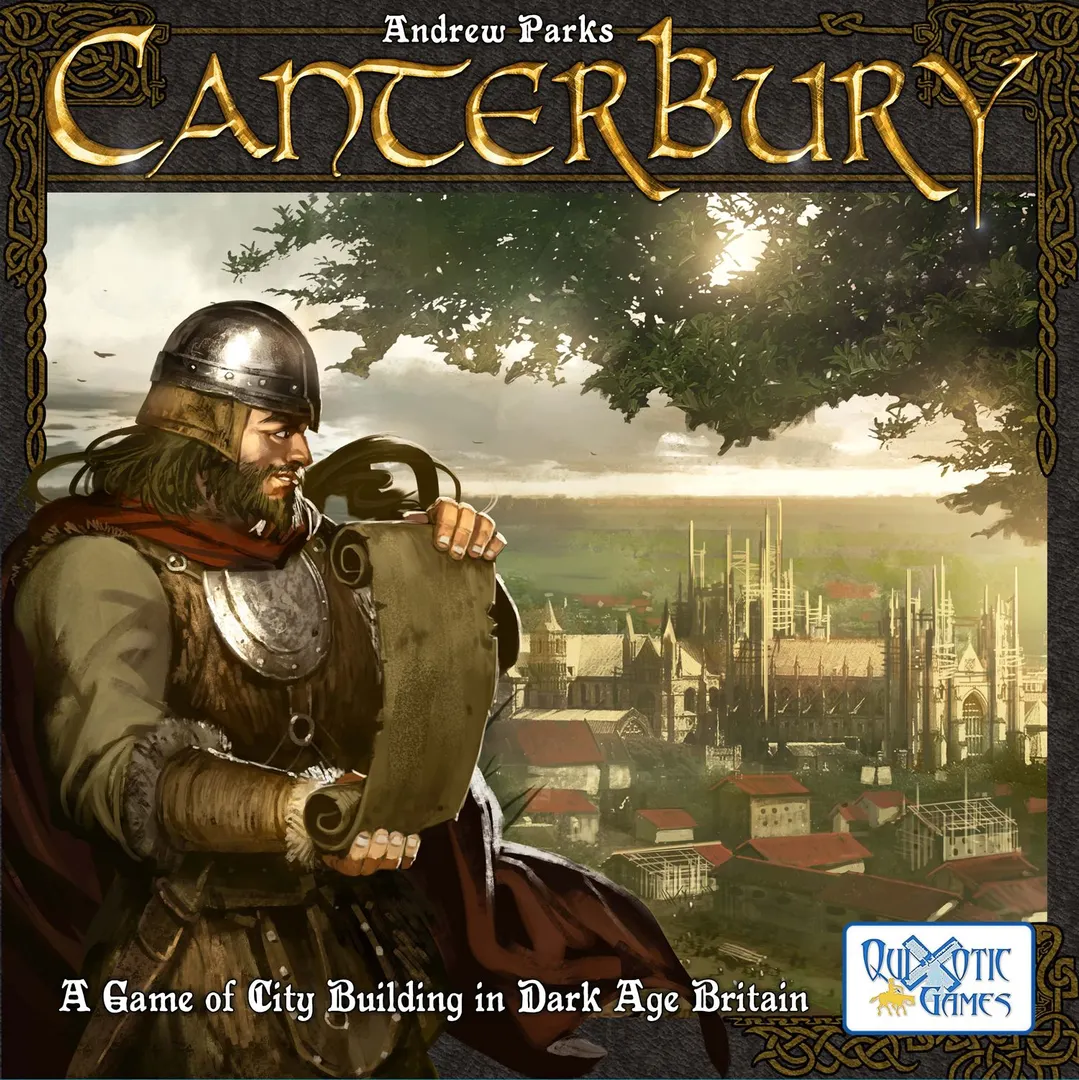
Regelhilfe für Canterbury
Verständliche Erklärungen zu Spielzügen, Karteneffekten und strittigen Situationen mit Verweisen auf offizielle Quellen und gespeichertem Fragenverlauf.
Für 2 Personen
Was möchtest du wissen?
Antworten stammen aus dem offiziellen Regelheft, mit Seitenangabe zum Nachprüfen.
Canterbury ist ein Brettspiel aus dem Jahr 2013 für 2–4 Personen, mit 90 Minuten pro Partie und ab 10 Jahren. Entwickelt wurde es von Andrew Parks; die wichtigsten Mechaniken sind Area Majority / Influence und Tile Placement.
Auf Englisch
Toward the end of the 6th century A.D., King Ethelbert of Kent established the old Roman city of Canterbury as his new capital. In Canterbury, 2 to 4 players represent Saxon Lords who are charged with building the city into a prosperous capital. The Saxon Lords must use the city's meager starting resources to build up the 25 districts of Canterbury and provide key services to its citizens. The key services are (in order from most basic to most prestigious) water, food, religion, defense, commerce, and culture. These services are provided by structures that are built in the various districts. However, structures that provide higher end services can only be built if the more basic services are already present in that district. For example, a Saxon Lord cannot order the construction of a chapel (which provides religion) unless there is already water and food in that district. As new structures are built in the city, the city grows more prosperous. While each Saxon Lord jealously guards his or her own prosperity and achievements, they all benefit as a whole from the growing prosperity of the city itself. The city treasury grows as the city prospers, and the Saxon Lords must balance their publicly scrutinized withdrawals from the treasury with the ambition of their building projects. When the city reaches the peak of its prosperity, the game ends and the player with the most individual prosperity wins the game. Object of the Game Every structure that is built in Canterbury provides Prosperity Points both to the city and to the Saxon Lord who ordained its construction. When the City Marker passes 300 Prosperity, there is one final round of play, and then the game ends. The player with the most individual Prosperity earns the accolades of the king and wins the game.
Laut Katalog unterstützt Canterbury 2–4 Personen. Diese Spanne entspricht der vom Verlag angegebenen Spielerzahl, das Spiel lässt sich also für jede Gruppengröße innerhalb dieser Spanne aufbauen. Aufbau, einzelne Regeln und Wertungsdetails können je nach Personenzahl trotzdem abweichen; prüfe daher die genaue Konfiguration in der Anleitung deiner Ausgabe.
Die angegebene Spieldauer für Canterbury beträgt 90 Minuten. Das ist die Schätzung des Verlags für eine vollständige Partie. Die tatsächliche Dauer hängt von der Gruppe, der Personenzahl und der Regelkenntnis ab: Erste Partien dauern meist länger, erfahrene Gruppen sind oft schneller fertig. Aufbau und Regelerklärung sind in dieser Schätzung nicht enthalten.
Im Katalog wird Canterbury ab 10 Jahren empfohlen. Das ist die Empfehlung des Verlags und berücksichtigt Leseanforderungen, Regelkomplexität und Kleinteile, nicht nur das Thema. Jüngere Kinder können oft mit Hilfe eines Erwachsenen mitspielen; beachte die Altersangabe deiner Ausgabe und die Brettspielerfahrung deiner Gruppe.
Canterbury hat bei BoardGameGeek eine Komplexitätswertung von 3,1 von 5 und gilt damit als mittelschweres Spiel. Die Wertung zeigt, wie viel Regelwissen, Planung und Entscheidungen eine typische Partie verlangt. Schwerere Spiele brauchen bei der ersten Erklärung mehr Zeit, daher hilft vor dem Spieleabend eine Vorbereitungsanleitung.
Canterbury gehört zu diesen Kategorien: Medieval und City Building. Die wichtigsten Mechaniken sind Area Majority / Influence und Tile Placement. Kategorien beschreiben Thema und Setting eines Spiels, Mechaniken dagegen, was die Spielenden in ihrem Zug tatsächlich tun. Jede Mechanik führt zu einer Katalogseite mit ähnlichen Spielen, falls du etwas Vergleichbares suchst.
Als Autoren von Canterbury sind angegeben: Andrew Parks. Diese Angaben stammen aus den veröffentlichten Spieldaten und nennen die für das Spieldesign verantwortlichen Personen, nicht die Illustratoren oder Verlage. Die Autorenseiten auf MeepleRules sammeln weitere Titel derselben Autoren – praktisch, wenn dir ein Spiel gefällt und du ähnliche Spiele suchst.
Im Katalog ist Canterbury als Grundspiel aufgeführt. Es lässt sich eigenständig mit dem Material aus der Schachtel spielen und benötigt keinen weiteren Titel. Erweiterungen, sofern es welche gibt, ergänzen neues Material oder neue Regeln und sind im Katalog separat mit einem Verweis auf dieses Grundspiel aufgeführt.