
- BGG-Rang
- BGG #4.453
- BGG-Bewertung
- 7,5
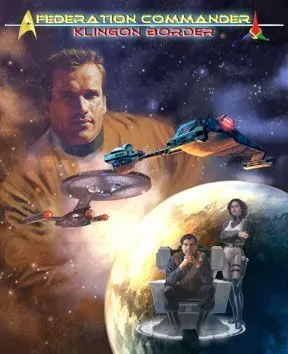
Federation Commander: Klingon Border
- 2–8 Spieler
- 60 Min.
- Komplexität 3,4/5
- 2005
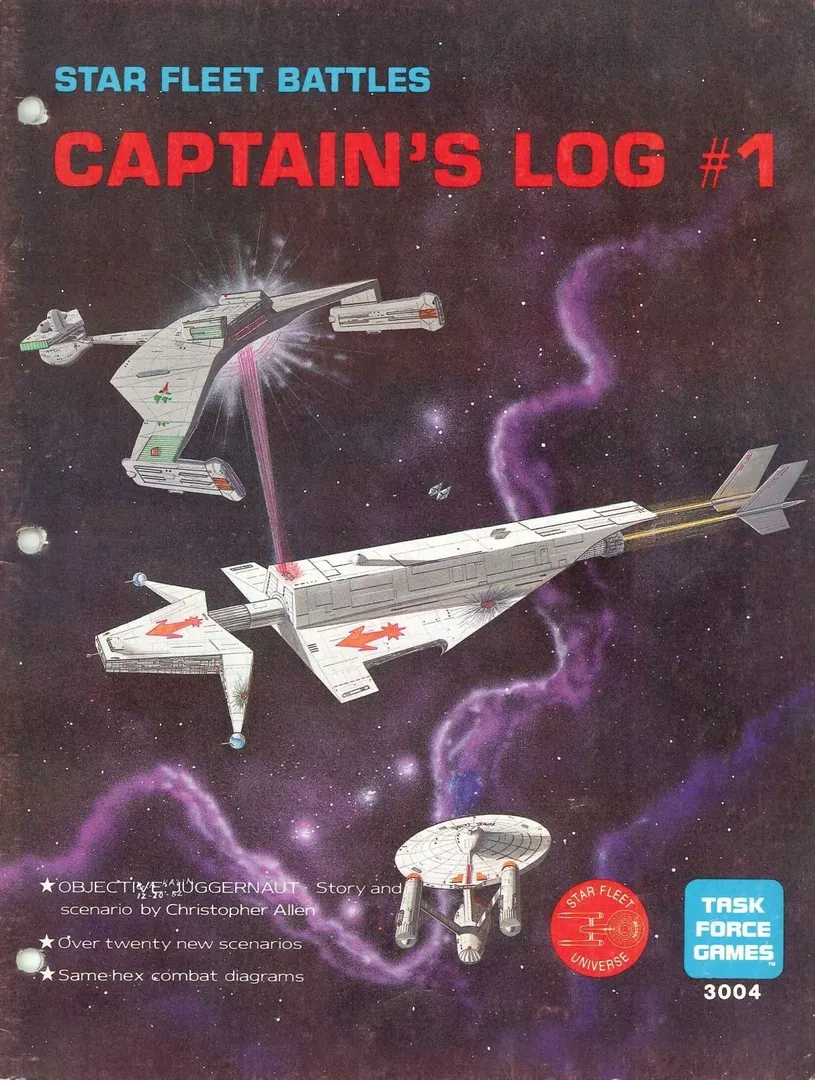
Regelhilfe für Captain's Log #1
Verständliche Erklärungen zu Spielzügen, Karteneffekten und strittigen Situationen mit Verweisen auf offizielle Quellen und gespeichertem Fragenverlauf.
Was möchtest du wissen?
Antworten stammen aus dem offiziellen Regelheft, mit Seitenangabe zum Nachprüfen.
Captain's Log #1 ist eine Erweiterung für Star Fleet Battles aus dem Jahr 1983 für 2 Personen. Entwickelt wurde es von Stephen V. Cole, Stephen G. Wilcox, Kenneth Kaufman, Christopher Allen, Jeff Moore (I), Mike Thompson, Steve Brinich, Jonathan D. Schuster, Greg Holland, Stephen Holland, David Solomon, Lyle Zoerman, Evan Tingley, John C. Pini, Scott Abel und Ardak Kumerian; die wichtigsten Mechaniken sind Dice Rolling, Simultaneous Action Selection und Grid Movement.






Auf Englisch
From the back: CAPTAIN'S LOG #1 features the short story and scenario, "Objective: Juggernaut," by Christopher Allen. This story creates a unique background for a five player situation which requires skill in combat and finesse in diplomacy. Involved are the Federation, Tholian, Klingon, Orion and the fearsome extra-galactic Juggernaut. Also included in CAPTAIN'S LOG #1 are the diagrams and rules needed to resolve combat in the same hex. This system will make combat in the same hex more realistic and systematic. NOTE! This product adds new play situations and rules for the STAR FLEET UNIVERSE. YOU MUST HAVE the boxed edition of STAR FLEET BATTLES to play any of the scenarios presented. Additionally, many of the scenarios draw on material published in the three STAR FLEET BATTLES EXPANSIONS. These products are recommended for maximum enjoyment of the material presented.
Laut Katalog unterstützt Captain's Log #1 2 Personen. Das ist die vom Verlag angegebene Spielerzahl, das Spiel ist also genau für diese Anzahl von Mitspielenden ausgelegt. Varianten für andere Gruppengrößen sind, sofern vorhanden, in der Anleitung deiner Ausgabe beschrieben; prüfe sie, bevor du eine andere Konfiguration aufbaust.
Captain's Log #1 hat bei BoardGameGeek eine Komplexitätswertung von 4,0 von 5 und gilt damit als schweres Spiel. Die Wertung zeigt, wie viel Regelwissen, Planung und Entscheidungen eine typische Partie verlangt. Schwerere Spiele brauchen bei der ersten Erklärung mehr Zeit, daher hilft vor dem Spieleabend eine Vorbereitungsanleitung.
Captain's Log #1 gehört zu diesen Kategorien: Wargame, Movies / TV / Radio theme und Science Fiction. Die wichtigsten Mechaniken sind Dice Rolling, Simultaneous Action Selection und Grid Movement. Kategorien beschreiben Thema und Setting eines Spiels, Mechaniken dagegen, was die Spielenden in ihrem Zug tatsächlich tun. Jede Mechanik führt zu einer Katalogseite mit ähnlichen Spielen, falls du etwas Vergleichbares suchst.
Als Autoren von Captain's Log #1 sind angegeben: Stephen V. Cole, Stephen G. Wilcox, Kenneth Kaufman, Christopher Allen, Jeff Moore (I), Mike Thompson, Steve Brinich, Jonathan D. Schuster, Greg Holland, Stephen Holland, David Solomon, Lyle Zoerman, Evan Tingley, John C. Pini, Scott Abel und Ardak Kumerian. Diese Angaben stammen aus den veröffentlichten Spieldaten und nennen die für das Spieldesign verantwortlichen Personen, nicht die Illustratoren oder Verlage. Die Autorenseiten auf MeepleRules sammeln weitere Titel derselben Autoren – praktisch, wenn dir ein Spiel gefällt und du ähnliche Spiele suchst.
Im Katalog ist Captain's Log #1 als Erweiterung zu Star Fleet Battles aufgeführt. Erweiterungen ergänzen das Grundspiel um neues Material, neue Regeln oder Szenarien und sind meist nicht eigenständig spielbar; du brauchst also Star Fleet Battles, um sie zu nutzen. Prüfe, ob deine Ausgabe von Star Fleet Battles kompatibel ist, da manche Erweiterungen zwischen den Auflagen überarbeitet wurden.