
- BGG-Bewertung
- 10,0
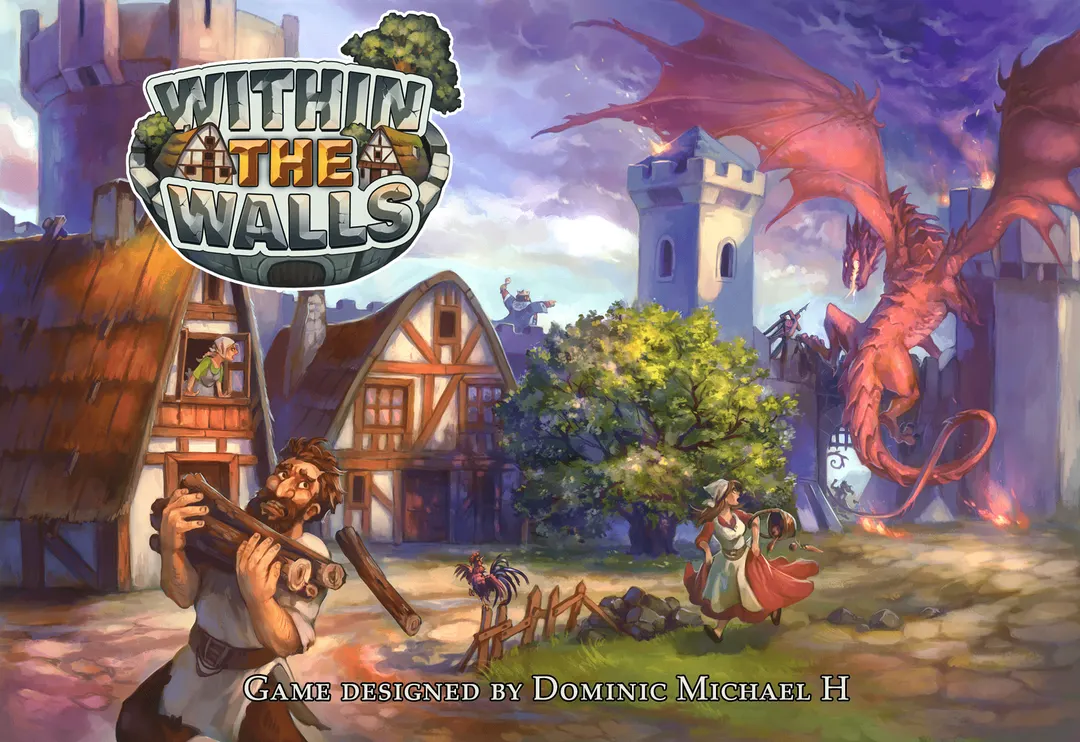
Castle Dukes: Within The Walls
- 1–4 Spieler
- 60–90 Min.
- 2020
2017
Regelhilfe für Castle Dukes
Verständliche Erklärungen zu Spielzügen, Karteneffekten und strittigen Situationen mit Verweisen auf offizielle Quellen und gespeichertem Fragenverlauf.
Für 1 Person
Was möchtest du wissen?
Antworten stammen aus dem offiziellen Regelheft, mit Seitenangabe zum Nachprüfen.
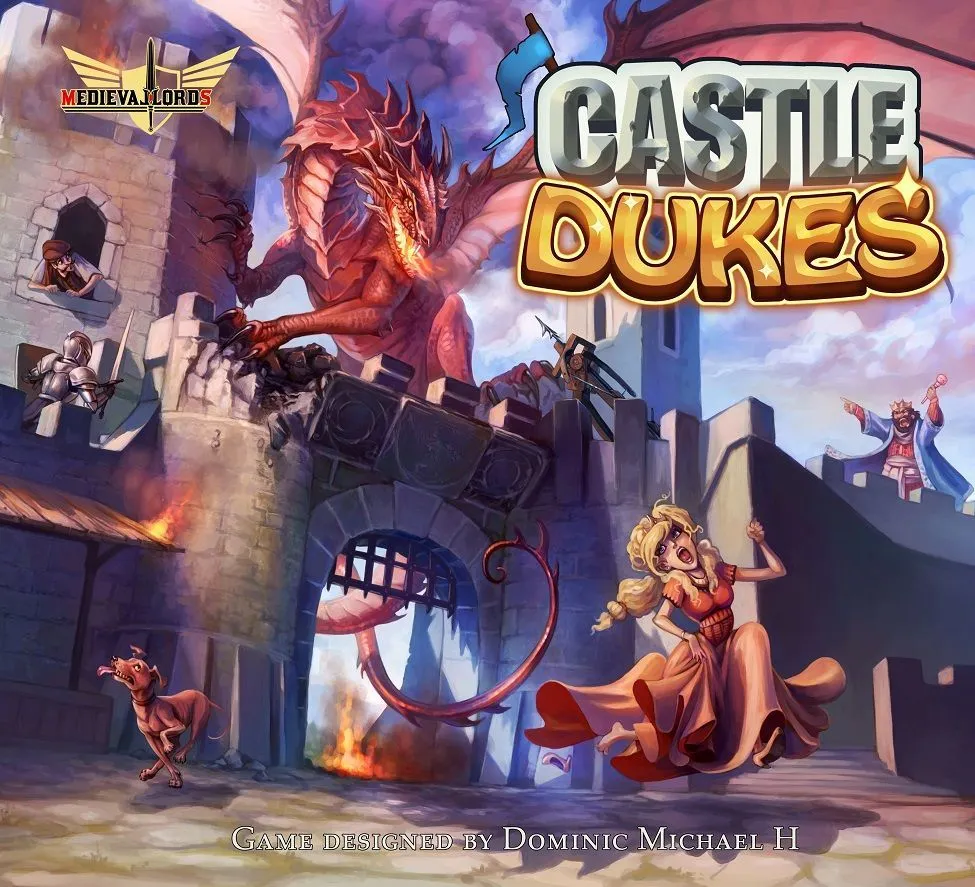
Castle Dukes ist ein Brettspiel aus dem Jahr 2017 für 1–4 Personen, mit 60–90 Minuten pro Partie und ab 12 Jahren. Entwickelt wurde es von Dominic Michael Huang; die wichtigsten Mechaniken sind Tile Placement und Action Points.











Auf Englisch
As a duke, you have decided to build the greatest castle in the land. You are not the only Duke in this land, though, and you are not the only one with this fantastic ambition. There are many ways to build your castle. You can even build it to lean towards one of several different styles, be it for Defence, for Comfort or even for Offence! The occasional royalty may pop by your land and if your castle does not suit his or her taste, they will leave to find better accommodations with your rival dukes! On top of that, the deadly dragon will appear once in awhile and raze the lands. If your castle is not well fortified against dragon attacks, it might just crumble! Score Victory Points (VP) by having the most number of important folks residing in your castle, as well as have the most magnificent castle of all and take home the title of Grand Duke! Castle Dukes is a very visually appealing game of Dexterity and Strategy - And it's 3D to boot! Each round, players start with 5 Coins. 6 Room cards are revealed from the stack and placed in positions 1 through 6 (from bottom to top), each room costing a higher amount of Coins to acquire than the last. The player with the First Player token gets first rights to the Room cards, passing the turn in clockwise direction until all players have had their chance to acquire rooms with their Coins. Rooms acquired leave a gap on their position and are not replaced with new cards during any player's turn. At the end of the whole turn after every player has had a chance at the rooms, any remaining room cards are then moved downwards to fill any gaps. Draw more Room cards from the Room Stack to fill all positions as needed. It is possible to choose not to acquire any Room card during a player's turn. Note: In the various positions 1 through 6, players also acquire additional castle components such as Tables and Coffers along with the Room cards, as depicted on the position on the main game board. Once done, all players then simultaneously acquire pillars, Floor Tiles, and Construction cards using their remaining Coins. They may then immediately build the newly acquired components, adding on layers to their castles until they gradually become beautiful fortresses of various shapes and heights. When all players are done with this next phase, a Guest card is revealed to show which Guests have dropped by for that turn. The princess always goes for the most comfortable castle, even if its flimsy. The king's life is very precious and he always seeks out the most defended castle. The knight looks for glory and always goes for the castle that best gives him the chance to slay a dragon. This is the end of a turn in Castle Dukes. The First Player token is now passed on to the right, and a new turn begins with each player having 5 Coins again. And yes, a dragon might appear now and then to attack all castles! Depending on your level of Defence or Offence, each castle will take varying amounts of damage. Beware! This is also a dexterity game! If at any point in the game your castle collapses, be it a small portion or even just one tiny component falling off, you will take a Crumble token which at the end of the game reduces your Victory Points by 2!
Laut Katalog unterstützt Castle Dukes 1–4 Personen. Diese Spanne entspricht der vom Verlag angegebenen Spielerzahl, das Spiel lässt sich also für jede Gruppengröße innerhalb dieser Spanne aufbauen. Aufbau, einzelne Regeln und Wertungsdetails können je nach Personenzahl trotzdem abweichen; prüfe daher die genaue Konfiguration in der Anleitung deiner Ausgabe.
Die angegebene Spieldauer für Castle Dukes beträgt 60–90 Minuten. Das ist die Schätzung des Verlags für eine vollständige Partie. Die tatsächliche Dauer hängt von der Gruppe, der Personenzahl und der Regelkenntnis ab: Erste Partien dauern meist länger, erfahrene Gruppen sind oft schneller fertig. Aufbau und Regelerklärung sind in dieser Schätzung nicht enthalten.
Im Katalog wird Castle Dukes ab 12 Jahren empfohlen. Das ist die Empfehlung des Verlags und berücksichtigt Leseanforderungen, Regelkomplexität und Kleinteile, nicht nur das Thema. Jüngere Kinder können oft mit Hilfe eines Erwachsenen mitspielen; beachte die Altersangabe deiner Ausgabe und die Brettspielerfahrung deiner Gruppe.
Castle Dukes hat bei BoardGameGeek eine Komplexitätswertung von 2,0 von 5 und gilt damit als eher leichtes Spiel. Die Wertung zeigt, wie viel Regelwissen, Planung und Entscheidungen eine typische Partie verlangt. Schwerere Spiele brauchen bei der ersten Erklärung mehr Zeit, daher hilft vor dem Spieleabend eine Vorbereitungsanleitung.
Castle Dukes gehört zu diesen Kategorien: Action / Dexterity, Medieval und City Building. Die wichtigsten Mechaniken sind Tile Placement und Action Points. Kategorien beschreiben Thema und Setting eines Spiels, Mechaniken dagegen, was die Spielenden in ihrem Zug tatsächlich tun. Jede Mechanik führt zu einer Katalogseite mit ähnlichen Spielen, falls du etwas Vergleichbares suchst.
Als Autoren von Castle Dukes sind angegeben: Dominic Michael Huang. Diese Angaben stammen aus den veröffentlichten Spieldaten und nennen die für das Spieldesign verantwortlichen Personen, nicht die Illustratoren oder Verlage. Die Autorenseiten auf MeepleRules sammeln weitere Titel derselben Autoren – praktisch, wenn dir ein Spiel gefällt und du ähnliche Spiele suchst.
Im Katalog ist Castle Dukes als Grundspiel aufgeführt. Es lässt sich eigenständig mit dem Material aus der Schachtel spielen und benötigt keinen weiteren Titel. Erweiterungen, sofern es welche gibt, ergänzen neues Material oder neue Regeln und sind im Katalog separat mit einem Verweis auf dieses Grundspiel aufgeführt.