
- BGG-Rang
- BGG #5.749
- BGG-Bewertung
- 6,2
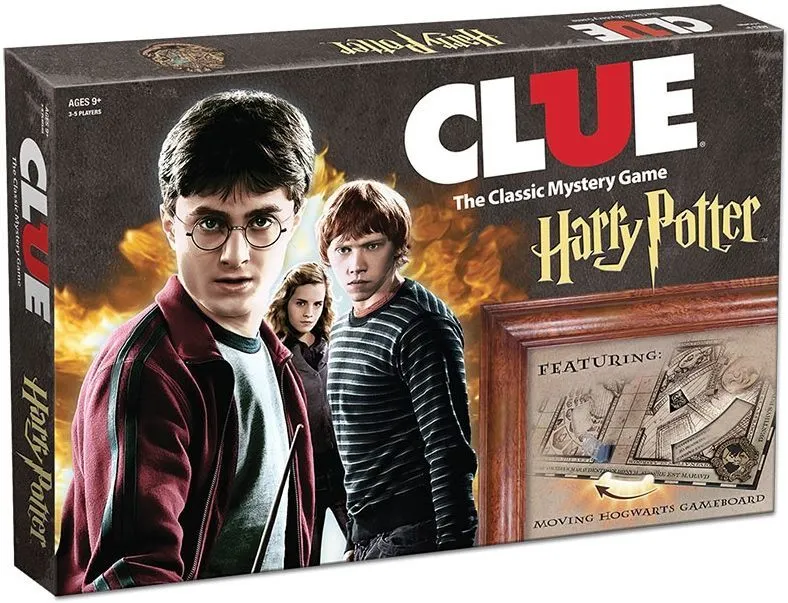
Clue: Harry Potter Edition
- 3–5 Spieler
- 30 Min.
- Komplexität 1,6/5
- 2008
2001
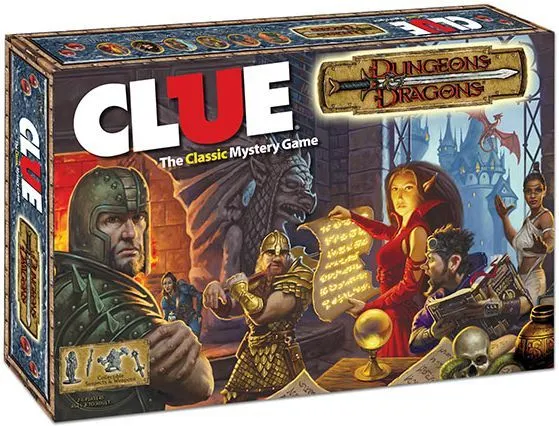
Regelhilfe für Clue: Dungeons & Dragons
Verständliche Erklärungen zu Spielzügen, Karteneffekten und strittigen Situationen mit Verweisen auf offizielle Quellen und gespeichertem Fragenverlauf.
Was möchtest du wissen?
Antworten stammen aus dem offiziellen Regelheft, mit Seitenangabe zum Nachprüfen.
Clue: Dungeons & Dragons ist ein Brettspiel aus dem Jahr 2001 für 3–6 Personen, mit 90 Minuten pro Partie und ab 8 Jahren. Die wichtigsten Mechaniken sind Roll / Spin and Move.





Auf Englisch
Game description from the publisher: Who killed the Archmage? Was it Tordek in the Dragon's Lair with the Flaming Battle Axe? Or Mialee in the Dungeon with the Staff of Power? In Clue: Dungeons & Dragons, a group of heroic adventurers has been called to the Archmage's castle, but one of those heroes isn't who he appears to be; one of the heroes is a doppelganger, a monster that can look like anyone! In the darkest part of the night, the doppelganger kills the Archmage, triggering a spell that seals the castle until the monster is caught. Now, in the grand tradition of Clue, the six suspects must determine which one of them is the doppelganger: Regdar the Human Fighter, Tordek the Dwarf Fighter, Lidda the Halfling Rogue, Mialee the Elf Wizard, Ember the Human Monk or Nebin the Gnome Wizard. The heroes try to figure out Who killed the Archmage, Where the crime occurred, and Which magical weapon was used. For the most part, gameplay in Clue: Dungeons & Dragons is identical to standard Clue as players roll a die, move into different locations on the game board, then make accusations against a particular combination of who/where/which cards and a particular opponent; if that opponent holds one of those cards, she must reveal it to you. Eventually someone will narrow down the possibilities and make an accusation as to exactly which cards have been removed from the game; if correct the player wins, and otherwise she's out of the game and play continues for everyone else. One optional element in Clue: Dungeons & Dragons is the Wandering Monsters deck. After landing on a "claw-marked" space on the game board, the player draws the top card from this deck, then battles the creature shown by rolling a die. If she wins, she gains a magic item that confers a single-use special ability, such as looking at a random card from an opponent's hand or taking an extra turn. If she loses, her token is placed in the center of the game board, from where it will take several turns to move back into a room (and get back into the game).
Laut Katalog unterstützt Clue: Dungeons & Dragons 3–6 Personen. Diese Spanne entspricht der vom Verlag angegebenen Spielerzahl, das Spiel lässt sich also für jede Gruppengröße innerhalb dieser Spanne aufbauen. Aufbau, einzelne Regeln und Wertungsdetails können je nach Personenzahl trotzdem abweichen; prüfe daher die genaue Konfiguration in der Anleitung deiner Ausgabe.
Die angegebene Spieldauer für Clue: Dungeons & Dragons beträgt 90 Minuten. Das ist die Schätzung des Verlags für eine vollständige Partie. Die tatsächliche Dauer hängt von der Gruppe, der Personenzahl und der Regelkenntnis ab: Erste Partien dauern meist länger, erfahrene Gruppen sind oft schneller fertig. Aufbau und Regelerklärung sind in dieser Schätzung nicht enthalten.
Im Katalog wird Clue: Dungeons & Dragons ab 8 Jahren empfohlen. Das ist die Empfehlung des Verlags und berücksichtigt Leseanforderungen, Regelkomplexität und Kleinteile, nicht nur das Thema. Jüngere Kinder können oft mit Hilfe eines Erwachsenen mitspielen; beachte die Altersangabe deiner Ausgabe und die Brettspielerfahrung deiner Gruppe.
Clue: Dungeons & Dragons hat bei BoardGameGeek eine Komplexitätswertung von 1,7 von 5 und gilt damit als leichtes Spiel. Die Wertung zeigt, wie viel Regelwissen, Planung und Entscheidungen eine typische Partie verlangt. Schwerere Spiele brauchen bei der ersten Erklärung mehr Zeit, daher hilft vor dem Spieleabend eine Vorbereitungsanleitung.
Clue: Dungeons & Dragons gehört zu diesen Kategorien: Fantasy, Deduction und Murder / Mystery. Die wichtigsten Mechaniken sind Roll / Spin and Move. Kategorien beschreiben Thema und Setting eines Spiels, Mechaniken dagegen, was die Spielenden in ihrem Zug tatsächlich tun. Jede Mechanik führt zu einer Katalogseite mit ähnlichen Spielen, falls du etwas Vergleichbares suchst.
Im Katalog ist Clue: Dungeons & Dragons als Grundspiel aufgeführt. Es lässt sich eigenständig mit dem Material aus der Schachtel spielen und benötigt keinen weiteren Titel. Erweiterungen, sofern es welche gibt, ergänzen neues Material oder neue Regeln und sind im Katalog separat mit einem Verweis auf dieses Grundspiel aufgeführt.