
- BGG-Rang
- BGG #4.845
- BGG-Bewertung
- 6,1
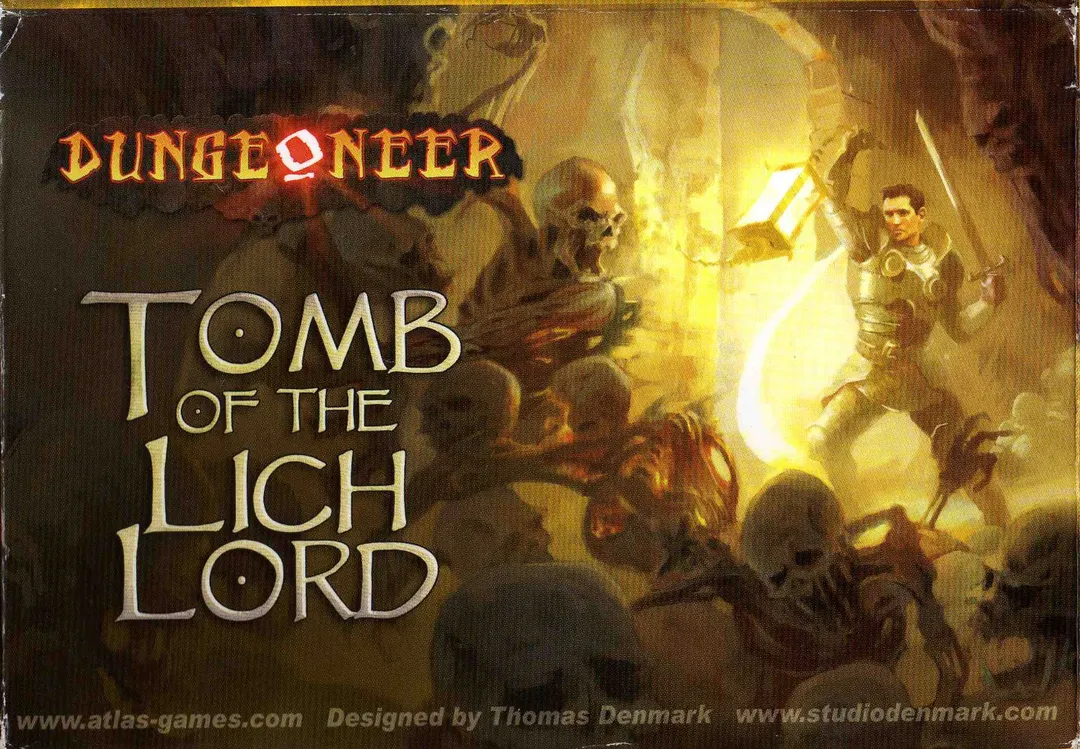
Dungeoneer: Tomb of the Lich Lord
- 2–4 Spieler
- 60 Min.
- Komplexität 2,2/5
- 2003
2003
Regelhilfe für Dungeoneer: Vault of the Fiends
Verständliche Erklärungen zu Spielzügen, Karteneffekten und strittigen Situationen mit Verweisen auf offizielle Quellen und gespeichertem Fragenverlauf.
Für 2 Personen
Was möchtest du wissen?
Antworten stammen aus dem offiziellen Regelheft, mit Seitenangabe zum Nachprüfen.
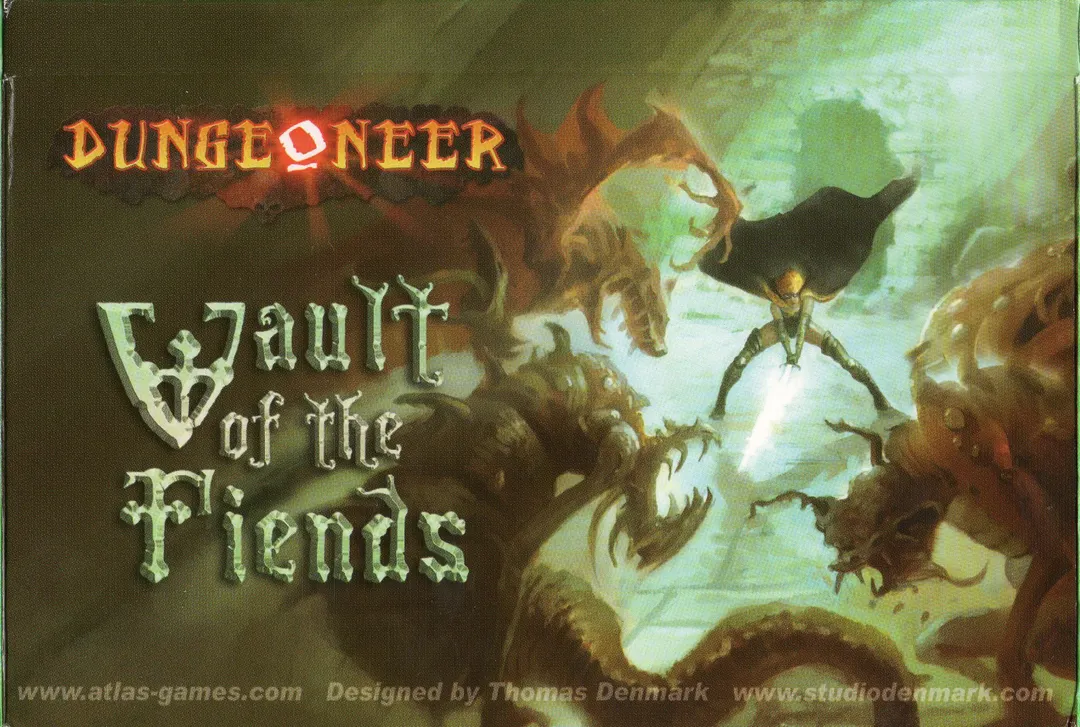
Dungeoneer: Vault of the Fiends ist ein Brettspiel aus dem Jahr 2003 für 2–4 Personen, mit 30 Minuten pro Partie und ab 12 Jahren. Entwickelt wurde es von Thomas Denmark; die wichtigsten Mechaniken sind Variable Player Powers, Hand Management und Dice Rolling.



Auf Englisch
Dungeoneer: Vault of the Fiends is a non-collectable dungeon-crawl card game for 2-4 players. It is meant as an expansion to the Dungeoneer: Tomb of the Lich Lord also published by Atlas Games, but Tomb of the Lich Lord is not necessary to play this set, as Vault of the Fiends is also a stand-alone set. Players play the part of one of six heroes. Each hero has variable melee, magic and speed scores, as well as a unique ability. Your second role in the game is as the malevolent “Dungeonlord”, trying to exterminate the other heroes. You win the game when as a hero you complete 3 Quests such as destroying an evil laboratory or rescuing a princess. An alternate win goal is as the Dungeonlord if all the other heroes are defeated except yours. Vault of the Fiends features a variety of new heroes. Elf Assassin, Human Beastmaster, Drakan Sentinal, Ork Shaman, Dwarf Runecaster, and Gnome Illusionist. Each turn you may: Play monsters, traps and other bad events on opponents Build a dungeon Move around the dungeon with your hero (collect Glory and Peril resources) Play abilities and treasures for yourself Complete a Quest Discard an unwanted card Fill your hand to 5 cards This game is similar to Wiz-War where you race in a dungeon to complete your objectives. This dungeon is created by the laying down of Map cards. You collect Glory and Peril as you move through the dungeon. Glory buys cards that help your hero such as abilities and treasures, but your opponent spends your Peril against you to play monsters, traps and other unpleasant stuff. Combat is similar to Talisman. Roll a six-sided die and add the score you are combating with, either Melee or Magic, to beat your opponent’s roll. The way the cards interact will be familiar to CCG players, in that you have “Permanents” and “Instants” that you can use strategically, or in combinations, but this game is not really a strategy game. Most of the fun comes from the theme, and surprising combination of events that occur. Dungeoneer is likely to appeal to those who enjoy a classic dungeon crawl and RPG like action. Vault of the Fiends features a few new mechanics that should serve to enhance the game play which players of Tomb of the Lich Lord will be familiar with. Some monsters, and attack cards are “pumpable” that means you may spend extra Glory or Peril to boost the effectiveness of the card. Also conditions on the map change such as effects being deactivated when a certain Quest is completed or throwing a switch in a room to extend a bridge across the Fiery Chasm. One of the more unexpected new mechanics are “artifact” Quests, such as the Armor Golem’s Glove which makes your hero more powerful or the Sunken Treasure which makes your hero faster. These do not confer a level, but are rotated 180 degrees so you can read the bonus they provide. Part of the Dungeoneer Series.
Laut Katalog unterstützt Dungeoneer: Vault of the Fiends 2–4 Personen. Diese Spanne entspricht der vom Verlag angegebenen Spielerzahl, das Spiel lässt sich also für jede Gruppengröße innerhalb dieser Spanne aufbauen. Aufbau, einzelne Regeln und Wertungsdetails können je nach Personenzahl trotzdem abweichen; prüfe daher die genaue Konfiguration in der Anleitung deiner Ausgabe.
Die angegebene Spieldauer für Dungeoneer: Vault of the Fiends beträgt 30 Minuten. Das ist die Schätzung des Verlags für eine vollständige Partie. Die tatsächliche Dauer hängt von der Gruppe, der Personenzahl und der Regelkenntnis ab: Erste Partien dauern meist länger, erfahrene Gruppen sind oft schneller fertig. Aufbau und Regelerklärung sind in dieser Schätzung nicht enthalten.
Im Katalog wird Dungeoneer: Vault of the Fiends ab 12 Jahren empfohlen. Das ist die Empfehlung des Verlags und berücksichtigt Leseanforderungen, Regelkomplexität und Kleinteile, nicht nur das Thema. Jüngere Kinder können oft mit Hilfe eines Erwachsenen mitspielen; beachte die Altersangabe deiner Ausgabe und die Brettspielerfahrung deiner Gruppe.
Dungeoneer: Vault of the Fiends hat bei BoardGameGeek eine Komplexitätswertung von 2,2 von 5 und gilt damit als eher leichtes Spiel. Die Wertung zeigt, wie viel Regelwissen, Planung und Entscheidungen eine typische Partie verlangt. Schwerere Spiele brauchen bei der ersten Erklärung mehr Zeit, daher hilft vor dem Spieleabend eine Vorbereitungsanleitung.
Dungeoneer: Vault of the Fiends gehört zu diesen Kategorien: Card Game, Fantasy und Dice. Die wichtigsten Mechaniken sind Variable Player Powers, Hand Management und Dice Rolling. Kategorien beschreiben Thema und Setting eines Spiels, Mechaniken dagegen, was die Spielenden in ihrem Zug tatsächlich tun. Jede Mechanik führt zu einer Katalogseite mit ähnlichen Spielen, falls du etwas Vergleichbares suchst.
Als Autoren von Dungeoneer: Vault of the Fiends sind angegeben: Thomas Denmark. Diese Angaben stammen aus den veröffentlichten Spieldaten und nennen die für das Spieldesign verantwortlichen Personen, nicht die Illustratoren oder Verlage. Die Autorenseiten auf MeepleRules sammeln weitere Titel derselben Autoren – praktisch, wenn dir ein Spiel gefällt und du ähnliche Spiele suchst.
Im Katalog ist Dungeoneer: Vault of the Fiends als Grundspiel aufgeführt. Es lässt sich eigenständig mit dem Material aus der Schachtel spielen und benötigt keinen weiteren Titel. Erweiterungen, sofern es welche gibt, ergänzen neues Material oder neue Regeln und sind im Katalog separat mit einem Verweis auf dieses Grundspiel aufgeführt.