
- BGG-Bewertung
- 7,5
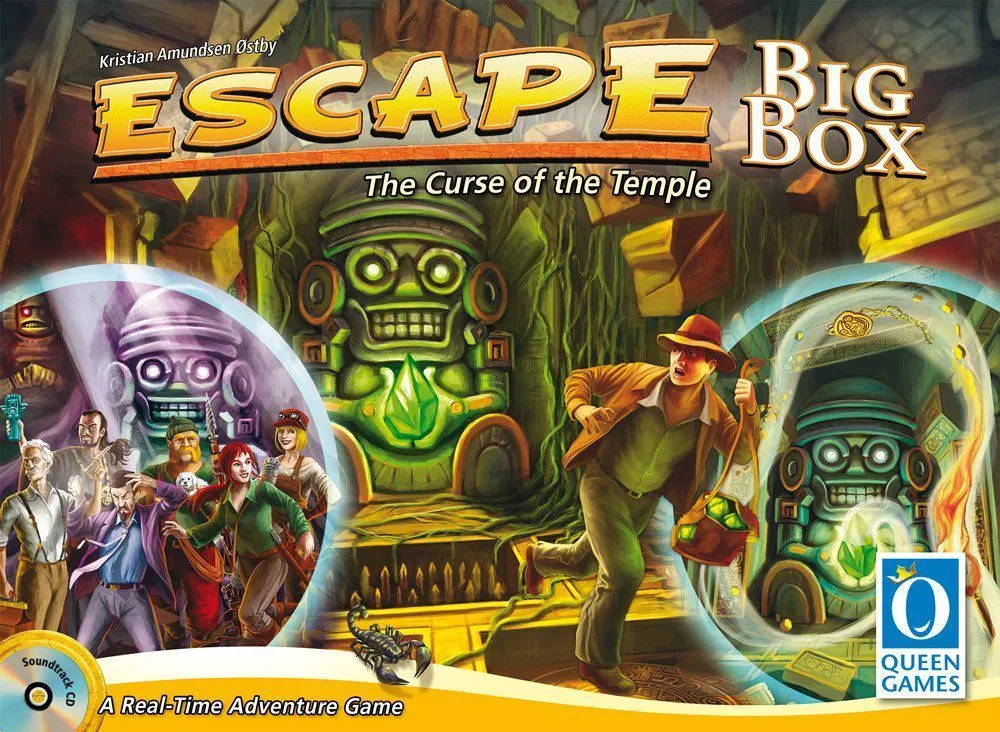
Escape: The Curse of the Temple – Big Box
- 1–6 Spieler
- 10 Min.
- Komplexität 1,5/5
- 2014
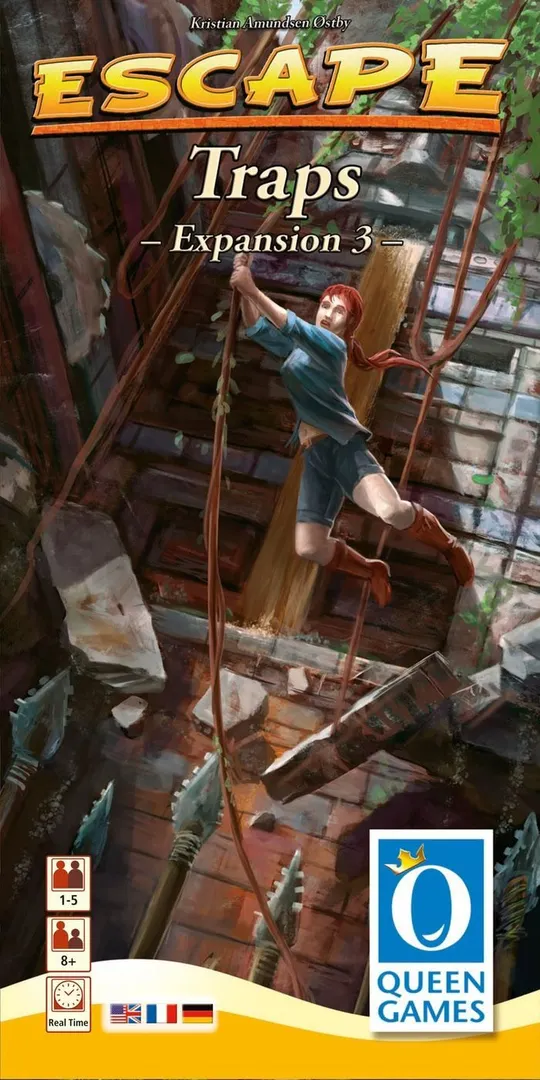
Erweiterung für Escape: The Curse of the Temple
2015
Regelhilfe für Escape: The Curse of the Temple – Expansion 3: Traps
Verständliche Erklärungen zu Spielzügen, Karteneffekten und strittigen Situationen mit Verweisen auf offizielle Quellen und gespeichertem Fragenverlauf.
Was möchtest du wissen?
Antworten stammen aus dem offiziellen Regelheft, mit Seitenangabe zum Nachprüfen.
Escape: The Curse of the Temple – Expansion 3: Traps ist eine Erweiterung für Escape: The Curse of the Temple aus dem Jahr 2015 für 1–5 Personen, mit 10 Minuten pro Partie und ab 8 Jahren. Entwickelt wurde es von Kristian Amundsen Østby; die wichtigsten Mechaniken sind Dice Rolling, Grid Movement und Modular Board.






Auf Englisch
Escape: Traps is the third boxed expansion for Escape: The Curse of the Temple, and like the previous Illusions and Quests expansions, Traps contains two modules that can be used individually or in combination with any other expansions for the game. Trap Chambers: There are 5 different chambers to choose from and 2, 3, or 4 will get mixed into the draw pile during setup. When a Trap Chamber gets drawn, that player puts their adventurer immediately on that tile. Each one has a different effect: Moving Platform (x1)- The chamber gets moved around the board clockwise (without changing the orientation) until it finds a new resting position connected to an empty doorway with that orientation. If none exists, that player has to wait until one shows up. Invocation Chamber (x1)- Place all adventurers (including yourself) in the chamber and now must start exploring from there. After discovery, a player can roll 3 keys to use this effect at another time. Cliff (x2)- The player cannot leave this chamber until they roll either 3 keys or 3 torches (depending on the tile). After this is done, the adventurer gets put on the brick area and can leave as normal. Fellow adventurers can enter the room, but can only contribute golden masks. Slide Trap (x1)- The player cannot return via the slanted entrance and must leave through the other entrances. Time Chambers: 8 Chambers with 2, 3, or 4 getting mixed into the draw pile. When drawn, you put the certain sand timer on the first time icon. Once that time runs out, it gets flipped over onto the next time icon. Either certain tasks must be fulfilled or actions can't be done during the duration of the sand timer. Prohibition Chambers (x4)- Uses the green sand timer. Certain actions cannot be performed (activating gems, using golden masks, exploring new chambers, entering the starting chamber) Sacrifice Chamber (x1)- Uses the blue timer. Each player must put one die in the chamber. Now they have 1 minute to rush to that chamber and retrieve their die or else they lose it. Torch Chamber (x1)- Uses the blue timer. Players have to go to the chamber and roll 7 torches or else 2 players lose 1 die. Lava Chambers (x2)- Uses the blue timer. Players have to fulfill 3 tasks to avoid punishment. If not all 3 get completed before the minute is over, the punishment next to the task gets triggered (add 3/2/1 gems to the depot)
Laut Katalog unterstützt Escape: The Curse of the Temple – Expansion 3: Traps 1–5 Personen. Diese Spanne entspricht der vom Verlag angegebenen Spielerzahl, das Spiel lässt sich also für jede Gruppengröße innerhalb dieser Spanne aufbauen. Aufbau, einzelne Regeln und Wertungsdetails können je nach Personenzahl trotzdem abweichen; prüfe daher die genaue Konfiguration in der Anleitung deiner Ausgabe.
Die angegebene Spieldauer für Escape: The Curse of the Temple – Expansion 3: Traps beträgt 10 Minuten. Das ist die Schätzung des Verlags für eine vollständige Partie. Die tatsächliche Dauer hängt von der Gruppe, der Personenzahl und der Regelkenntnis ab: Erste Partien dauern meist länger, erfahrene Gruppen sind oft schneller fertig. Aufbau und Regelerklärung sind in dieser Schätzung nicht enthalten.
Im Katalog wird Escape: The Curse of the Temple – Expansion 3: Traps ab 8 Jahren empfohlen. Das ist die Empfehlung des Verlags und berücksichtigt Leseanforderungen, Regelkomplexität und Kleinteile, nicht nur das Thema. Jüngere Kinder können oft mit Hilfe eines Erwachsenen mitspielen; beachte die Altersangabe deiner Ausgabe und die Brettspielerfahrung deiner Gruppe.
Escape: The Curse of the Temple – Expansion 3: Traps hat bei BoardGameGeek eine Komplexitätswertung von 1,5 von 5 und gilt damit als leichtes Spiel. Die Wertung zeigt, wie viel Regelwissen, Planung und Entscheidungen eine typische Partie verlangt. Schwerere Spiele brauchen bei der ersten Erklärung mehr Zeit, daher hilft vor dem Spieleabend eine Vorbereitungsanleitung.
Escape: The Curse of the Temple – Expansion 3: Traps gehört zu diesen Kategorien: Dice, Exploration und Adventure. Die wichtigsten Mechaniken sind Dice Rolling, Grid Movement und Modular Board. Kategorien beschreiben Thema und Setting eines Spiels, Mechaniken dagegen, was die Spielenden in ihrem Zug tatsächlich tun. Jede Mechanik führt zu einer Katalogseite mit ähnlichen Spielen, falls du etwas Vergleichbares suchst.
Als Autoren von Escape: The Curse of the Temple – Expansion 3: Traps sind angegeben: Kristian Amundsen Østby. Diese Angaben stammen aus den veröffentlichten Spieldaten und nennen die für das Spieldesign verantwortlichen Personen, nicht die Illustratoren oder Verlage. Die Autorenseiten auf MeepleRules sammeln weitere Titel derselben Autoren – praktisch, wenn dir ein Spiel gefällt und du ähnliche Spiele suchst.
Im Katalog ist Escape: The Curse of the Temple – Expansion 3: Traps als Erweiterung zu Escape: The Curse of the Temple aufgeführt. Erweiterungen ergänzen das Grundspiel um neues Material, neue Regeln oder Szenarien und sind meist nicht eigenständig spielbar; du brauchst also Escape: The Curse of the Temple, um sie zu nutzen. Prüfe, ob deine Ausgabe von Escape: The Curse of the Temple kompatibel ist, da manche Erweiterungen zwischen den Auflagen überarbeitet wurden.