
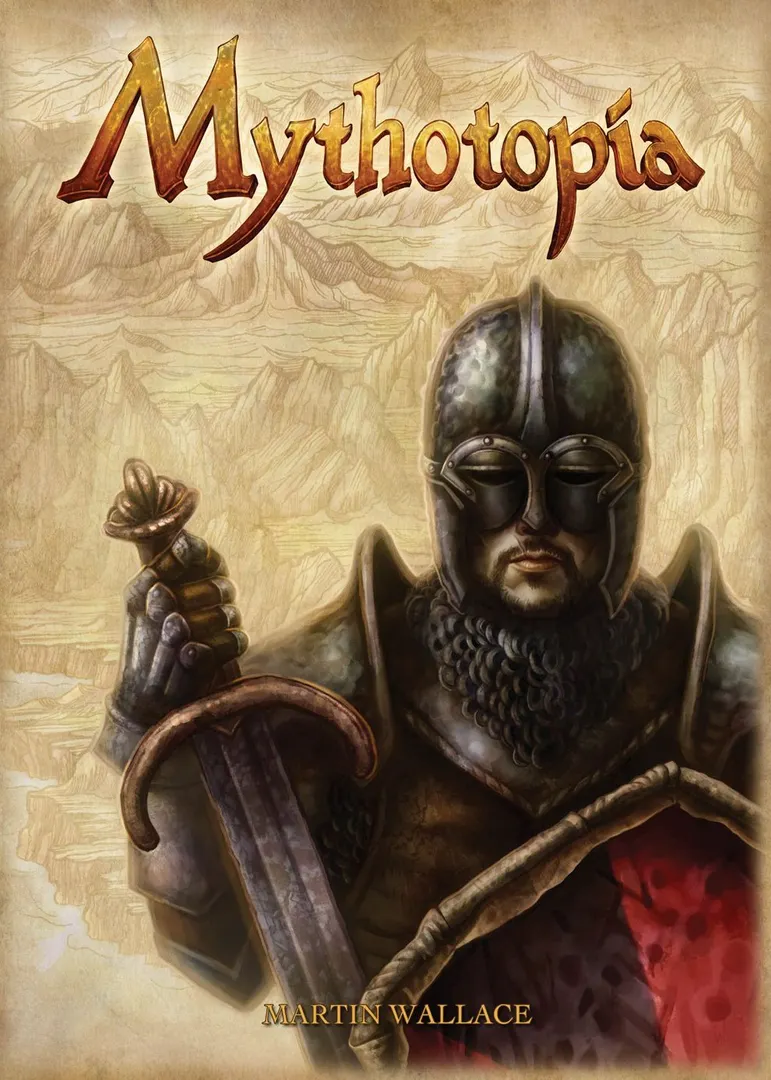
- BGG-Rang
- BGG #2.866
- BGG-Bewertung
- 6,8
Mythotopia
- 2–4 Spieler
- 60 Min.
- Komplexität 3,1/5
- 2014
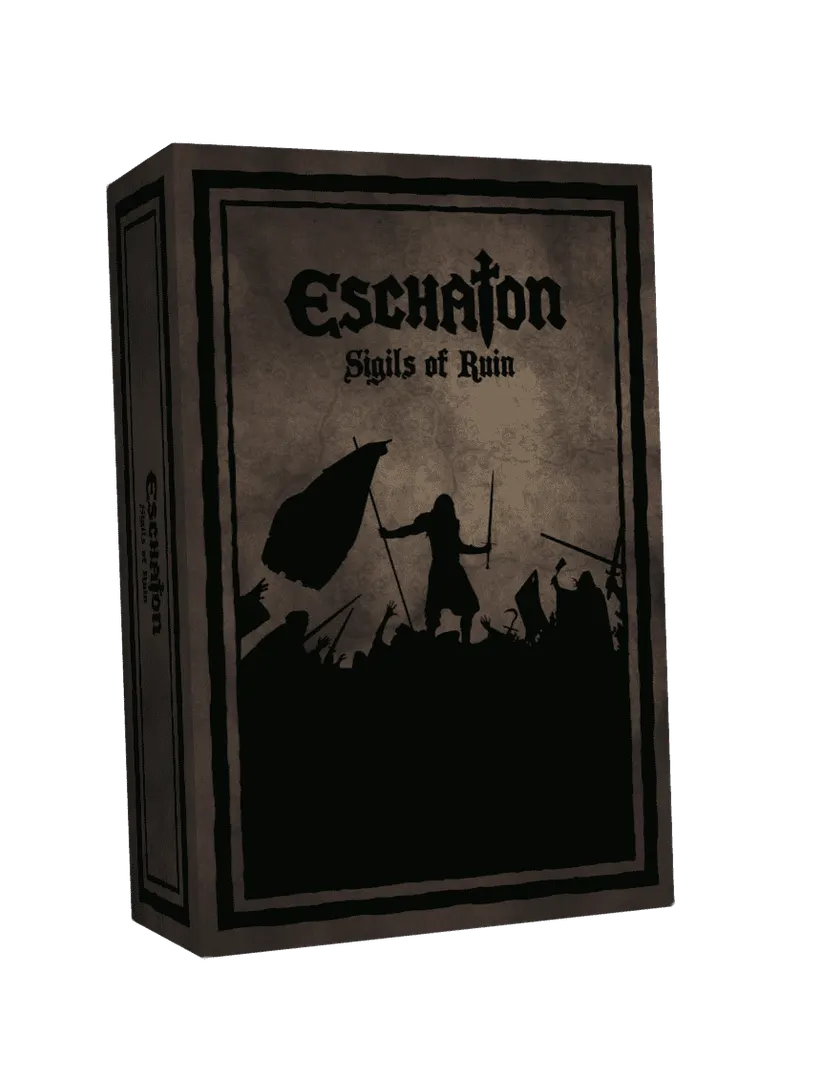
Regelhilfe für Eschaton: Sigils of Ruin
Verständliche Erklärungen zu Spielzügen, Karteneffekten und strittigen Situationen mit Verweisen auf offizielle Quellen und gespeichertem Fragenverlauf.
Was möchtest du wissen?
Antworten stammen aus dem offiziellen Regelheft, mit Seitenangabe zum Nachprüfen.
Eschaton: Sigils of Ruin ist eine Erweiterung für Eschaton aus dem Jahr 2017 für 2–6 Personen und mit 60–180 Minuten pro Partie. Entwickelt wurde es von Adam Watts, Diha und Petras Vaznelis; die wichtigsten Mechaniken sind Hand Management, Area Majority / Influence und Open Drafting.

Auf Englisch
Sigils of Ruin is an expansion for Eschaton. Before the great battle at the end of days, each player chooses one of six special characters to act as champion for their cult deck. This champion will play alongside other cultists, but will influence the overall play style of the deck in a direction defined by the champion’s affiliation. Partnered with each champion is a corresponding avatar. Through the ritual invocations based on their champion’s affiliation, a cult will eventually be able to summon their avatar to join their deck. These avatars are not only powerful characters, but the direct path to the Sigils of Ruin. Once the avatar has served their purpose on the mortal plane, they can be sacrificed to channel the cult’s corresponding sigil. When conjured, these sigils are immovable auras that bestow their cult with unique abilities and victory conditions. Although no two paths are the same, they each demand equal favor from the Dark One. —description from the publisher
Laut Katalog unterstützt Eschaton: Sigils of Ruin 2–6 Personen. Diese Spanne entspricht der vom Verlag angegebenen Spielerzahl, das Spiel lässt sich also für jede Gruppengröße innerhalb dieser Spanne aufbauen. Aufbau, einzelne Regeln und Wertungsdetails können je nach Personenzahl trotzdem abweichen; prüfe daher die genaue Konfiguration in der Anleitung deiner Ausgabe.
Die angegebene Spieldauer für Eschaton: Sigils of Ruin beträgt 60–180 Minuten. Das ist die Schätzung des Verlags für eine vollständige Partie. Die tatsächliche Dauer hängt von der Gruppe, der Personenzahl und der Regelkenntnis ab: Erste Partien dauern meist länger, erfahrene Gruppen sind oft schneller fertig. Aufbau und Regelerklärung sind in dieser Schätzung nicht enthalten.
Eschaton: Sigils of Ruin hat bei BoardGameGeek eine Komplexitätswertung von 2,7 von 5 und gilt damit als eher leichtes Spiel. Die Wertung zeigt, wie viel Regelwissen, Planung und Entscheidungen eine typische Partie verlangt. Schwerere Spiele brauchen bei der ersten Erklärung mehr Zeit, daher hilft vor dem Spieleabend eine Vorbereitungsanleitung.
Eschaton: Sigils of Ruin gehört zu diesen Kategorien: Card Game, Fantasy und Territory Building. Die wichtigsten Mechaniken sind Hand Management, Area Majority / Influence und Open Drafting. Kategorien beschreiben Thema und Setting eines Spiels, Mechaniken dagegen, was die Spielenden in ihrem Zug tatsächlich tun. Jede Mechanik führt zu einer Katalogseite mit ähnlichen Spielen, falls du etwas Vergleichbares suchst.
Als Autoren von Eschaton: Sigils of Ruin sind angegeben: Adam Watts, Diha und Petras Vaznelis. Diese Angaben stammen aus den veröffentlichten Spieldaten und nennen die für das Spieldesign verantwortlichen Personen, nicht die Illustratoren oder Verlage. Die Autorenseiten auf MeepleRules sammeln weitere Titel derselben Autoren – praktisch, wenn dir ein Spiel gefällt und du ähnliche Spiele suchst.
Im Katalog ist Eschaton: Sigils of Ruin als Erweiterung zu Eschaton aufgeführt. Erweiterungen ergänzen das Grundspiel um neues Material, neue Regeln oder Szenarien und sind meist nicht eigenständig spielbar; du brauchst also Eschaton, um sie zu nutzen. Prüfe, ob deine Ausgabe von Eschaton kompatibel ist, da manche Erweiterungen zwischen den Auflagen überarbeitet wurden.