- BGG-Bewertung
- 8,6
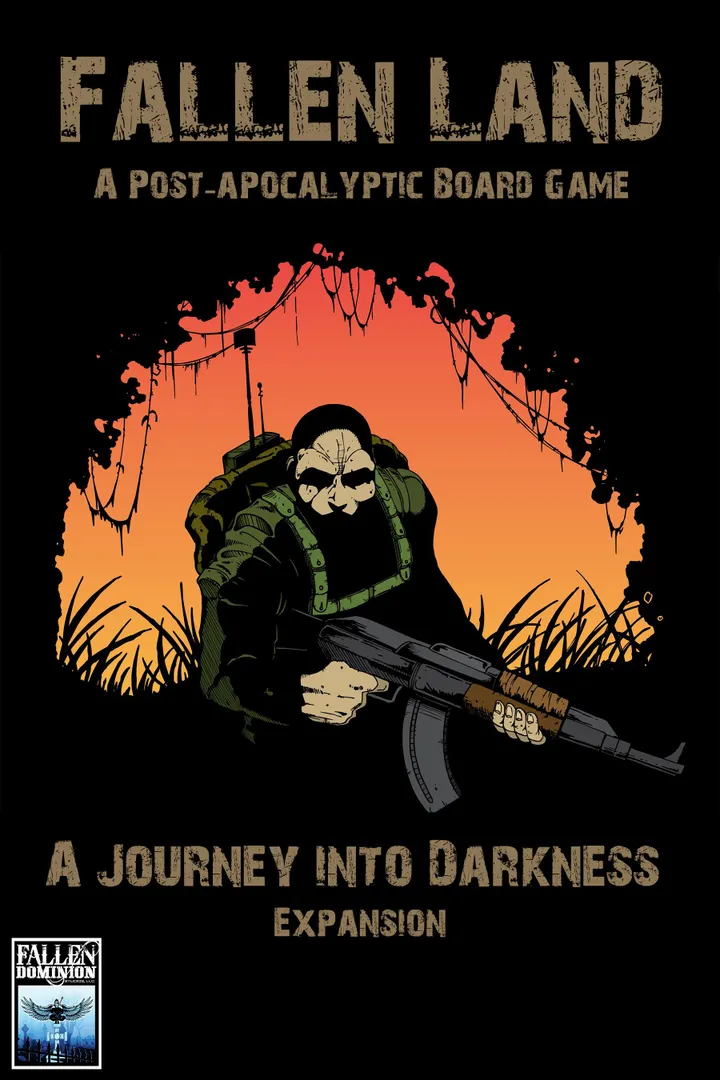
Fallen Land: A Journey into Darkness
- 1–6 Spieler
- 60–360 Min.
- 2017
2017
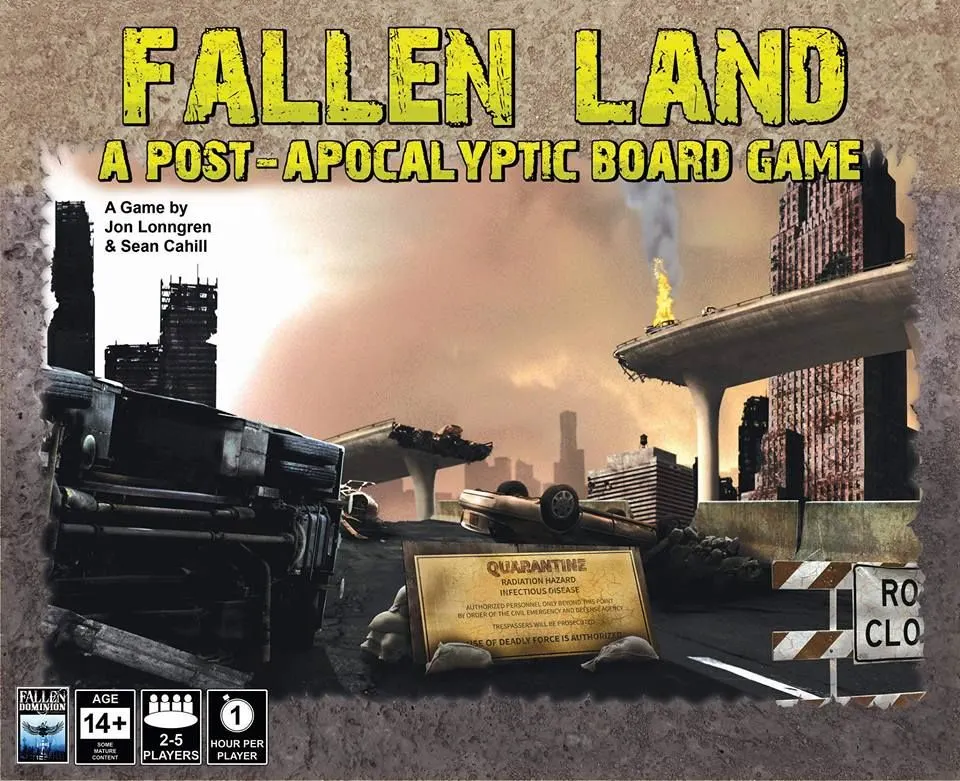
Regelhilfe für Fallen Land: A Post Apocalyptic Board Game
Verständliche Erklärungen zu Spielzügen, Karteneffekten und strittigen Situationen mit Verweisen auf offizielle Quellen und gespeichertem Fragenverlauf.
Was möchtest du wissen?
Antworten stammen aus dem offiziellen Regelheft, mit Seitenangabe zum Nachprüfen.
Fallen Land: A Post Apocalyptic Board Game ist ein Brettspiel aus dem Jahr 2017 für 2–5 Personen, mit 120–300 Minuten pro Partie und ab 14 Jahren. Entwickelt wurde es von Sean Cahill und Jon Lonngren; die wichtigsten Mechaniken sind Variable Player Powers, Trading und Area Movement.





Auf Englisch
Set in a post-apocalyptic sci-fi setting, Fallen Land: A Post Apocalyptic Board Game is a hybrid game that combines the elements of a strategy board game, with card building and role-playing. It is driven by macabre stories of a world gone mad and features adventure, politics and economics to deliver an unlimited sandbox experience. Each game the variables change: cards, player interactions, stories, strategies and threats. While the game has a strong pulp influence, its roots stem from Cold War studies. We have expanded upon this research to arrive at our game’s premise: What would happen after a nuclear and biological apocalypse? Our answer is Fallen Land. As a player, you are the leader of a unique faction of survivors competing for primacy in the ruinous aftermath of post-apocalyptic America. You must manage and enhance your town, protect your citizens and secure resources. You will also have to make and break treaties to endure, amidst a myriad of bribery and betrayal by the other players. But that is just where the adventure begins! You must also direct your agents (a party of characters), to explore the rugged landscape, establish your territory and solidify your agenda. Game play is comprised of Turns. Each represents one month and is divided into Phases and Sub-Phases. The First Player resolves each Phase and Sub-Phase followed clockwise by the other players, before proceeding to the next Phase or Sub-Phase. A Turn is over when all players have had the opportunity to act or pass on each Phase. I. Effects Phase * 1.) Resolve. II. Town Business Phase * 1.) Deal. 2.) Resource Production. 3.) Auction House. 4.) Roll 1d10 on Town Events Chart. 5.) Financial period. ~Sell. ~Purchase. ~Hire (NPCMs). III. Party Exploits Phase * 1.) NPCMs move. 2.) Choose Party Exploits (4 weeks to spend). ~Movement, spend 1 week. ~Encounter, spend 1 week. ~PVP, spend 1 week. ~Resource, spend 2 weeks. ~Healing, spend 2 weeks. ~Mission, spend 3 weeks. IV. End Turn Phase * 1.) Adjust Turn Marker. 2.) Pass the First Player Sheet. Resolve an Action Card in each Phase or Sub-Phase as directed by the card. A player's town is simulated by a Town Play Mat. Players organize their owned Resources, inventory, Party Characters, excess Characters and movement bonuses here. In addition, Town Play Mats can be upgraded three different ways: Town Defense Chips, Town Technologies and Action Cards. The first two upgrades are available for purchase during the Town Business Phase. However, Action Cards are dealt at the beginning of each Turn and are also drawn as a reward. Players also manage their Party consisting of five Character Cards. Characters may be equipped with gear (Spoils Cards), to increase their Base Skills. A party can move around the map, draw Encounter and Mission cards (stories) which contain Skill Checks (challenges) and even attack another player's Party in PVP. Dice are rolled for these many "deeds" to determine the outcome. There are seven decks of cards. These are drawn and played throughout the game. Some are stories, such as Encounter and Mission Cards, Characters are a Faction's agents, and Spoils are equipment/vehicle/gear. Lastly, Action Cards modify the story and/or game play. To win, one of two Victory Conditions is necessary, either 20 Prestige or 80 Town Health. Prestige represents your reputation as a leader, while Town Health represents your town’s prosperity and number of its citizens. Both conditions are marked on their respective Victory Tracks bordering the map. Adventure and intrigue await! We hope you have the opportunity to play Fallen Land and that you enjoy playing it as much as we have enjoyed creating it for you.
Laut Katalog unterstützt Fallen Land: A Post Apocalyptic Board Game 2–5 Personen. Diese Spanne entspricht der vom Verlag angegebenen Spielerzahl, das Spiel lässt sich also für jede Gruppengröße innerhalb dieser Spanne aufbauen. Aufbau, einzelne Regeln und Wertungsdetails können je nach Personenzahl trotzdem abweichen; prüfe daher die genaue Konfiguration in der Anleitung deiner Ausgabe.
Die angegebene Spieldauer für Fallen Land: A Post Apocalyptic Board Game beträgt 120–300 Minuten. Das ist die Schätzung des Verlags für eine vollständige Partie. Die tatsächliche Dauer hängt von der Gruppe, der Personenzahl und der Regelkenntnis ab: Erste Partien dauern meist länger, erfahrene Gruppen sind oft schneller fertig. Aufbau und Regelerklärung sind in dieser Schätzung nicht enthalten.
Im Katalog wird Fallen Land: A Post Apocalyptic Board Game ab 14 Jahren empfohlen. Das ist die Empfehlung des Verlags und berücksichtigt Leseanforderungen, Regelkomplexität und Kleinteile, nicht nur das Thema. Jüngere Kinder können oft mit Hilfe eines Erwachsenen mitspielen; beachte die Altersangabe deiner Ausgabe und die Brettspielerfahrung deiner Gruppe.
Fallen Land: A Post Apocalyptic Board Game hat bei BoardGameGeek eine Komplexitätswertung von 3,7 von 5 und gilt damit als mittelschweres Spiel. Die Wertung zeigt, wie viel Regelwissen, Planung und Entscheidungen eine typische Partie verlangt. Schwerere Spiele brauchen bei der ersten Erklärung mehr Zeit, daher hilft vor dem Spieleabend eine Vorbereitungsanleitung.
Fallen Land: A Post Apocalyptic Board Game gehört zu diesen Kategorien: Card Game, Economic und Adventure. Die wichtigsten Mechaniken sind Variable Player Powers, Trading und Area Movement. Kategorien beschreiben Thema und Setting eines Spiels, Mechaniken dagegen, was die Spielenden in ihrem Zug tatsächlich tun. Jede Mechanik führt zu einer Katalogseite mit ähnlichen Spielen, falls du etwas Vergleichbares suchst.
Als Autoren von Fallen Land: A Post Apocalyptic Board Game sind angegeben: Sean Cahill und Jon Lonngren. Diese Angaben stammen aus den veröffentlichten Spieldaten und nennen die für das Spieldesign verantwortlichen Personen, nicht die Illustratoren oder Verlage. Die Autorenseiten auf MeepleRules sammeln weitere Titel derselben Autoren – praktisch, wenn dir ein Spiel gefällt und du ähnliche Spiele suchst.
Im Katalog ist Fallen Land: A Post Apocalyptic Board Game als Grundspiel aufgeführt. Es lässt sich eigenständig mit dem Material aus der Schachtel spielen und benötigt keinen weiteren Titel. Erweiterungen, sofern es welche gibt, ergänzen neues Material oder neue Regeln und sind im Katalog separat mit einem Verweis auf dieses Grundspiel aufgeführt.