- BGG-Bewertung
- 7,4
Fief: Les Reliques
- 3–6 Spieler
- 120 Min.
- Komplexität 4,0/5
- 2011
2011
Regelhilfe für Fief
Verständliche Erklärungen zu Spielzügen, Karteneffekten und strittigen Situationen mit Verweisen auf offizielle Quellen und gespeichertem Fragenverlauf.
Für 3 Personen
Was möchtest du wissen?
Antworten stammen aus dem offiziellen Regelheft, mit Seitenangabe zum Nachprüfen.
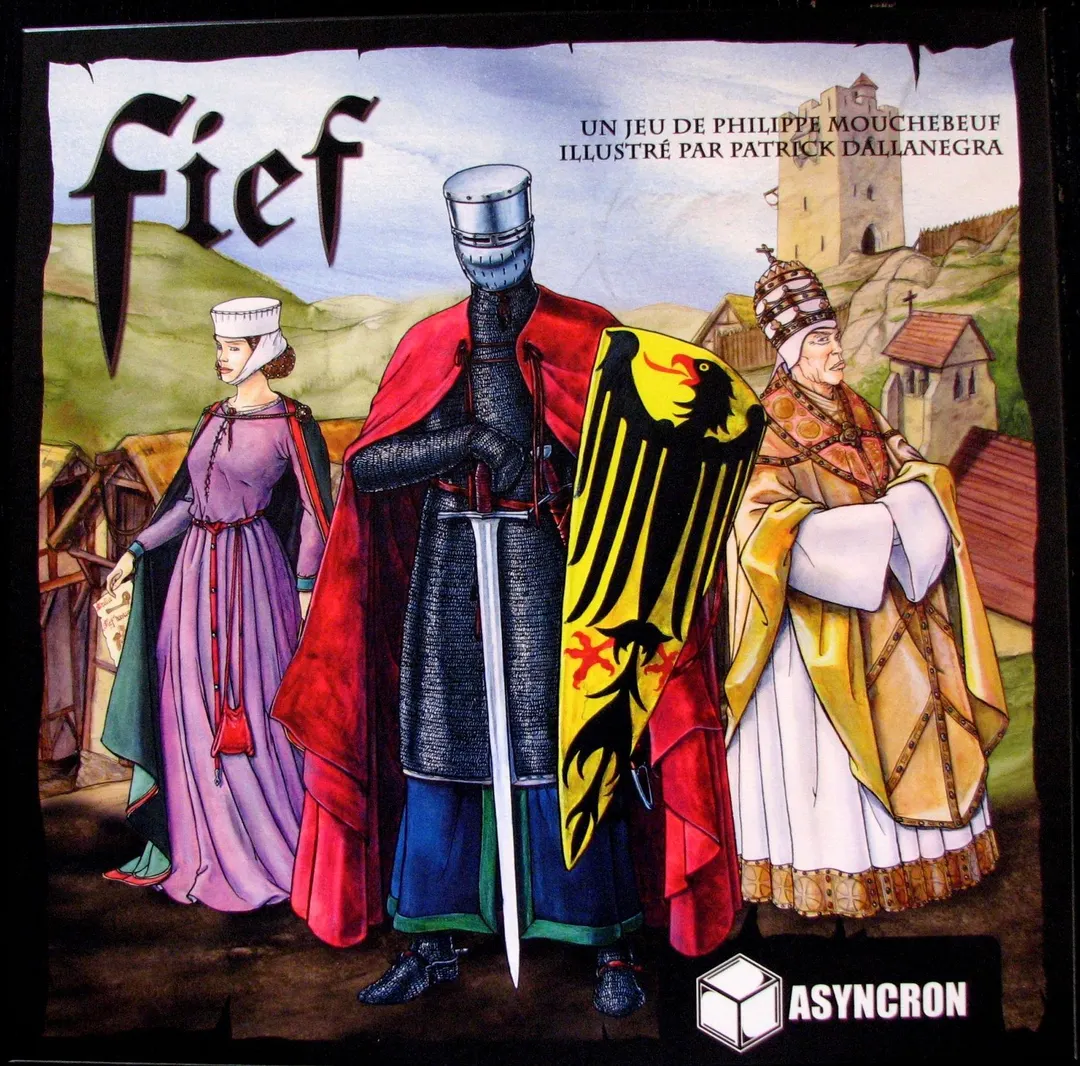
Fief ist ein Brettspiel aus dem Jahr 2011 für 3–6 Personen, mit 120 Minuten pro Partie und ab 12 Jahren. Entwickelt wurde es von Philippe Mouchebeuf; die wichtigsten Mechaniken sind Area Movement, Dice Rolling und Area Majority / Influence.



Auf Englisch
Fief is a game of strategic conquest and diplomacy that simulates a military, economic, and political fight between several lords in the Middle Ages – with players being those lords and representing noble families that want to have the most powerful kingdom in the land. Fief is played in a fictional kingdom in the Middle Ages, with the villages connected by roads and each village belonging to both a fief and a bishopric. Each player starts with a lord, a castle and some troops in one of the villages. At the end of each round, check to see whether one or more players have won, with shared wins being possible through alliances created by marriage. Winning solo is tough, so players need to negotiate, make deals and form alliances. To do this, players use their three embassy pawns; by spending a pawn, a player can have a three-minute-long private conversation with one or more other players to make whatever deals they wish. You have only three pawns, so plan well for these talks! Players draw cards each round: character cards that can bring new lords into play and event cards such as good harvests, good weather and taxes. They pay the costs to play cards, with some cards being playable at any time to upset current events with a surprise assassination or underground invasion. Players then receive income, with which they can buy troops and buildings, and move lords and troops among villages, with troops never being able to travel without a lord. If troops from more than one player end up in the same village, they battle until one side is eliminated or forced to flee. If a player controls all villages in a fief and has at least one castle there, he can purchase the title of the fief and assign it to a lord, with the title being passed to an heir if the lord subsequently dies. Players also try to secure the titles of king and pope, which provide benefits of their own, as well as points. Each title of fief, king or pope is worth a point, and the first player to collect three points wins. Two players win if they are allied and have a total of four points. The 2011 version of Fief has vastly revised rules with new materials and set-ups for shorter game play in addition to the long game. Reimplements: Fief Fief 2
Laut Katalog unterstützt Fief 3–6 Personen. Diese Spanne entspricht der vom Verlag angegebenen Spielerzahl, das Spiel lässt sich also für jede Gruppengröße innerhalb dieser Spanne aufbauen. Aufbau, einzelne Regeln und Wertungsdetails können je nach Personenzahl trotzdem abweichen; prüfe daher die genaue Konfiguration in der Anleitung deiner Ausgabe.
Die angegebene Spieldauer für Fief beträgt 120 Minuten. Das ist die Schätzung des Verlags für eine vollständige Partie. Die tatsächliche Dauer hängt von der Gruppe, der Personenzahl und der Regelkenntnis ab: Erste Partien dauern meist länger, erfahrene Gruppen sind oft schneller fertig. Aufbau und Regelerklärung sind in dieser Schätzung nicht enthalten.
Im Katalog wird Fief ab 12 Jahren empfohlen. Das ist die Empfehlung des Verlags und berücksichtigt Leseanforderungen, Regelkomplexität und Kleinteile, nicht nur das Thema. Jüngere Kinder können oft mit Hilfe eines Erwachsenen mitspielen; beachte die Altersangabe deiner Ausgabe und die Brettspielerfahrung deiner Gruppe.
Fief hat bei BoardGameGeek eine Komplexitätswertung von 3,7 von 5 und gilt damit als mittelschweres Spiel. Die Wertung zeigt, wie viel Regelwissen, Planung und Entscheidungen eine typische Partie verlangt. Schwerere Spiele brauchen bei der ersten Erklärung mehr Zeit, daher hilft vor dem Spieleabend eine Vorbereitungsanleitung.
Fief gehört zu diesen Kategorien: Wargame, Medieval und Political. Die wichtigsten Mechaniken sind Area Movement, Dice Rolling und Area Majority / Influence. Kategorien beschreiben Thema und Setting eines Spiels, Mechaniken dagegen, was die Spielenden in ihrem Zug tatsächlich tun. Jede Mechanik führt zu einer Katalogseite mit ähnlichen Spielen, falls du etwas Vergleichbares suchst.
Als Autoren von Fief sind angegeben: Philippe Mouchebeuf. Diese Angaben stammen aus den veröffentlichten Spieldaten und nennen die für das Spieldesign verantwortlichen Personen, nicht die Illustratoren oder Verlage. Die Autorenseiten auf MeepleRules sammeln weitere Titel derselben Autoren – praktisch, wenn dir ein Spiel gefällt und du ähnliche Spiele suchst.
Im Katalog ist Fief als Grundspiel aufgeführt. Es lässt sich eigenständig mit dem Material aus der Schachtel spielen und benötigt keinen weiteren Titel. Erweiterungen, sofern es welche gibt, ergänzen neues Material oder neue Regeln und sind im Katalog separat mit einem Verweis auf dieses Grundspiel aufgeführt.