
- BGG-Bewertung
- 8,0
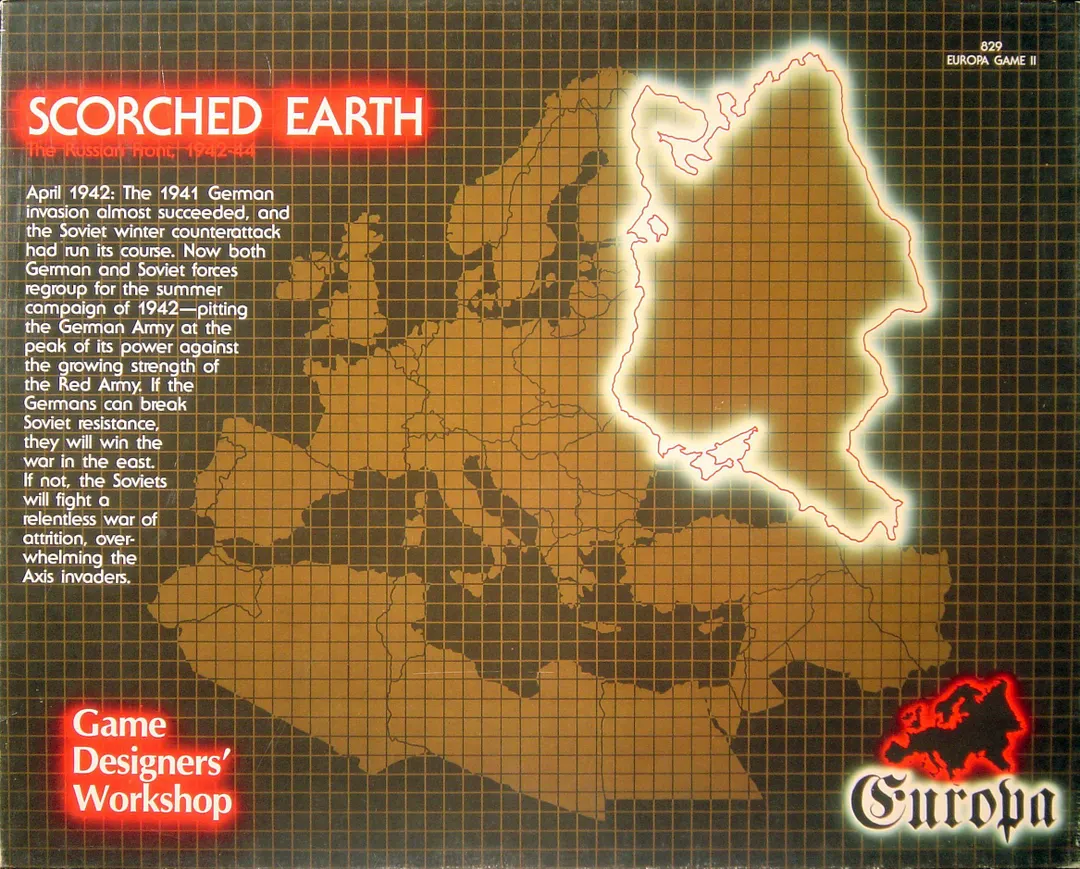
Scorched Earth
- 2 Spieler
- 2400–6000 Min.
- Komplexität 4,4/5
- 1987
1984
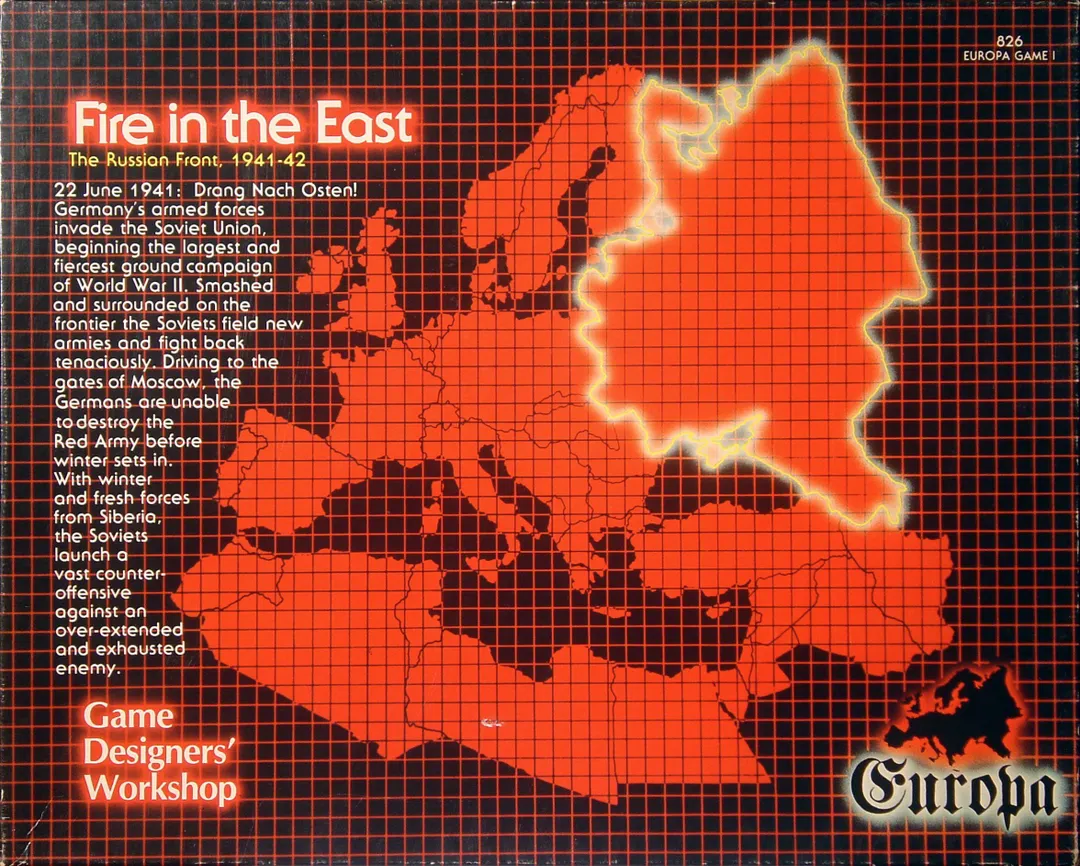
Regelhilfe für Fire in the East
Verständliche Erklärungen zu Spielzügen, Karteneffekten und strittigen Situationen mit Verweisen auf offizielle Quellen und gespeichertem Fragenverlauf.
Für 2 Personen
Was möchtest du wissen?
Antworten stammen aus dem offiziellen Regelheft, mit Seitenangabe zum Nachprüfen.
Fire in the East ist ein Brettspiel aus dem Jahr 1984 für 2–4 Personen, mit 3.000 Minuten pro Partie und ab 12 Jahren. Entwickelt wurde es von Frank Chadwick, John Astell und Paul Richard "Rich" Banner; die wichtigsten Mechaniken sind Dice Rolling, Hexagon Grid und Simulation.
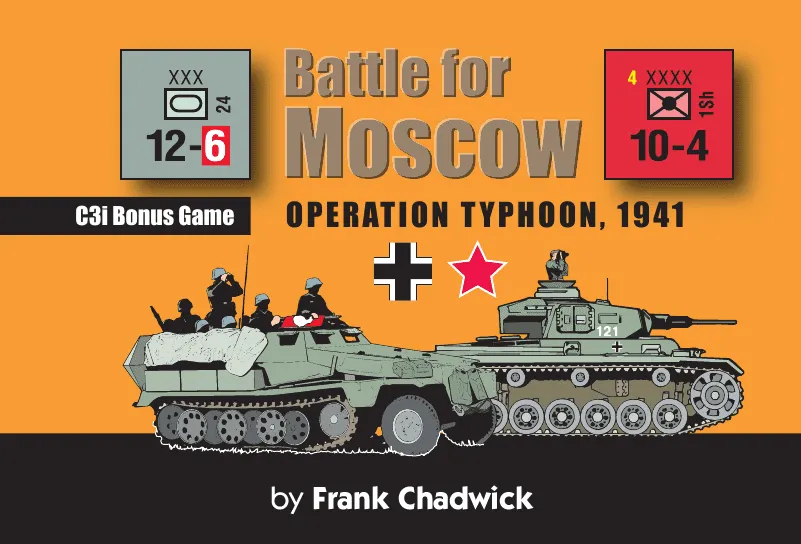




Auf Englisch
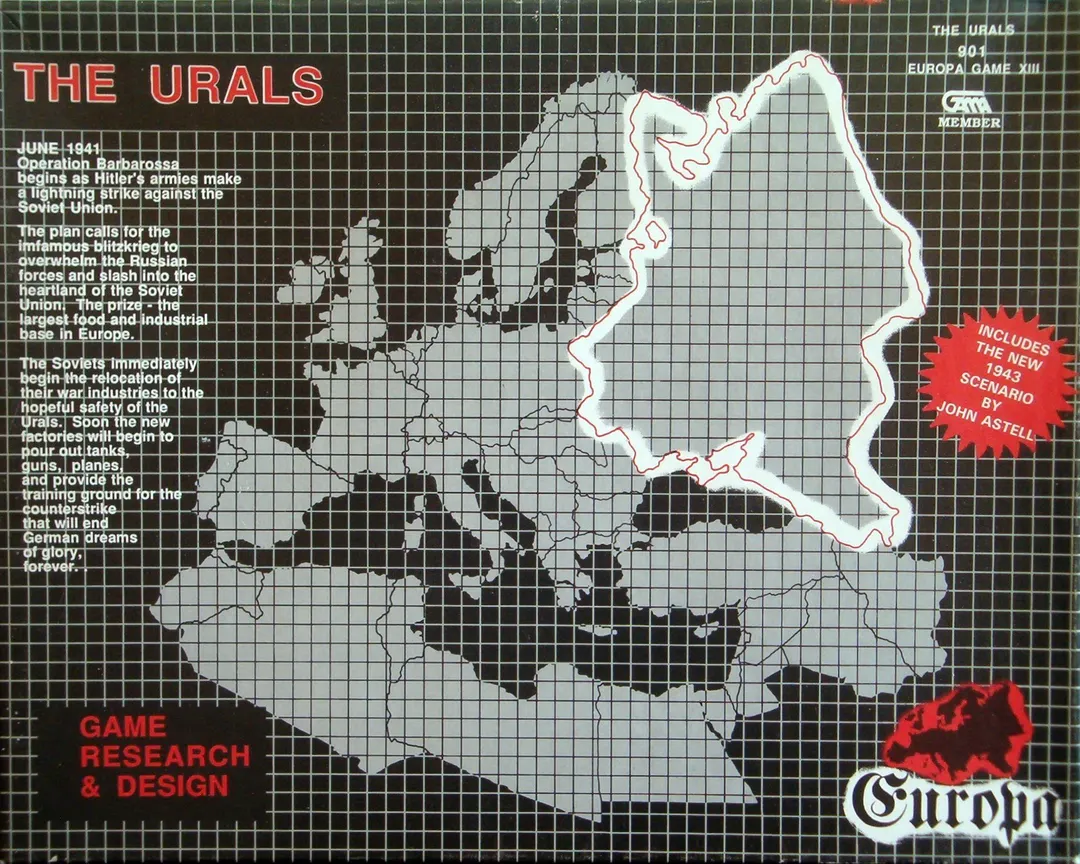
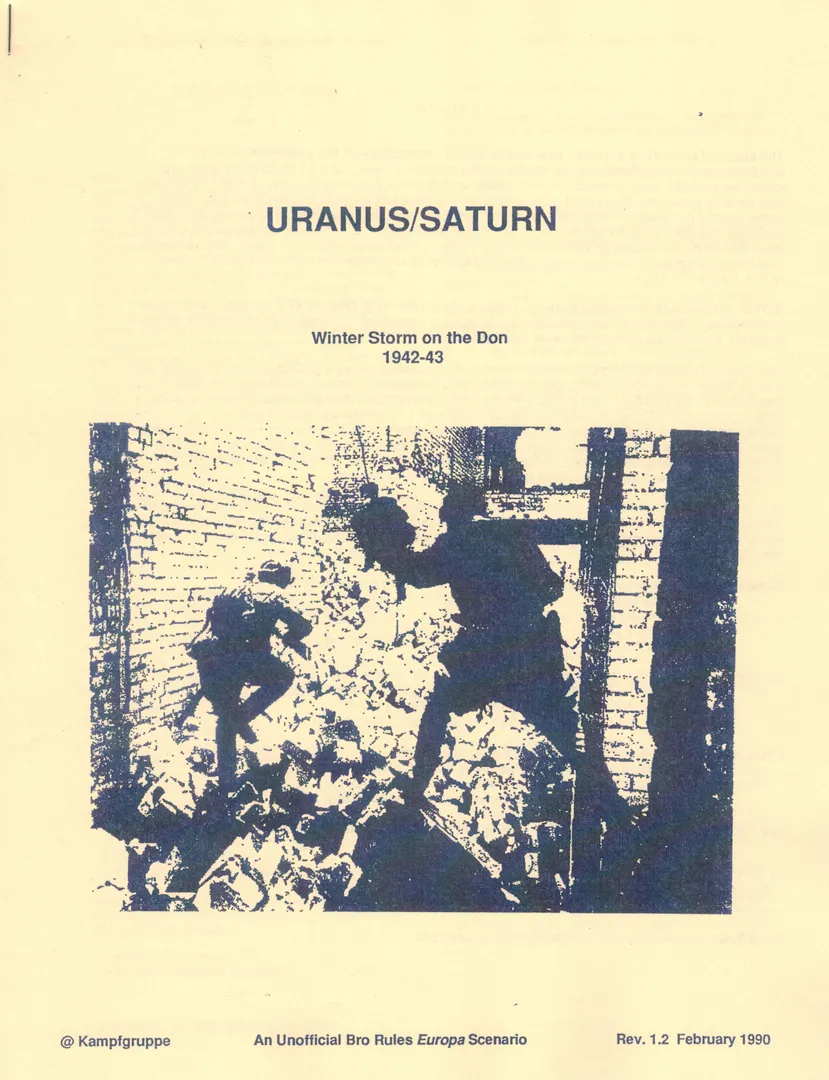
Fire in the East covers the war in the Soviet Union from the start of the Barbarossa invasion in June 1941 through the end of the Soviet winter counteroffensive in March 1942. It requires two players, with one player controlling the German and German-allied (Rumanian, Finnish, etc.) forces and the other controlling the various Soviet forces: regular troops, militia divisions,and Guards formations. The size of the game makes it well suited to team play: each side can easily be played by a team of two or three players. Fire in the East's 6 multi-color maps stretch from Warsaw to Stalingrad, from Murmansk to Sevastopol. Terrain is analyzed in detail, with over 20 different types, including two types of rivers, forests, and mountains and four types of cities. There are over 2500 counters each marked with its historical designation - the most accurate and detailed order of battle ever published for the Eastern Front. The counters represent divisions, and independent brigades, regiments, and battalions. Units are highly differentiated by type, from armor, infantry, and artillery to Soviet Guards, NKVD, and katyushas, German flammpanzers and railroad artillery, and Finnish ski troops. Air units vary from outmoded I-15 biplane fighters to the Me-109F, from Ju 87 Stukas and Il-2 Sturmoviks to Pe-8 long-range bombers. The capital ships of the Soviet Baltic and Black Sea fleets are also represented. The rules include extensive armor and antitank effects, plus special capabilities for many other unit types, from assault engineers to paratroopers. Every combat arm has its own abilities and limitations, and the players must use them all to achieve victory. The air system is very detailed - almost a game in itself. Logistics rules cover the different gauges of German and Soviet rails and allow supply lines to be extended temporarily by trucks. Isolated units gradually lose their combat abiliites and then collapse, but those besieged in cities and fortresses survive longer. Other important rules cover weather effects, the unique nature of the Arctic front, the need for artillery support, the German surprise attack, doctrinal limits of Soviet mechanized units, and more. Fire in the East is extremely challenging to both sides. German panzer spearheads can break through the front almost at will, but soon will find themselves outrunning their supply lines, infantry, and air support. Careful play and the optimum use of all arms are needed to travel the long road to Moscow. The Soviets are faced with the need to preserve their army for the final defense of major cities while delaying the German advance to make that defense possible by determined resistance and carefully chosen local counterattacks. Game Components: six 21" x 27" maps (1B, 2A, 3B, 4A, 5B, 6A) over 2880 die-cut counters (Europa 1A, 2A, 3A, 4A, 5A, 36, 37, 38, 39, 40, 41, 42) a complete set of rules a complete set of charts two dice (source: back of the box and user's description)
Laut Katalog unterstützt Fire in the East 2–4 Personen. Diese Spanne entspricht der vom Verlag angegebenen Spielerzahl, das Spiel lässt sich also für jede Gruppengröße innerhalb dieser Spanne aufbauen. Aufbau, einzelne Regeln und Wertungsdetails können je nach Personenzahl trotzdem abweichen; prüfe daher die genaue Konfiguration in der Anleitung deiner Ausgabe.
Die angegebene Spieldauer für Fire in the East beträgt 3.000 Minuten. Das ist die Schätzung des Verlags für eine vollständige Partie. Die tatsächliche Dauer hängt von der Gruppe, der Personenzahl und der Regelkenntnis ab: Erste Partien dauern meist länger, erfahrene Gruppen sind oft schneller fertig. Aufbau und Regelerklärung sind in dieser Schätzung nicht enthalten.
Im Katalog wird Fire in the East ab 12 Jahren empfohlen. Das ist die Empfehlung des Verlags und berücksichtigt Leseanforderungen, Regelkomplexität und Kleinteile, nicht nur das Thema. Jüngere Kinder können oft mit Hilfe eines Erwachsenen mitspielen; beachte die Altersangabe deiner Ausgabe und die Brettspielerfahrung deiner Gruppe.
Fire in the East hat bei BoardGameGeek eine Komplexitätswertung von 4,3 von 5 und gilt damit als schweres Spiel. Die Wertung zeigt, wie viel Regelwissen, Planung und Entscheidungen eine typische Partie verlangt. Schwerere Spiele brauchen bei der ersten Erklärung mehr Zeit, daher hilft vor dem Spieleabend eine Vorbereitungsanleitung.
Fire in the East gehört zu diesen Kategorien: Wargame und World War II. Die wichtigsten Mechaniken sind Dice Rolling, Hexagon Grid und Simulation. Kategorien beschreiben Thema und Setting eines Spiels, Mechaniken dagegen, was die Spielenden in ihrem Zug tatsächlich tun. Jede Mechanik führt zu einer Katalogseite mit ähnlichen Spielen, falls du etwas Vergleichbares suchst.
Als Autoren von Fire in the East sind angegeben: Frank Chadwick, John Astell und Paul Richard "Rich" Banner. Diese Angaben stammen aus den veröffentlichten Spieldaten und nennen die für das Spieldesign verantwortlichen Personen, nicht die Illustratoren oder Verlage. Die Autorenseiten auf MeepleRules sammeln weitere Titel derselben Autoren – praktisch, wenn dir ein Spiel gefällt und du ähnliche Spiele suchst.
Im Katalog ist Fire in the East als Grundspiel aufgeführt. Es lässt sich eigenständig mit dem Material aus der Schachtel spielen und benötigt keinen weiteren Titel. Erweiterungen, sofern es welche gibt, ergänzen neues Material oder neue Regeln und sind im Katalog separat mit einem Verweis auf dieses Grundspiel aufgeführt.