

- BGG-Rang
- BGG #8.795
- BGG-Bewertung
- 5,9
Spank the Monkey
- 2–6 Spieler
- 30 Min.
- Komplexität 1,4/5
- 2003
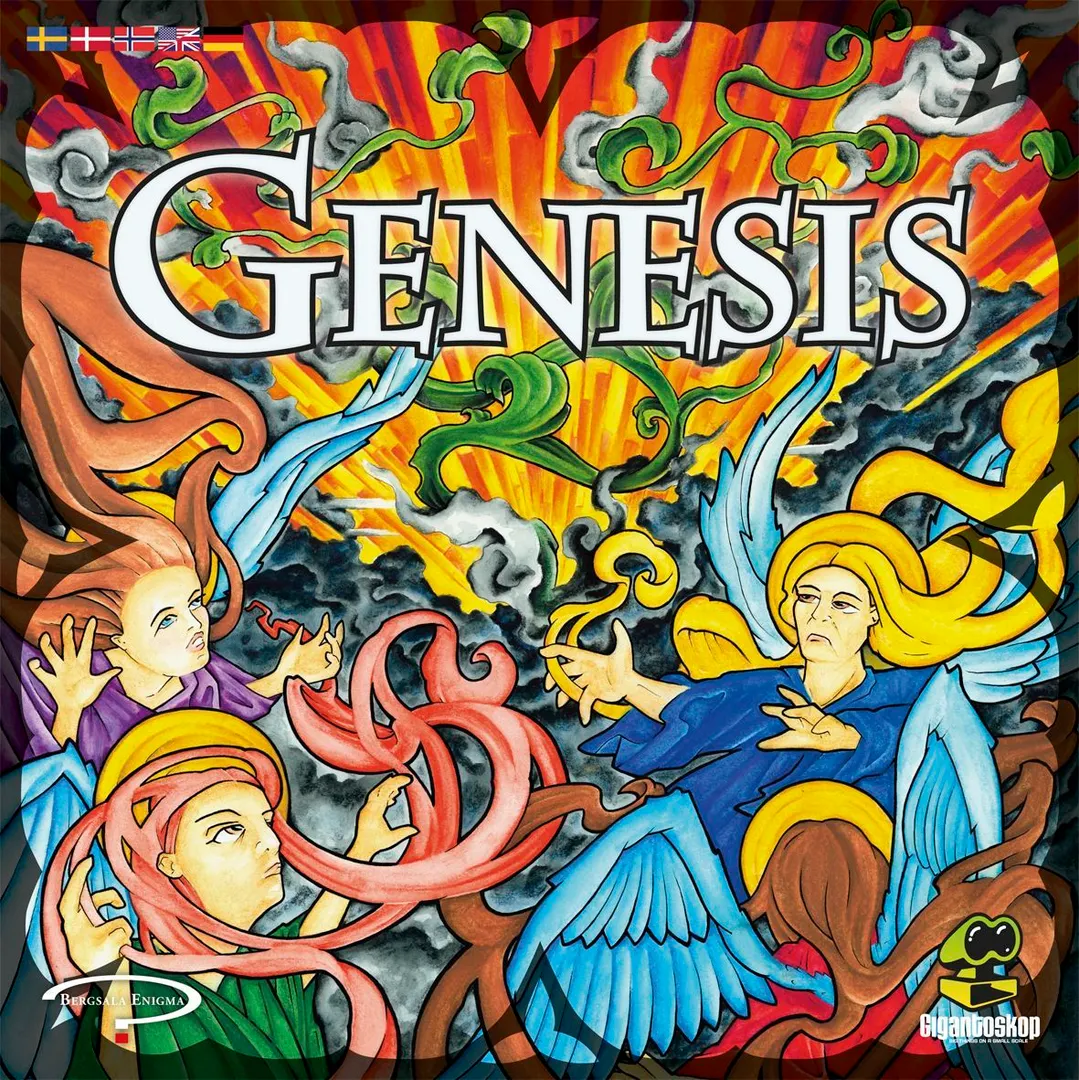
2010
Regelhilfe für Genesis
Verständliche Erklärungen zu Spielzügen, Karteneffekten und strittigen Situationen mit Verweisen auf offizielle Quellen und gespeichertem Fragenverlauf.
Für 2 Personen
Was möchtest du wissen?
Antworten stammen aus dem offiziellen Regelheft, mit Seitenangabe zum Nachprüfen.
Genesis ist ein Brettspiel aus dem Jahr 2010 für 2–6 Personen, mit 60 Minuten pro Partie und ab 10 Jahren. Entwickelt wurde es von Peter Hansson; die wichtigsten Mechaniken sind Set Collection.



Auf Englisch
In the Beginning In the beginning God created the heaven and the earth. It took him six days to complete his work, assisted by a host of heavenly angels doing his divine bidding. On the seventh day God rested and examined the result. Seeing that it was good, he praised the angel who had contributed the most. Genesis - In the Beginning gives you the chance to become that angel. By gathering the essence of creation - chaos, matter and life - and turning it into seas and mountains, birds and beasts, you hope to win Gods approval - and the game! But the way to victory is wrought with hard decisions. You must gather essence when it's most advantageous, move at the right time and do your days’ work where they count the most. And beware of the dark angel who's trying to outshine you all. Now - let there be light! Contents 1 game board 1 God 1 dark angel 6 player angels 42 day work markers 1 starting player marker 72 essence cubes 1 rules booklet Gameplay Before the creation, the players’ angels are gathered in the void with God. When God starts the creation with the words "let there be light", the angels start their monumental task. There’s a lot do to and only seven days to get it done in, so every action counts. Throughout the game, God moves over each of the seven days on the game board, stopping morning, midday and evening, allowing the players 21 rounds to act. During their turn, players can choose to collect the essence of creation (chaos, matter and life), to do a day work on the current day using the different kinds of essence they have collected, or to follow in God’s path to another day. When players move from day to day, they’re positioned along the essence track. The essence track determines both the order of play and the type of essence a player can gather. The first player to move to a certain day gets the first position, the second player the second position, and so on. As different positions yield different kinds of essence, the players must plan their movement to get the right kind and the right amount of essence. If they’re not happy with their position, they can spend essence to swap positions with a neighboring angel, thereby also thwarting other players’ plans. When God creates a new day with new tasks for the angels, players can move to that day. The first player to do a day work on a certain day is awarded the highest points, the second player the second highest, and so on. As the week progresses, the points earned for doing a day work increase, which affects players’ long-term strategy. As the seventh day is a day of rest, God looks favorably on angels that retire from their hard work. The first player to retire their angel on the seventh day earns the highest points, the second player the second highest, and so on. When God reaches the evening of the seventh day, the game is over. All points will be tallied and the player with the highest score is declared the winner. To make things even more challenging, a dark angel is mixed in with the players’ angels, doing his best to snatch as many points as possible. The dark angel follows a pre-determined pattern of actions that the players can predict and delay but never stop. If the players aren’t careful, or if they’re too caught up in their own plans, the dark angel will surely outshine them, making all of them lose the game. The mechanics of the game are quite simple: the sooner you do a day work on a day, the higher the points you score, making it a good idea to keep close in God’s wake. Unfortunately, simply following God throughout the creation might not give you the exact essence you need to do your day work. Eventually you must stop to collect essence, preferably in the right position, making you lose momentum. In the end it’s always about choices: when and what to collect, when to move and when to do a day work. The winner, God willing, is the player who makes the right choices at the right time, a task easier said than done.
Laut Katalog unterstützt Genesis 2–6 Personen. Diese Spanne entspricht der vom Verlag angegebenen Spielerzahl, das Spiel lässt sich also für jede Gruppengröße innerhalb dieser Spanne aufbauen. Aufbau, einzelne Regeln und Wertungsdetails können je nach Personenzahl trotzdem abweichen; prüfe daher die genaue Konfiguration in der Anleitung deiner Ausgabe.
Die angegebene Spieldauer für Genesis beträgt 60 Minuten. Das ist die Schätzung des Verlags für eine vollständige Partie. Die tatsächliche Dauer hängt von der Gruppe, der Personenzahl und der Regelkenntnis ab: Erste Partien dauern meist länger, erfahrene Gruppen sind oft schneller fertig. Aufbau und Regelerklärung sind in dieser Schätzung nicht enthalten.
Im Katalog wird Genesis ab 10 Jahren empfohlen. Das ist die Empfehlung des Verlags und berücksichtigt Leseanforderungen, Regelkomplexität und Kleinteile, nicht nur das Thema. Jüngere Kinder können oft mit Hilfe eines Erwachsenen mitspielen; beachte die Altersangabe deiner Ausgabe und die Brettspielerfahrung deiner Gruppe.
Genesis hat bei BoardGameGeek eine Komplexitätswertung von 2,4 von 5 und gilt damit als eher leichtes Spiel. Die Wertung zeigt, wie viel Regelwissen, Planung und Entscheidungen eine typische Partie verlangt. Schwerere Spiele brauchen bei der ersten Erklärung mehr Zeit, daher hilft vor dem Spieleabend eine Vorbereitungsanleitung.
Genesis gehört zu diesen Kategorien: Abstract Strategy, Religious und Mythology. Die wichtigsten Mechaniken sind Set Collection. Kategorien beschreiben Thema und Setting eines Spiels, Mechaniken dagegen, was die Spielenden in ihrem Zug tatsächlich tun. Jede Mechanik führt zu einer Katalogseite mit ähnlichen Spielen, falls du etwas Vergleichbares suchst.
Als Autoren von Genesis sind angegeben: Peter Hansson. Diese Angaben stammen aus den veröffentlichten Spieldaten und nennen die für das Spieldesign verantwortlichen Personen, nicht die Illustratoren oder Verlage. Die Autorenseiten auf MeepleRules sammeln weitere Titel derselben Autoren – praktisch, wenn dir ein Spiel gefällt und du ähnliche Spiele suchst.
Im Katalog ist Genesis als Grundspiel aufgeführt. Es lässt sich eigenständig mit dem Material aus der Schachtel spielen und benötigt keinen weiteren Titel. Erweiterungen, sofern es welche gibt, ergänzen neues Material oder neue Regeln und sind im Katalog separat mit einem Verweis auf dieses Grundspiel aufgeführt.