

- BGG-Rang
- BGG #1.120
- BGG-Bewertung
- 7,2
Akrotiri
- 2 Spieler
- 45 Min.
- Komplexität 2,6/5
- 2014
2017
Regelhilfe für Gentes
Verständliche Erklärungen zu Spielzügen, Karteneffekten und strittigen Situationen mit Verweisen auf offizielle Quellen und gespeichertem Fragenverlauf.
Für 1 Person
Was möchtest du wissen?
Antworten stammen aus dem offiziellen Regelheft, mit Seitenangabe zum Nachprüfen.
Gentes ist ein Brettspiel aus dem Jahr 2017 für 1–4 Personen, mit 90 Minuten pro Partie und ab 12 Jahren. Entwickelt wurde es von Stefan Risthaus; die wichtigsten Mechaniken sind Hand Management, Set Collection und Income.





Auf Englisch
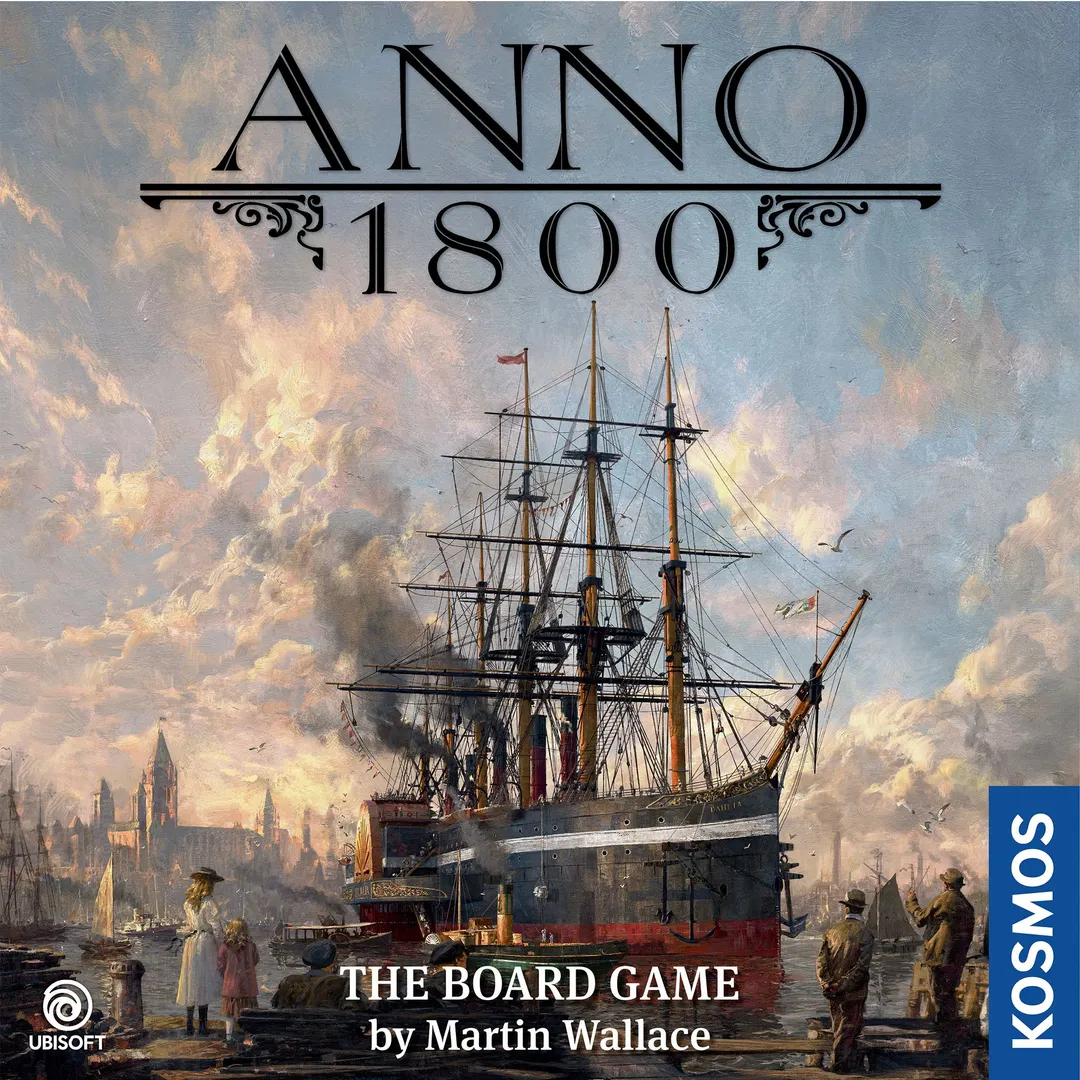
Gentes is an interesting civilization game with an innovative timing mechanism. "Gentes" is a pleonasm of the Latin plural word for greater groups of human beings (e.g., tribes, nations, people; singular: "gens"). In this game, players take the role of an ancient people who are attempting to develop by building monuments and colonizing or founding new cities in the Mediterranean sea. The game is played in six rounds, each consisting of two phases: action phase, and tidying up. There are three eras — rounds 1-2, 3-4, 5-6 — with new monument cards entering the game at the beginning of rounds 1, 3 and 5. Each player has a personal player mat with a time track for action markers and sand timer markers. In the action phase of a round, the players take their turns in clockwise order, conducting one action per turn. Each action requires an action marker from the main board that is placed on the time track. Depending on the information on the action marker, you have to also pay some money or take sand timers that are placed on the time track. When you have no free spaces on your time track, you must pass for the remainder of the round. Therefore, the number of actions per player in a single round may vary significantly if, for example, you choose double sand timers instead of two single ones or take action markers that require more money but fewer sand timers. Single sand timers are dropped in the tidying up phase, while double sand timers are flipped to become single sand timer markers and stay for another round. The actions are: Buy new cards from the common display Build monuments (playing cards from your hand to your personal display for victory points and new options) Train/Educate your people Build/found cities Take money To play a card, you must meet the requirements printed on that card, such as having specific persons on your personal board (e.g., two priests and four soldiers). These requirements are why training — i.e., getting specific people — is important, but that is not that easy because there are six different types of people — three on the left and three on the right side of your personal player board — and you have only six spaces in total for the two types in the same line. If you have three merchants, for example, you move your marker for counting merchants three spaces toward the side of the soldiers and thus you have only three spaces left for soldiers. By educating a fourth soldier and moving your soldier marker forward to its fourth space, you automatically lose one merchant because that marker is pushed back to its second space. It is crucial to generate additional actions by using the specific functions of monuments in your display and cities you have built. Cities are expensive, but they create benefits at the end of each round or provide new options for taking an action without acquiring an action marker, gaining only a sand timer marker instead. Try to have a steady income to avoid wasting actions to take money. Pay attention to the display of common cards, which is new in every single game, because the monument cards are shuffled randomly within the decks of eras I, II and III. Collect identical achievement symbols on the cards to benefit from the increasing victory points for a series of symbols. Build cities to enlarge your options! The differences between the Deluxified and regular edition: Includes "New Cities" Expansion A foil stamped box 6 oversized meeples 24 normal sized meeples 89 metal coins 28 wood action tokens 21 wood lock tokens 60 wood hourglass tokens 4 dual layered player boards 4 custom shaped score tokens folded space custom insert 1 drawstring bag 1 upgraded round token
Laut Katalog unterstützt Gentes 1–4 Personen. Diese Spanne entspricht der vom Verlag angegebenen Spielerzahl, das Spiel lässt sich also für jede Gruppengröße innerhalb dieser Spanne aufbauen. Aufbau, einzelne Regeln und Wertungsdetails können je nach Personenzahl trotzdem abweichen; prüfe daher die genaue Konfiguration in der Anleitung deiner Ausgabe.
Die angegebene Spieldauer für Gentes beträgt 90 Minuten. Das ist die Schätzung des Verlags für eine vollständige Partie. Die tatsächliche Dauer hängt von der Gruppe, der Personenzahl und der Regelkenntnis ab: Erste Partien dauern meist länger, erfahrene Gruppen sind oft schneller fertig. Aufbau und Regelerklärung sind in dieser Schätzung nicht enthalten.
Im Katalog wird Gentes ab 12 Jahren empfohlen. Das ist die Empfehlung des Verlags und berücksichtigt Leseanforderungen, Regelkomplexität und Kleinteile, nicht nur das Thema. Jüngere Kinder können oft mit Hilfe eines Erwachsenen mitspielen; beachte die Altersangabe deiner Ausgabe und die Brettspielerfahrung deiner Gruppe.
Gentes hat bei BoardGameGeek eine Komplexitätswertung von 3,2 von 5 und gilt damit als mittelschweres Spiel. Die Wertung zeigt, wie viel Regelwissen, Planung und Entscheidungen eine typische Partie verlangt. Schwerere Spiele brauchen bei der ersten Erklärung mehr Zeit, daher hilft vor dem Spieleabend eine Vorbereitungsanleitung.
Gentes gehört zu diesen Kategorien: Ancient und Civilization. Die wichtigsten Mechaniken sind Hand Management, Set Collection und Income. Kategorien beschreiben Thema und Setting eines Spiels, Mechaniken dagegen, was die Spielenden in ihrem Zug tatsächlich tun. Jede Mechanik führt zu einer Katalogseite mit ähnlichen Spielen, falls du etwas Vergleichbares suchst.
Als Autoren von Gentes sind angegeben: Stefan Risthaus. Diese Angaben stammen aus den veröffentlichten Spieldaten und nennen die für das Spieldesign verantwortlichen Personen, nicht die Illustratoren oder Verlage. Die Autorenseiten auf MeepleRules sammeln weitere Titel derselben Autoren – praktisch, wenn dir ein Spiel gefällt und du ähnliche Spiele suchst.
Im Katalog ist Gentes als Grundspiel aufgeführt. Es lässt sich eigenständig mit dem Material aus der Schachtel spielen und benötigt keinen weiteren Titel. Erweiterungen, sofern es welche gibt, ergänzen neues Material oder neue Regeln und sind im Katalog separat mit einem Verweis auf dieses Grundspiel aufgeführt.