
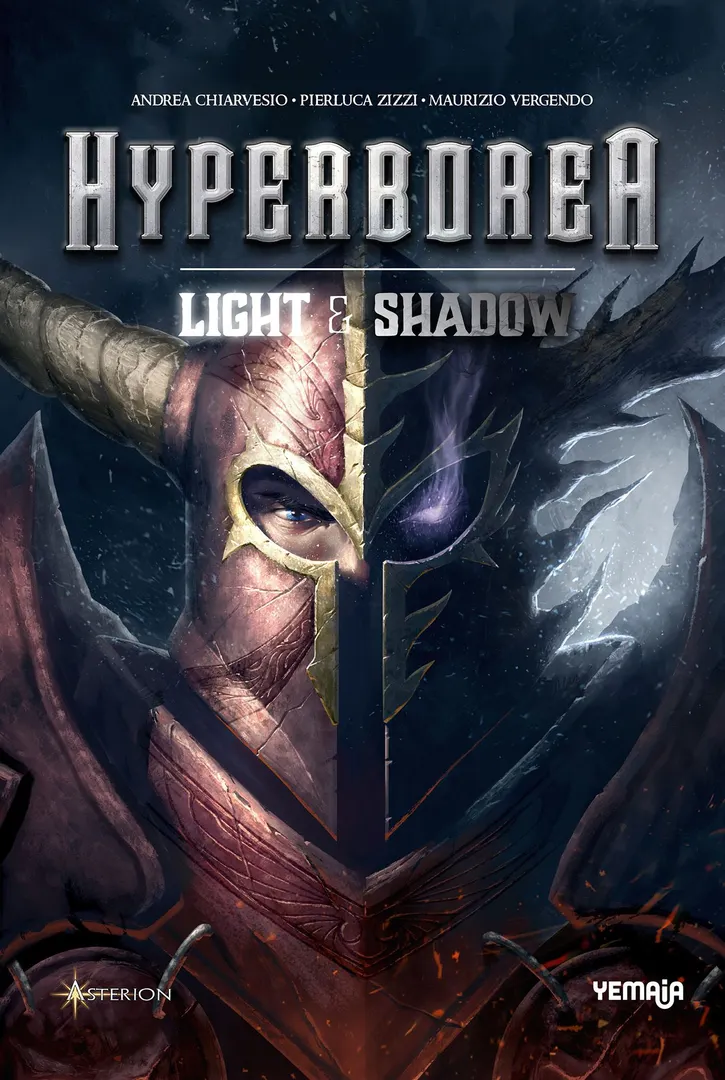
- BGG-Bewertung
- 7,8
Hyperborea: Light & Shadow
- 2–6 Spieler
- 60–180 Min.
- Komplexität 3,0/5
- 2016
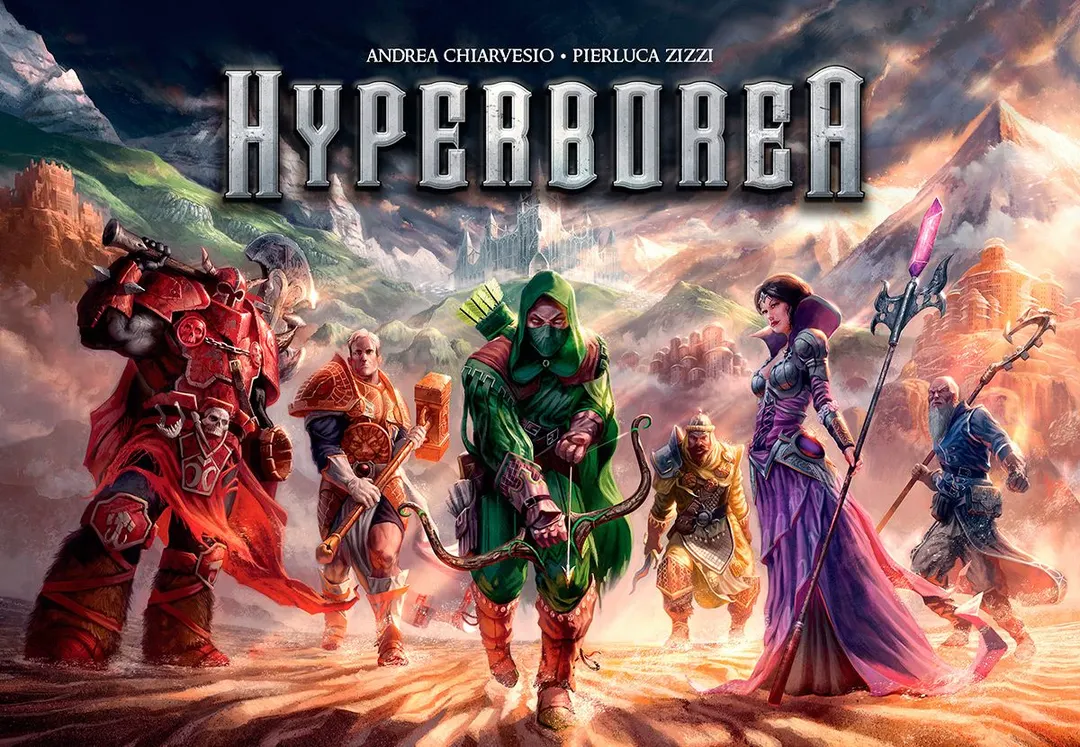
2014
Regelhilfe für Hyperborea
Verständliche Erklärungen zu Spielzügen, Karteneffekten und strittigen Situationen mit Verweisen auf offizielle Quellen und gespeichertem Fragenverlauf.
Für 2 Personen
Was möchtest du wissen?
Antworten stammen aus dem offiziellen Regelheft, mit Seitenangabe zum Nachprüfen.
Hyperborea ist ein Brettspiel aus dem Jahr 2014 für 2–6 Personen, mit 50–150 Minuten pro Partie und ab 14 Jahren. Entwickelt wurde es von Andrea Chiarvesio und Pierluca Zizzi; die wichtigsten Mechaniken sind Variable Player Powers, Area Majority / Influence und Grid Movement.


Auf Englisch
The mythical realm of Hyperborea was ruled by an ancient civilization that used magical crystals as their main source of energy. With time, the Hyperboreans became greedy, and their search for power in the deep made the crystals unstable, causing earthquakes, mutations, droughts and floods. Hyperboreans just dug deeper, and only a few wise mages, foreseeing the inevitable, built an unbreakable magical barrier. When the unharnessed magical energy was unleashed from the deep, the Hyperborean civilization was destroyed in a single day, only the magical barrier preventing the disappearance of life from the whole land. The survivors living in the small outposts outside Hyperborea were now sealed out by the barrier. The knowledge of crystals was declared forbidden it was because too dangerous, or simply forgotten. Over centuries, six rival realms were born from the ashes of the Hyperborean civilization: the militarist Red Duchy; the Emerald Kingdom and its death-delivering archers; the Purple Matriarchy fanatically worshipping the goddess of life; the skilled diplomats and merchants of the Golden Barony; the Coral Throne with its efficiently organized society and finally the secluded and enigmatic Celestial Reign. The fragile peace between the different realms was not intended to last. One day, the magical barrier suddenly collapsed. A whole new land stood in front of the six kingdoms, still haunted by the old Hyperboreans turned into harmless but ominous ghosts, full of ruins to discover and cities to explore. Each realm is now sending its best warriors and explorers to Hyperborea in order to achieve dominance over their rivals, but which will prevail? Brutal strength or deep understanding of science? The discovery of valuable artifacts in the lost ruins or the retaking of long, lost cities? Only you, as the leader of one of the factions, can lead your people to the ultimate dominance over Hyperborea! Set in a mythical land of the same name, Hyperborea is a light civilization game for 2 to 6 players that takes 20-25 minutes per player. The game begins at the time when the magic barrier protecting access to the mythical continent of Hyperborea suddenly falls. Each player takes the role of the leader of a small kingdom situated just outside the now open to be conquered and explored land. Her kingdom has limited knowledge of housing, trade, movement, warfare, research, and growth, but new and exciting powers are hidden in Hyperborea. During the game, this kingdom will grow in numbers and raise armies, extend its territory, explore and conquer, learn new technologies, etc... The game's main mechanism, which can be described as "bag-building", involves you building a pool of "civilicubes". Each cube represents specializations for your kingdom: war, trade, movement, building, knowledge, growth. Grey cubes represent corruption and waste, and players will acquire them by developing new technologies. (Power corrupts by its own definition, and the more complex a society becomes, the more waste it generates.) Each turn, players draw three random cubes from their bags, then use them to activate knowledge (technologies) they own.
Laut Katalog unterstützt Hyperborea 2–6 Personen. Diese Spanne entspricht der vom Verlag angegebenen Spielerzahl, das Spiel lässt sich also für jede Gruppengröße innerhalb dieser Spanne aufbauen. Aufbau, einzelne Regeln und Wertungsdetails können je nach Personenzahl trotzdem abweichen; prüfe daher die genaue Konfiguration in der Anleitung deiner Ausgabe.
Die angegebene Spieldauer für Hyperborea beträgt 50–150 Minuten. Das ist die Schätzung des Verlags für eine vollständige Partie. Die tatsächliche Dauer hängt von der Gruppe, der Personenzahl und der Regelkenntnis ab: Erste Partien dauern meist länger, erfahrene Gruppen sind oft schneller fertig. Aufbau und Regelerklärung sind in dieser Schätzung nicht enthalten.
Im Katalog wird Hyperborea ab 14 Jahren empfohlen. Das ist die Empfehlung des Verlags und berücksichtigt Leseanforderungen, Regelkomplexität und Kleinteile, nicht nur das Thema. Jüngere Kinder können oft mit Hilfe eines Erwachsenen mitspielen; beachte die Altersangabe deiner Ausgabe und die Brettspielerfahrung deiner Gruppe.
Hyperborea hat bei BoardGameGeek eine Komplexitätswertung von 3,2 von 5 und gilt damit als mittelschweres Spiel. Die Wertung zeigt, wie viel Regelwissen, Planung und Entscheidungen eine typische Partie verlangt. Schwerere Spiele brauchen bei der ersten Erklärung mehr Zeit, daher hilft vor dem Spieleabend eine Vorbereitungsanleitung.
Hyperborea gehört zu diesen Kategorien: Fantasy, Fighting und Exploration. Die wichtigsten Mechaniken sind Variable Player Powers, Area Majority / Influence und Grid Movement. Kategorien beschreiben Thema und Setting eines Spiels, Mechaniken dagegen, was die Spielenden in ihrem Zug tatsächlich tun. Jede Mechanik führt zu einer Katalogseite mit ähnlichen Spielen, falls du etwas Vergleichbares suchst.
Als Autoren von Hyperborea sind angegeben: Andrea Chiarvesio und Pierluca Zizzi. Diese Angaben stammen aus den veröffentlichten Spieldaten und nennen die für das Spieldesign verantwortlichen Personen, nicht die Illustratoren oder Verlage. Die Autorenseiten auf MeepleRules sammeln weitere Titel derselben Autoren – praktisch, wenn dir ein Spiel gefällt und du ähnliche Spiele suchst.
Im Katalog ist Hyperborea als Grundspiel aufgeführt. Es lässt sich eigenständig mit dem Material aus der Schachtel spielen und benötigt keinen weiteren Titel. Erweiterungen, sofern es welche gibt, ergänzen neues Material oder neue Regeln und sind im Katalog separat mit einem Verweis auf dieses Grundspiel aufgeführt.