
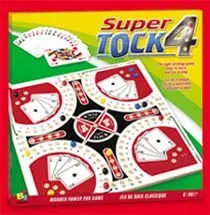
- BGG-Rang
- BGG #20.844
- BGG-Bewertung
- 5,8
Super Tock 4
- 2–4 Spieler
- 45 Min.
- Komplexität 1,7/5
- 2006
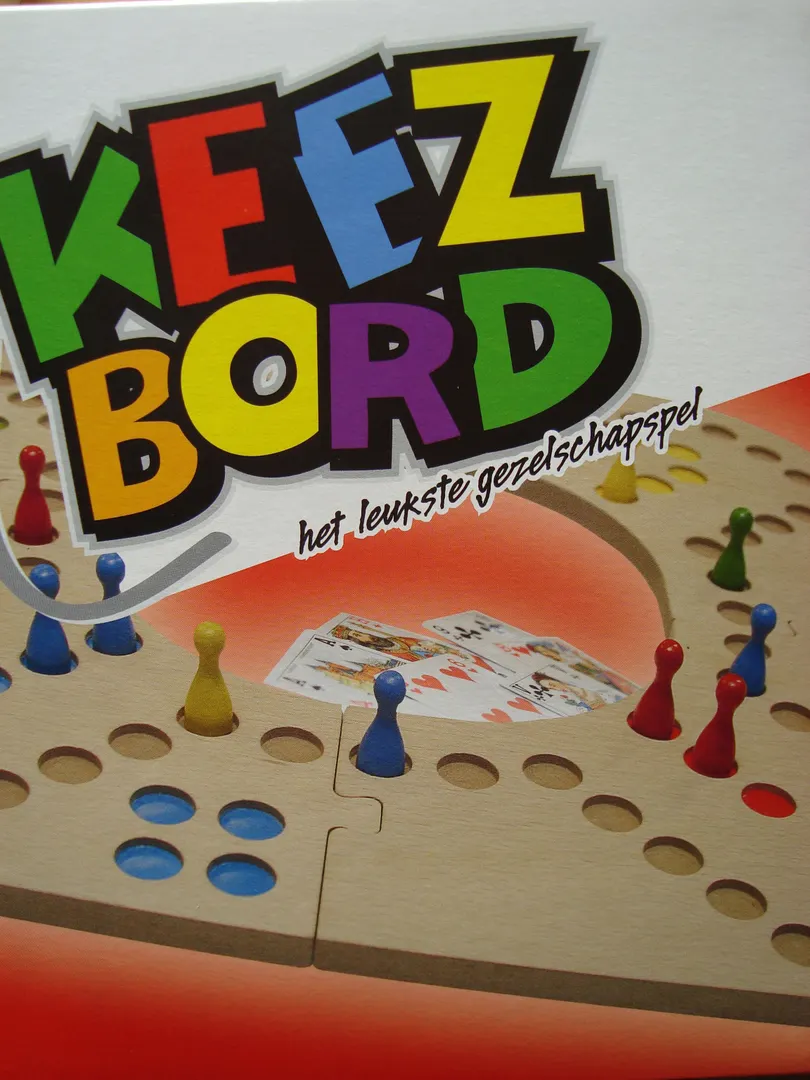
2007
Regelhilfe für Keezbord
Verständliche Erklärungen zu Spielzügen, Karteneffekten und strittigen Situationen mit Verweisen auf offizielle Quellen und gespeichertem Fragenverlauf.
Was möchtest du wissen?
Antworten stammen aus dem offiziellen Regelheft, mit Seitenangabe zum Nachprüfen.
Keezbord ist ein Brettspiel aus dem Jahr 2007 für 2–8 Personen, mit 60 Minuten pro Partie und ab 6 Jahren. Die wichtigsten Mechaniken sind Team-Based Game und Open Drafting.





Auf Englisch
This partnership game is played in 2 or 3 pairs. (A simple 2-player version also exists as Keezbord Duo.) The aim of the game is to be the first pair to get all their pawns in their homes, just like Ludo and Pachisi. Instead of dice you play with playingcards. The first round everyone gets 5 playing cards. The second and third rounds everyone gets 4 cards. At the end of the third round all the cards are shuffled and then the second three rounds begin, until one pair has won the game. If you don’t have a King or Ace in your hand, the very first round, you must put your 5 cards aside and take 5 new ones. Repeat this until you have at least one of those cards. When it’s your turn you play a card in the middle and do what you have to do. To set a pawn on the starting position (the colored point in the color of your pawns) you have to put down a King or Ace. If you can play a card you have to do so, even if it’s bad for you or your partner. If you can’t play a card anymore you put down all your remaining cards in the middle. Your turns are over in this round. If everyone has put down all of their cards, this round is over and another round can begin. These are the actions: Ace: put a pawn (yours or your partner’s) on your starting space or a pawn 1 place ahead. King: put a pawn (yours or your partner’s) on your (or your partner’s) starting space. Queen: move a pawn (yours or your partner’s) 12 spaces forward. Jack: swap a pawn (yours or your partner’s) with one of the other players’ pawn. Seven: move 1 or 2 pawns (yours or your partner’s) a total of seven spaces forward. Four: a pawn has to move 4 spaces backwards. When a pawn is standing on its own colored space, this pawn may not be beaten, nor swapped with a Jack, nor be overtaken. With any other card you have to go forward spaces as shown on the card. During the whole game you can beat other pawns if you land on them. The beaten pawn has to go back to its place at the beginning of the game. With 4 players you play with 1 deck of cards. With 6 players you play with 1.5 decks of cards. _ Shares many similarities with DOG and Partners.
Laut Katalog unterstützt Keezbord 2–8 Personen. Diese Spanne entspricht der vom Verlag angegebenen Spielerzahl, das Spiel lässt sich also für jede Gruppengröße innerhalb dieser Spanne aufbauen. Aufbau, einzelne Regeln und Wertungsdetails können je nach Personenzahl trotzdem abweichen; prüfe daher die genaue Konfiguration in der Anleitung deiner Ausgabe.
Die angegebene Spieldauer für Keezbord beträgt 60 Minuten. Das ist die Schätzung des Verlags für eine vollständige Partie. Die tatsächliche Dauer hängt von der Gruppe, der Personenzahl und der Regelkenntnis ab: Erste Partien dauern meist länger, erfahrene Gruppen sind oft schneller fertig. Aufbau und Regelerklärung sind in dieser Schätzung nicht enthalten.
Im Katalog wird Keezbord ab 6 Jahren empfohlen. Das ist die Empfehlung des Verlags und berücksichtigt Leseanforderungen, Regelkomplexität und Kleinteile, nicht nur das Thema. Jüngere Kinder können oft mit Hilfe eines Erwachsenen mitspielen; beachte die Altersangabe deiner Ausgabe und die Brettspielerfahrung deiner Gruppe.
Keezbord hat bei BoardGameGeek eine Komplexitätswertung von 1,4 von 5 und gilt damit als leichtes Spiel. Die Wertung zeigt, wie viel Regelwissen, Planung und Entscheidungen eine typische Partie verlangt. Schwerere Spiele brauchen bei der ersten Erklärung mehr Zeit, daher hilft vor dem Spieleabend eine Vorbereitungsanleitung.
Keezbord gehört zu diesen Kategorien: Card Game und Racing. Die wichtigsten Mechaniken sind Team-Based Game und Open Drafting. Kategorien beschreiben Thema und Setting eines Spiels, Mechaniken dagegen, was die Spielenden in ihrem Zug tatsächlich tun. Jede Mechanik führt zu einer Katalogseite mit ähnlichen Spielen, falls du etwas Vergleichbares suchst.
Im Katalog ist Keezbord als Grundspiel aufgeführt. Es lässt sich eigenständig mit dem Material aus der Schachtel spielen und benötigt keinen weiteren Titel. Erweiterungen, sofern es welche gibt, ergänzen neues Material oder neue Regeln und sind im Katalog separat mit einem Verweis auf dieses Grundspiel aufgeführt.