

- BGG-Rang
- BGG #6.175
- BGG-Bewertung
- 7,5
Corduba 27 a.C.
- 1–4 Spieler
- 90–180 Min.
- Komplexität 4,0/5
- 2021
2023
Regelhilfe für Keops
Verständliche Erklärungen zu Spielzügen, Karteneffekten und strittigen Situationen mit Verweisen auf offizielle Quellen und gespeichertem Fragenverlauf.
Für 1 Person
Was möchtest du wissen?
Antworten stammen aus dem offiziellen Regelheft, mit Seitenangabe zum Nachprüfen.
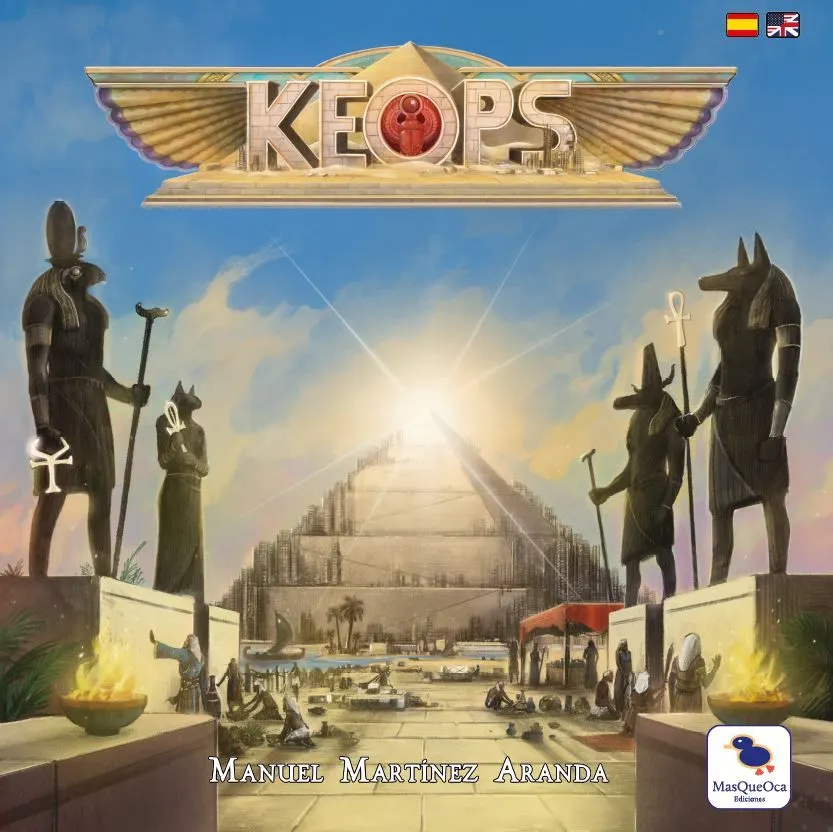
Keops ist ein Brettspiel aus dem Jahr 2023 für 1–4 Personen, mit 75–180 Minuten pro Partie und ab 14 Jahren. Entwickelt wurde es von Manuel Martinez Aranda; die wichtigsten Mechaniken sind Variable Player Powers, Tile Placement und Solo / Solitaire Game.




Auf Englisch
The Pyramid of Keops (also known as Giza) was the first wonder of the Ancient World. Built around 2600 BC, it was the tallest building on Earth for nearly 4,000 years. For its construction were used about 2 million blocks of granite stone, covered by limestone, assembled by complex systems of wooden cranes and transported on barges from the Upper Nile. Various theories suggest that the Egyptians had access to advanced technology, or even that they were assisted by otherworldly beings. Be that as it may, the construction of The Pyramids was the most important engineering work of mankind to date, with an unprecedented waste of resources and manpower. In Keops, you will become one of the Viziers of Pharaoh Khufu, who has decreed the construction of the largest pyramid to date. The eternal glory of all Mizraim is at stake. You will have to compete with the rest of the Viziers to obtain the Pharaoh's favor and make Mizraim the envy of the people who want to destroy it. Keep Ra and the other gods of the Pantheon happy, making offerings in their temples. Construct buildings to obtain better rents when you recover your officials, besides obtaining prestige constructing a city worthy of the Pharaoh's relatives and assistants. Reinforce the borders with your Medjay to avoid the invasion of the fearsome enemies of Egypt. Acquire the best barges in the port, fill your warehouses with granite and limestone, and send your craftsmen to prepare the tomb for Jufu's journey to the afterlife, building the first Wonder of the ancient world. The game is played over three rounds, marked by the construction of the three levels of the Pyramid. During the round, players will take turns until the current level of the Pyramid is built. To do so, they will have to wisely manage their craftsmen, scribes and priests, without forgetting their needs and happiness. At the end of a round, the Pharaoh Jufu will grant his Favor to the Viziers (players) who have contributed the most to the defense of the Frontiers, the welfare of the Gods, the construction of the city and the Pyramid. Keops is an action building game, with worker placement and resource management mechanics. The actions available at the start of the game are related to obtaining materials to build the Pyramid and defending the borders. However, as players build the city, and new temples and crops, the available actions will increase, increasing the possibilities and strategies. Each game of Keops is conditioned to what the players build, so each one will be a different experience. This, added to the different families available and the use of the Decree cards, which modify the rules of the game, make each game completely different. This is one of the strong points of Keops. The game is played over three rounds, the end of each round being determined by the level of construction of the pyramid. During a round, players will play their turns one at a time, assigning their officials to the various actions or removing them from the central board to obtain their rents and pay their salaries. Each of the buildings that have been constructed are available to all players, regardless of who built them. However, you will receive benefits every time another player makes use of one of your buildings. This is important when it comes to developing your long-term strategy, as it provides extra income, which always comes in handy. In Keops there are no victory points. To win the game you will have to win the favor of the Pharaoh Jufu. Be the player with more offerings in the temple of Ra, to obtain the favor of the priests of the Pharaoh. Build the Pyramid to earn the favor of the architects' guild of Jufu. Defend the Borders hiring Medjays to avoid the invasion of your territories and not to lose resources, workers or your own buildings. And build the city to obtain Prestige, thus gaining the Favor of the Pharaoh's court. At the end of each level of the Pyramid, players will have the opportunity to obtain these favors, but also to lose them... For the most daring, the Ra-utoma deck adds a virtual player with three levels of difficulty in games for 1 to 3 players, who will make things difficult for the Viziers. All this under the watchful eye of Jufu, who will not stop in the construction of his great tomb. Although players do not build the Pyramid, the game itself will do it little by little, so every action becomes relevant, because you never know how much time you have left to obtain the Pharaoh's favor.
Laut Katalog unterstützt Keops 1–4 Personen. Diese Spanne entspricht der vom Verlag angegebenen Spielerzahl, das Spiel lässt sich also für jede Gruppengröße innerhalb dieser Spanne aufbauen. Aufbau, einzelne Regeln und Wertungsdetails können je nach Personenzahl trotzdem abweichen; prüfe daher die genaue Konfiguration in der Anleitung deiner Ausgabe.
Die angegebene Spieldauer für Keops beträgt 75–180 Minuten. Das ist die Schätzung des Verlags für eine vollständige Partie. Die tatsächliche Dauer hängt von der Gruppe, der Personenzahl und der Regelkenntnis ab: Erste Partien dauern meist länger, erfahrene Gruppen sind oft schneller fertig. Aufbau und Regelerklärung sind in dieser Schätzung nicht enthalten.
Im Katalog wird Keops ab 14 Jahren empfohlen. Das ist die Empfehlung des Verlags und berücksichtigt Leseanforderungen, Regelkomplexität und Kleinteile, nicht nur das Thema. Jüngere Kinder können oft mit Hilfe eines Erwachsenen mitspielen; beachte die Altersangabe deiner Ausgabe und die Brettspielerfahrung deiner Gruppe.
Keops hat bei BoardGameGeek eine Komplexitätswertung von 4,3 von 5 und gilt damit als schweres Spiel. Die Wertung zeigt, wie viel Regelwissen, Planung und Entscheidungen eine typische Partie verlangt. Schwerere Spiele brauchen bei der ersten Erklärung mehr Zeit, daher hilft vor dem Spieleabend eine Vorbereitungsanleitung.
Keops gehört zu diesen Kategorien: Ancient und City Building. Die wichtigsten Mechaniken sind Variable Player Powers, Tile Placement und Solo / Solitaire Game. Kategorien beschreiben Thema und Setting eines Spiels, Mechaniken dagegen, was die Spielenden in ihrem Zug tatsächlich tun. Jede Mechanik führt zu einer Katalogseite mit ähnlichen Spielen, falls du etwas Vergleichbares suchst.
Als Autoren von Keops sind angegeben: Manuel Martinez Aranda. Diese Angaben stammen aus den veröffentlichten Spieldaten und nennen die für das Spieldesign verantwortlichen Personen, nicht die Illustratoren oder Verlage. Die Autorenseiten auf MeepleRules sammeln weitere Titel derselben Autoren – praktisch, wenn dir ein Spiel gefällt und du ähnliche Spiele suchst.
Im Katalog ist Keops als Grundspiel aufgeführt. Es lässt sich eigenständig mit dem Material aus der Schachtel spielen und benötigt keinen weiteren Titel. Erweiterungen, sofern es welche gibt, ergänzen neues Material oder neue Regeln und sind im Katalog separat mit einem Verweis auf dieses Grundspiel aufgeführt.