
- BGG-Bewertung
- 5,0
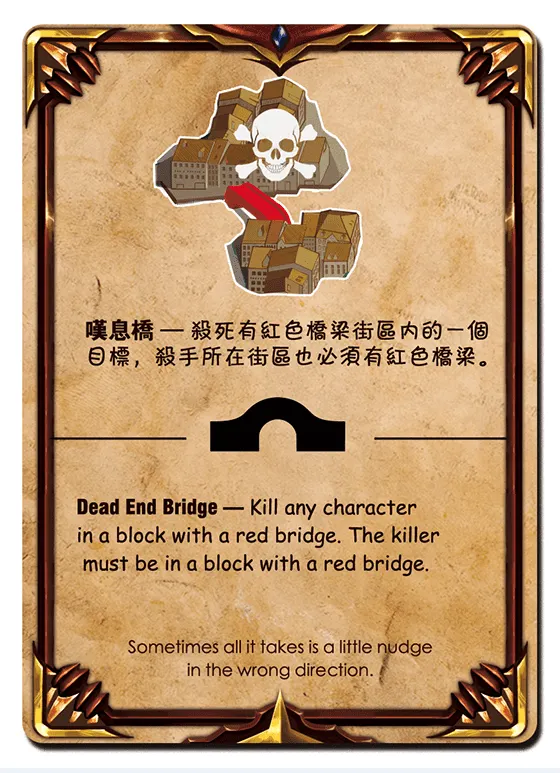
Killing Code: Venice Vendetta – Dead End Bridge
- 3–6 Spieler
- 45–75 Min.
- 2017
2017
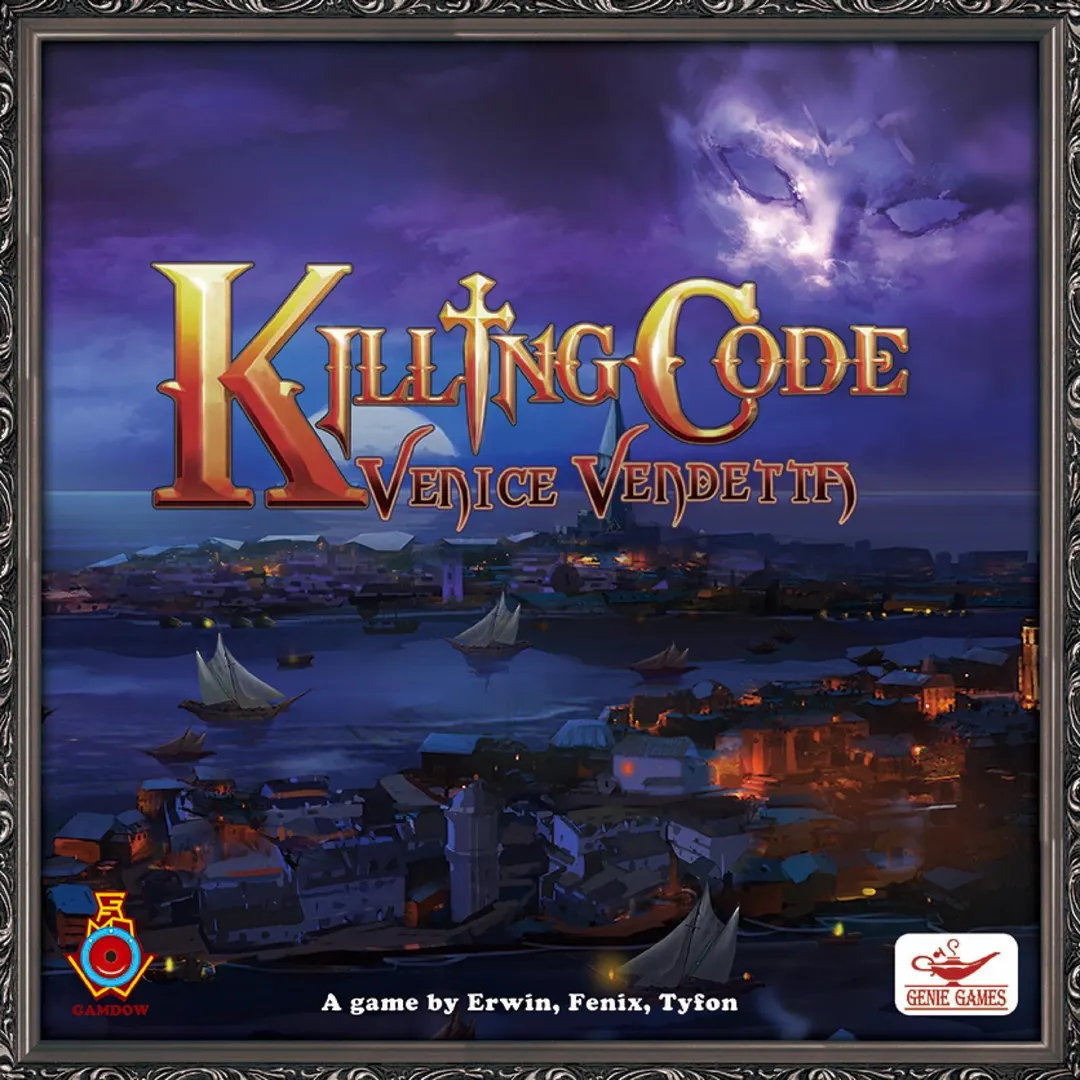
Regelhilfe für Killing Code: Venice Vendetta
Verständliche Erklärungen zu Spielzügen, Karteneffekten und strittigen Situationen mit Verweisen auf offizielle Quellen und gespeichertem Fragenverlauf.
Was möchtest du wissen?
Antworten stammen aus dem offiziellen Regelheft, mit Seitenangabe zum Nachprüfen.
Killing Code: Venice Vendetta ist ein Brettspiel aus dem Jahr 2017 für 2–6 Personen, mit 45–75 Minuten pro Partie und ab 10 Jahren. Entwickelt wurde es von Erwin, Fenix und Tyfon; die wichtigsten Mechaniken sind Variable Player Powers, Area Movement und Area Majority / Influence.






Auf Englisch
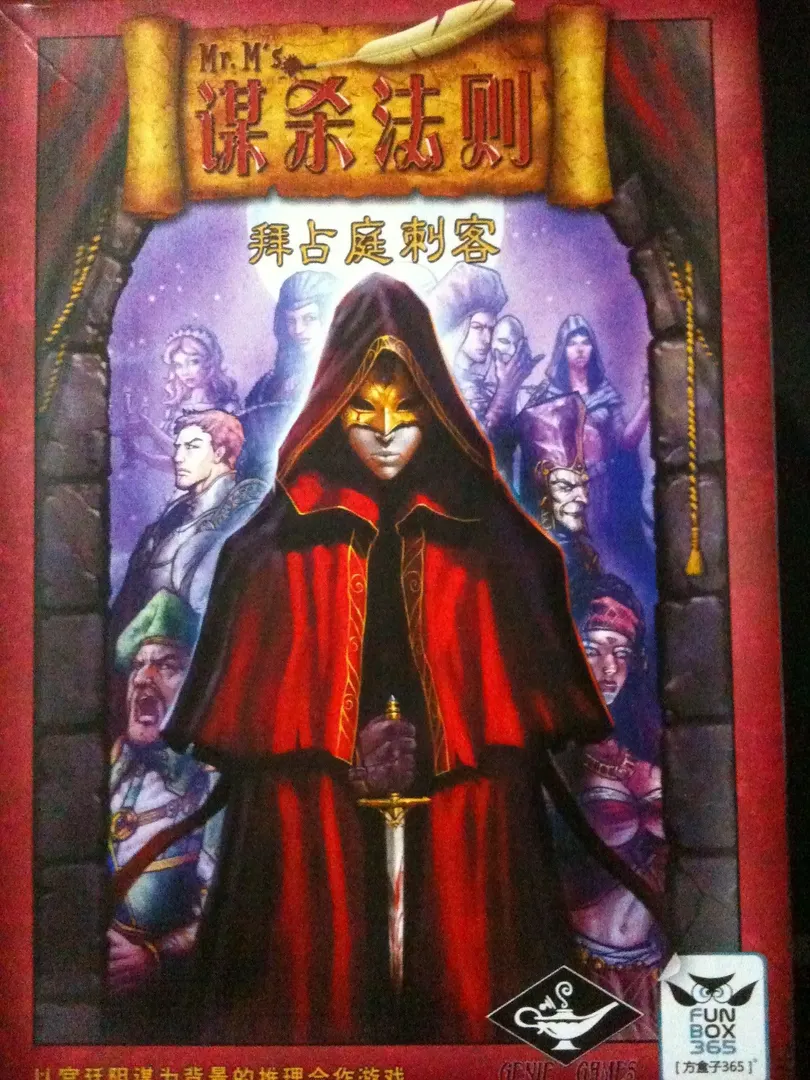
Killing Code: Venice Vendetta is a cooperative reasoning game in which the players must work together to discover the identity of a killer in the city before it is too late. One player acts as the killer, secretly assuming the identity of one of the citizens of Venice and looking for opportunities to kill some of the others. The other players act together to unmask the killer's identity. Within the round limit, the killer must keep their identity hidden and complete their killings, while the other players must investigate the murder methods to discover clues leading to the killer's unmasking and stop these atrocities. Aside from the standard game mode, the game includes five scenarios that can provide players with more rules and story experiences. Game Playing: Stage 1: Flip Over Cards: At the start of this stage, the killer takes all the character cards still in play, shuffles them face down and places the pile in front of him.(In the first round of a normal game, this will be all 13 character cards, reduced each round when the killer takes victims). Deal a number of character cards according to the number of players, then flip those cards face-up and place them in area easily reached by all players. These will be the character cards availible for use this round. Stage 2: The Investigators Act Starting with the investigator to the left of the killer, that player chooses one of the availible character cards for this round and places it face-up in front of him or herself. Once a character card has been placed in front of a player no other investigator may choose that card. After placing the card infront of him or herself, the investigator can move that character according to the movement value on the card and one active ability on the card. After the investigator finishes moving his or her chosen character and taking any actions, the next investigator clockwise repeats this process until all investigators have taken a character card. Stage 3: The Killer Acts The killer's stage consists of 2 parts: movement and murder. -Movement- The killer can choose from 2 options for movement: Use the remaining 2 character cards unchosen by the non-killer players. The killer chooses what order to use these cards in. Use 1 card in front of a non-killer player. After the killer has taken his or her movement action(s), he or she is ready to take a life. -Murder- The killer selects a killing code card from his or her hand, using its ability to end the lives of one or more characters based on the qualifications of the killing code card text. Each round the killer can only make use of 1 killing code card. Please refer to the killing code card section of this rulebook for further clarification. The killer dons the mask, dramatically announces who will die, then lays that character's marker down in the block they were just alive in. Search the character cards for the character killed and place that card face up on the grave marker from this round, then the killer places the killing code card that he or she used face down on top of that character card. If multiple characters were killed at once, place them all on the same grave before placing the killing code card over them. Accusation Round After the killer has successfully killed 5 or more characters or has used 5 killing code cards, the game immediately enters a special final round called the accusation round. The final round is an additional round which only has the first 2 stages, the killer will not take any action in this round, instead he or she should don the mask, steeple his or her hands and watch the proceedings dramatically. When the investigators are finished moving in this round, they must immediately make an accusation. The investigators may only accuse one suspect. Various methods of reaching an agreement on this accusation include: Discussion Voting Arm Wrestling Drinking Contest Giving in to the Most Persuasive Who-Donnit Speech Being Generally Louder than the Other Investigators Agree with the Person you Secretly Find Attractive Bribing, Coercing, or Torturing the Killer Or any additional methods which the design company assumes no responsibility for the consequences of. Or whatever, you know, it doesn't matter, just guess. Faced with this accusation, the killer must flip up his or her suspect card with a flourish. Victory or Defeat Complete the Accusation So close, yet so far very very wrong... No matter when it is made, if the accusation was correct, the investigators win. If the accusation was wrong, the killer wins.
Laut Katalog unterstützt Killing Code: Venice Vendetta 2–6 Personen. Diese Spanne entspricht der vom Verlag angegebenen Spielerzahl, das Spiel lässt sich also für jede Gruppengröße innerhalb dieser Spanne aufbauen. Aufbau, einzelne Regeln und Wertungsdetails können je nach Personenzahl trotzdem abweichen; prüfe daher die genaue Konfiguration in der Anleitung deiner Ausgabe.
Die angegebene Spieldauer für Killing Code: Venice Vendetta beträgt 45–75 Minuten. Das ist die Schätzung des Verlags für eine vollständige Partie. Die tatsächliche Dauer hängt von der Gruppe, der Personenzahl und der Regelkenntnis ab: Erste Partien dauern meist länger, erfahrene Gruppen sind oft schneller fertig. Aufbau und Regelerklärung sind in dieser Schätzung nicht enthalten.
Im Katalog wird Killing Code: Venice Vendetta ab 10 Jahren empfohlen. Das ist die Empfehlung des Verlags und berücksichtigt Leseanforderungen, Regelkomplexität und Kleinteile, nicht nur das Thema. Jüngere Kinder können oft mit Hilfe eines Erwachsenen mitspielen; beachte die Altersangabe deiner Ausgabe und die Brettspielerfahrung deiner Gruppe.
Killing Code: Venice Vendetta hat bei BoardGameGeek eine Komplexitätswertung von 2,3 von 5 und gilt damit als eher leichtes Spiel. Die Wertung zeigt, wie viel Regelwissen, Planung und Entscheidungen eine typische Partie verlangt. Schwerere Spiele brauchen bei der ersten Erklärung mehr Zeit, daher hilft vor dem Spieleabend eine Vorbereitungsanleitung.
Killing Code: Venice Vendetta gehört zu diesen Kategorien: Deduction, Murder / Mystery und Medieval. Die wichtigsten Mechaniken sind Variable Player Powers, Area Movement und Area Majority / Influence. Kategorien beschreiben Thema und Setting eines Spiels, Mechaniken dagegen, was die Spielenden in ihrem Zug tatsächlich tun. Jede Mechanik führt zu einer Katalogseite mit ähnlichen Spielen, falls du etwas Vergleichbares suchst.
Als Autoren von Killing Code: Venice Vendetta sind angegeben: Erwin, Fenix und Tyfon. Diese Angaben stammen aus den veröffentlichten Spieldaten und nennen die für das Spieldesign verantwortlichen Personen, nicht die Illustratoren oder Verlage. Die Autorenseiten auf MeepleRules sammeln weitere Titel derselben Autoren – praktisch, wenn dir ein Spiel gefällt und du ähnliche Spiele suchst.
Im Katalog ist Killing Code: Venice Vendetta als Grundspiel aufgeführt. Es lässt sich eigenständig mit dem Material aus der Schachtel spielen und benötigt keinen weiteren Titel. Erweiterungen, sofern es welche gibt, ergänzen neues Material oder neue Regeln und sind im Katalog separat mit einem Verweis auf dieses Grundspiel aufgeführt.