
- BGG-Rang
- BGG #728
- BGG-Bewertung
- 7,0
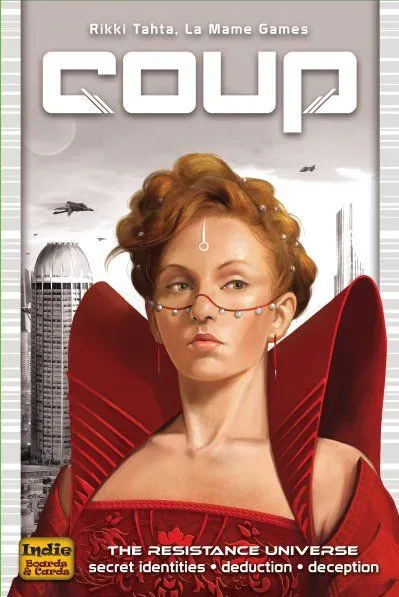
Coup
- 2–6 Spieler
- 15 Min.
- Komplexität 1,4/5
- 2012
2012
Regelhilfe für Lady Alice
Verständliche Erklärungen zu Spielzügen, Karteneffekten und strittigen Situationen mit Verweisen auf offizielle Quellen und gespeichertem Fragenverlauf.
Für 3 Personen
Was möchtest du wissen?
Antworten stammen aus dem offiziellen Regelheft, mit Seitenangabe zum Nachprüfen.
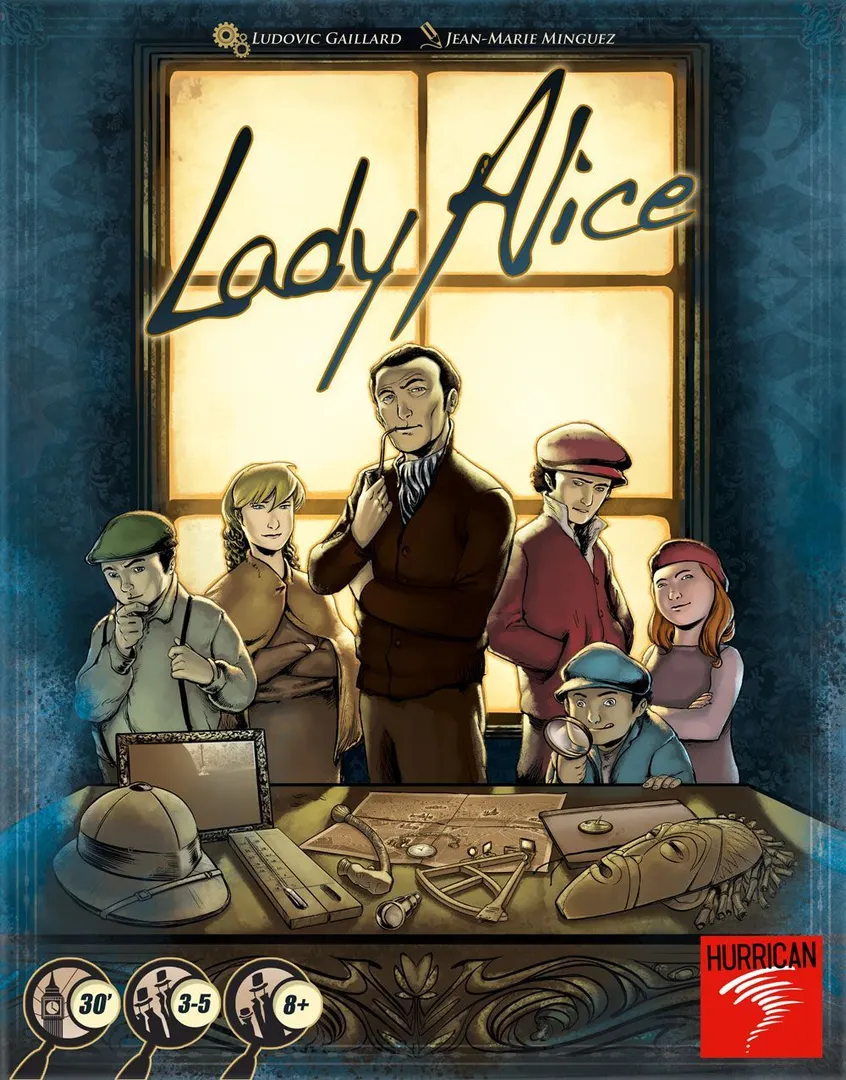
Lady Alice ist ein Brettspiel aus dem Jahr 2012 für 3–5 Personen, mit 30 Minuten pro Partie und ab 8 Jahren. Entwickelt wurde es von Ludovic Gaillard; die wichtigsten Mechaniken sind Memory und Betting and Bluffing.











Auf Englisch
In Lady Alice – a game of intrigue, flair, bluffing, and mischief – the players are the Baker Street Kids, children under the tutelage of Sherlock Holmes who must deduce the culprit behind the kidnapping of Henry Morton Stanley as well as the time and place the kidnapping occurred and which object was stolen at the same time. Holmes gives each player the solution to one of these categories at the start of the game, and players must keep such information secret. On a turn, the active player voices his suspicions in the form of a sentence – "I suspect ....... of having been seen at ....... at around ....... hundred in possession of ......." – filling in the blanks with one of the eight possibilities in each category. All players then secretly note whether or not they hold the evidence card for one of the four things named by placing a verdict card inside a folder. The active player shuffles these folders to disguise who answered in which ways, then reveals them. If all four items guessed were false, then you cover those four guesses on the game board with Holmes' business cards; otherwise players mentally note how many of the items were correct and try to decipher which ones those might be. Players then participate in a deduction round in which each player can: Place a deduction token on a clue. Say "I pass". Attempt an accusation. If all players pass successively, the round ends and the next player in clockwise order then voices a suspicion. Otherwise a player can pass, then place a deduction token or attempt an accusation later in the same round. Each player has nine deduction tokens in his color, three each of 0, 1 and 2. To place a token, you place it face-down on the clue of your choice to the right of any tokens already present; if any of those tokens are face-down, you reveal those tokens. At most four tokens can be placed on a clue. To attempt an accusation, you say, "I accuse (suspect) of having been been seen at (place) at around (time) in possession of (object)", then all players submit their verdict cards the same way they normally do. If all of them are positive, you've solved the case – but not necessarily won the game. All tokens on incorrect clues and all tokens belonging to players who made a false accusation are removed, then players tally the numbers on their tokens, scoring bonus points if they have a token on each piece of evidence, or if they made a correct suspicion or accusation. The player with the most points wins. With three or five players, you decrease (increase) the number of evidence cards handed out at the start of the game and the number of tokens that can be placed on a clue.
Laut Katalog unterstützt Lady Alice 3–5 Personen. Diese Spanne entspricht der vom Verlag angegebenen Spielerzahl, das Spiel lässt sich also für jede Gruppengröße innerhalb dieser Spanne aufbauen. Aufbau, einzelne Regeln und Wertungsdetails können je nach Personenzahl trotzdem abweichen; prüfe daher die genaue Konfiguration in der Anleitung deiner Ausgabe.
Die angegebene Spieldauer für Lady Alice beträgt 30 Minuten. Das ist die Schätzung des Verlags für eine vollständige Partie. Die tatsächliche Dauer hängt von der Gruppe, der Personenzahl und der Regelkenntnis ab: Erste Partien dauern meist länger, erfahrene Gruppen sind oft schneller fertig. Aufbau und Regelerklärung sind in dieser Schätzung nicht enthalten.
Im Katalog wird Lady Alice ab 8 Jahren empfohlen. Das ist die Empfehlung des Verlags und berücksichtigt Leseanforderungen, Regelkomplexität und Kleinteile, nicht nur das Thema. Jüngere Kinder können oft mit Hilfe eines Erwachsenen mitspielen; beachte die Altersangabe deiner Ausgabe und die Brettspielerfahrung deiner Gruppe.
Lady Alice hat bei BoardGameGeek eine Komplexitätswertung von 2,0 von 5 und gilt damit als leichtes Spiel. Die Wertung zeigt, wie viel Regelwissen, Planung und Entscheidungen eine typische Partie verlangt. Schwerere Spiele brauchen bei der ersten Erklärung mehr Zeit, daher hilft vor dem Spieleabend eine Vorbereitungsanleitung.
Lady Alice gehört zu diesen Kategorien: Deduction und Bluffing. Die wichtigsten Mechaniken sind Memory und Betting and Bluffing. Kategorien beschreiben Thema und Setting eines Spiels, Mechaniken dagegen, was die Spielenden in ihrem Zug tatsächlich tun. Jede Mechanik führt zu einer Katalogseite mit ähnlichen Spielen, falls du etwas Vergleichbares suchst.
Als Autoren von Lady Alice sind angegeben: Ludovic Gaillard. Diese Angaben stammen aus den veröffentlichten Spieldaten und nennen die für das Spieldesign verantwortlichen Personen, nicht die Illustratoren oder Verlage. Die Autorenseiten auf MeepleRules sammeln weitere Titel derselben Autoren – praktisch, wenn dir ein Spiel gefällt und du ähnliche Spiele suchst.
Im Katalog ist Lady Alice als Grundspiel aufgeführt. Es lässt sich eigenständig mit dem Material aus der Schachtel spielen und benötigt keinen weiteren Titel. Erweiterungen, sofern es welche gibt, ergänzen neues Material oder neue Regeln und sind im Katalog separat mit einem Verweis auf dieses Grundspiel aufgeführt.