
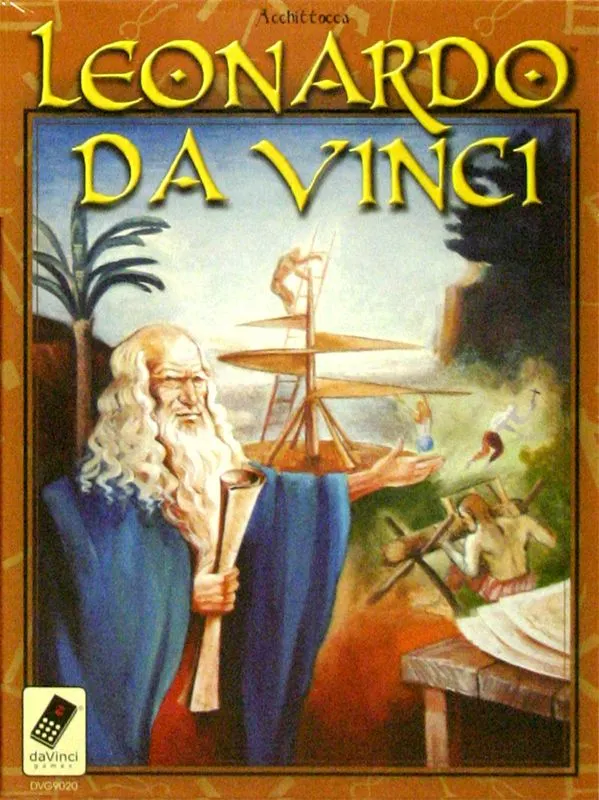
- BGG-Rang
- BGG #2.253
- BGG-Bewertung
- 6,7
Leonardo da Vinci
- 2–5 Spieler
- 90 Min.
- Komplexität 3,2/5
- 2006
2023
Regelhilfe für Leonardo da Vinci's Codex Leicester
Verständliche Erklärungen zu Spielzügen, Karteneffekten und strittigen Situationen mit Verweisen auf offizielle Quellen und gespeichertem Fragenverlauf.
Für 1 Person
Was möchtest du wissen?
Antworten stammen aus dem offiziellen Regelheft, mit Seitenangabe zum Nachprüfen.
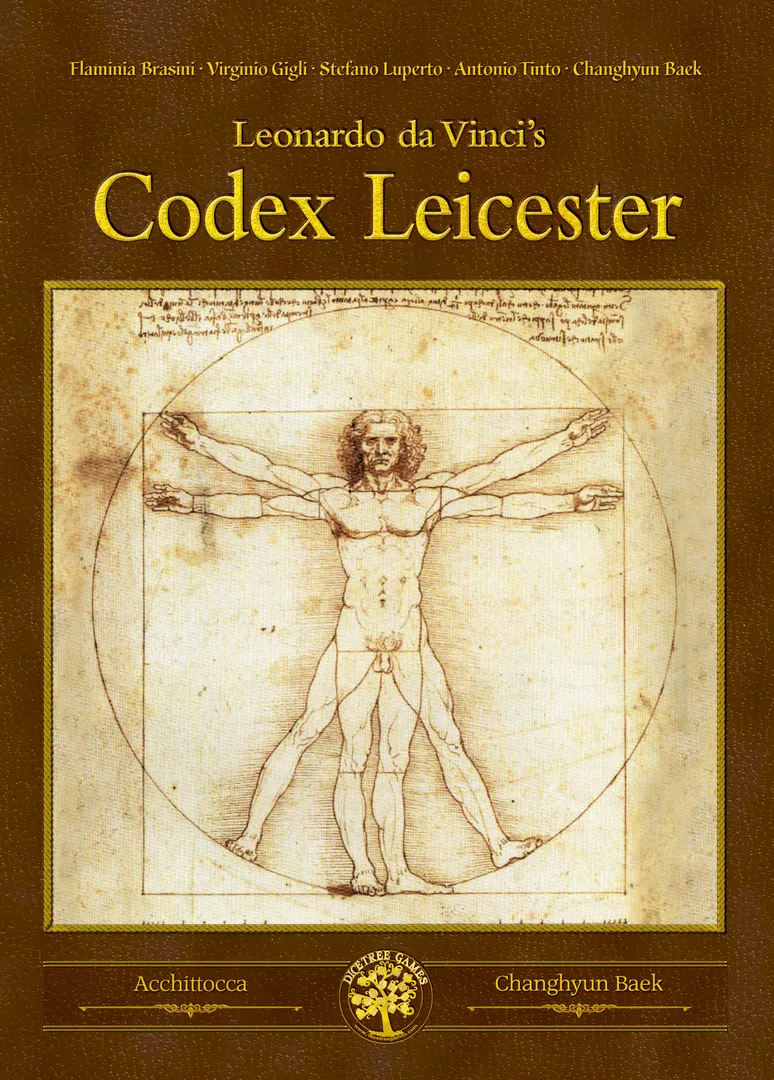
Leonardo da Vinci's Codex Leicester ist ein Brettspiel aus dem Jahr 2023 für 1–5 Personen, mit 30–150 Minuten pro Partie und ab 14 Jahren. Entwickelt wurde es von Stefano Luperto, Antonio Tinto, Virginio Gigli, Flaminia Brasini und Changhyun Baek; die wichtigsten Mechaniken sind Area Majority / Influence und Worker Placement.







Auf Englisch
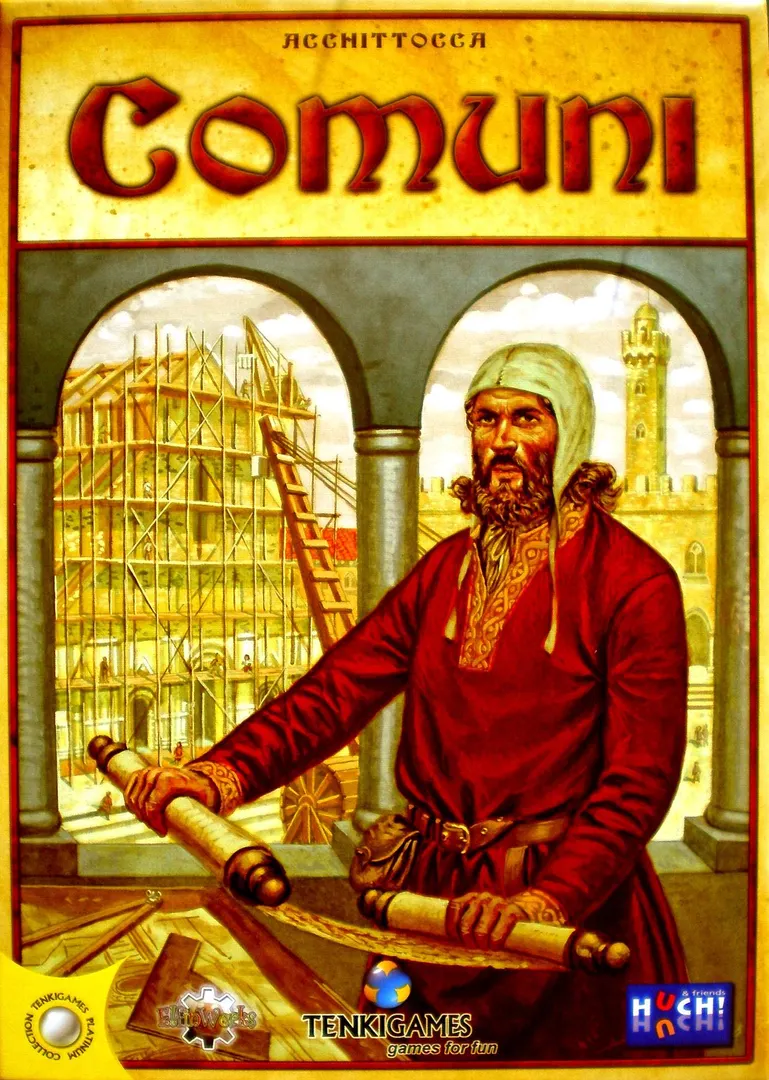
Codex Leicester is the reimplementation of Leonardo da Vinci (2006) by Acchittocca (Flaminia Brasini, Virginio Gigli, Stefano Luperto, Antonio Tinto) in collaboration with the founder of DiceTree Games, Changhyun Baek. It is a new game using the original’s system and theme. This is a worker placement game for 1 to 5 players, featuring strong player interaction. Playtime lasts approximately 30 minutes per player. Summary: Players find themselves as inventors trying to breathe life into their designs, all of which draw their inspiration from the notes of the master himself: the Codex Leicester of Leonardo da Vinci. Ranging from relatively simple to epic, all these inventions require materials and time to bring them to fruition. Of course, genius alone won’t get the job done. Get support from the Council and sponsors. You will need to expand your workshops and procure Automata designed by Leonardo himself – all this to increase your work efficiency. Hire apprentices straight out of the academy to nab highly coveted materials from the market before your rivals. Time is of the essence. Race to be the foremost in completing inventions. You will unlock rewards and special abilities if you are the first player to complete the inventions. Otherwise, you will get less rewards without special abilities. After 7 rounds, the player who has amassed the largest fortune will be awarded victory! Who among you will be the most ingenious Renaissance inventor? -description from publisher = Changes from Leonardo da Vinci (2006): - The allocation of start game resources has changed. 4 resource selection cards are distributed, of which 2 are kept, and their corresponding resources are collected. Receive additional resources according to to turn order. - Competitive elements have been strengthened for a 2 or 3 players game, allowing enjoyment of a similar tension at any player count. - More invention cards! An increase from 25 to 40 cards, with each card having special effects that players can use instantly, once in a round, and permanently. - More enticing Council options! An increase from four to eight options, with florins piling up on tiles that no one has chosen each time a new tile is placed. - Card resources have been replaced with meeples, and player screens have been added. - Invention card completion has been modified so that everyone knows what inventions are being worked on at any given time. - Invention cards are now divided into current and future spaces, adding a new dimension for strategic play. - The 15-week inventions are now only revealed at the start of the game, allowing players to prepare in advance. - Restrictions of the workshops have been lifted so that you can upgrade them, as well as add automata, in the middle of working on an invention. - Each player now gets six objectives, all of which yield rewards upon fulfillment. So if you find yourself falling behind in completing inventions, these objectives will help you catch up. - New effects have been added to the Laboratory and Academy. You can buy 1 work from the Laboratory and 1 resource from the Academy. Now there’s a reason to use the Laboratory and Academy in the later of the game. - The game consists of 7 rounds. Players pay salaries to hired assistants at the end of rounds 3, 5, and 7. Some effects of the Laboratory and Academy change in rounds 4 and 6. In round 7, players can sell resources instead of buying them. - The game comes with a double-sided game board; double-layered player boards; premium wooden, glass, and plastic resource tokens; and 12 transparent containers for storing components.
Laut Katalog unterstützt Leonardo da Vinci's Codex Leicester 1–5 Personen. Diese Spanne entspricht der vom Verlag angegebenen Spielerzahl, das Spiel lässt sich also für jede Gruppengröße innerhalb dieser Spanne aufbauen. Aufbau, einzelne Regeln und Wertungsdetails können je nach Personenzahl trotzdem abweichen; prüfe daher die genaue Konfiguration in der Anleitung deiner Ausgabe.
Die angegebene Spieldauer für Leonardo da Vinci's Codex Leicester beträgt 30–150 Minuten. Das ist die Schätzung des Verlags für eine vollständige Partie. Die tatsächliche Dauer hängt von der Gruppe, der Personenzahl und der Regelkenntnis ab: Erste Partien dauern meist länger, erfahrene Gruppen sind oft schneller fertig. Aufbau und Regelerklärung sind in dieser Schätzung nicht enthalten.
Im Katalog wird Leonardo da Vinci's Codex Leicester ab 14 Jahren empfohlen. Das ist die Empfehlung des Verlags und berücksichtigt Leseanforderungen, Regelkomplexität und Kleinteile, nicht nur das Thema. Jüngere Kinder können oft mit Hilfe eines Erwachsenen mitspielen; beachte die Altersangabe deiner Ausgabe und die Brettspielerfahrung deiner Gruppe.
Leonardo da Vinci's Codex Leicester hat bei BoardGameGeek eine Komplexitätswertung von 3,2 von 5 und gilt damit als mittelschweres Spiel. Die Wertung zeigt, wie viel Regelwissen, Planung und Entscheidungen eine typische Partie verlangt. Schwerere Spiele brauchen bei der ersten Erklärung mehr Zeit, daher hilft vor dem Spieleabend eine Vorbereitungsanleitung.
Leonardo da Vinci's Codex Leicester gehört zu diesen Kategorien: Industry / Manufacturing, Renaissance und Book. Die wichtigsten Mechaniken sind Area Majority / Influence und Worker Placement. Kategorien beschreiben Thema und Setting eines Spiels, Mechaniken dagegen, was die Spielenden in ihrem Zug tatsächlich tun. Jede Mechanik führt zu einer Katalogseite mit ähnlichen Spielen, falls du etwas Vergleichbares suchst.
Als Autoren von Leonardo da Vinci's Codex Leicester sind angegeben: Stefano Luperto, Antonio Tinto, Virginio Gigli, Flaminia Brasini und Changhyun Baek. Diese Angaben stammen aus den veröffentlichten Spieldaten und nennen die für das Spieldesign verantwortlichen Personen, nicht die Illustratoren oder Verlage. Die Autorenseiten auf MeepleRules sammeln weitere Titel derselben Autoren – praktisch, wenn dir ein Spiel gefällt und du ähnliche Spiele suchst.
Im Katalog ist Leonardo da Vinci's Codex Leicester als Grundspiel aufgeführt. Es lässt sich eigenständig mit dem Material aus der Schachtel spielen und benötigt keinen weiteren Titel. Erweiterungen, sofern es welche gibt, ergänzen neues Material oder neue Regeln und sind im Katalog separat mit einem Verweis auf dieses Grundspiel aufgeführt.