

- BGG-Rang
- BGG #23.906
- BGG-Bewertung
- 6,0
Coronation
- 2–6 Spieler
- 40 Min.
- Komplexität 1,8/5
- 2010
2011
Regelhilfe für Metro 2033
Verständliche Erklärungen zu Spielzügen, Karteneffekten und strittigen Situationen mit Verweisen auf offizielle Quellen und gespeichertem Fragenverlauf.
Für 2 Personen
Was möchtest du wissen?
Antworten stammen aus dem offiziellen Regelheft, mit Seitenangabe zum Nachprüfen.
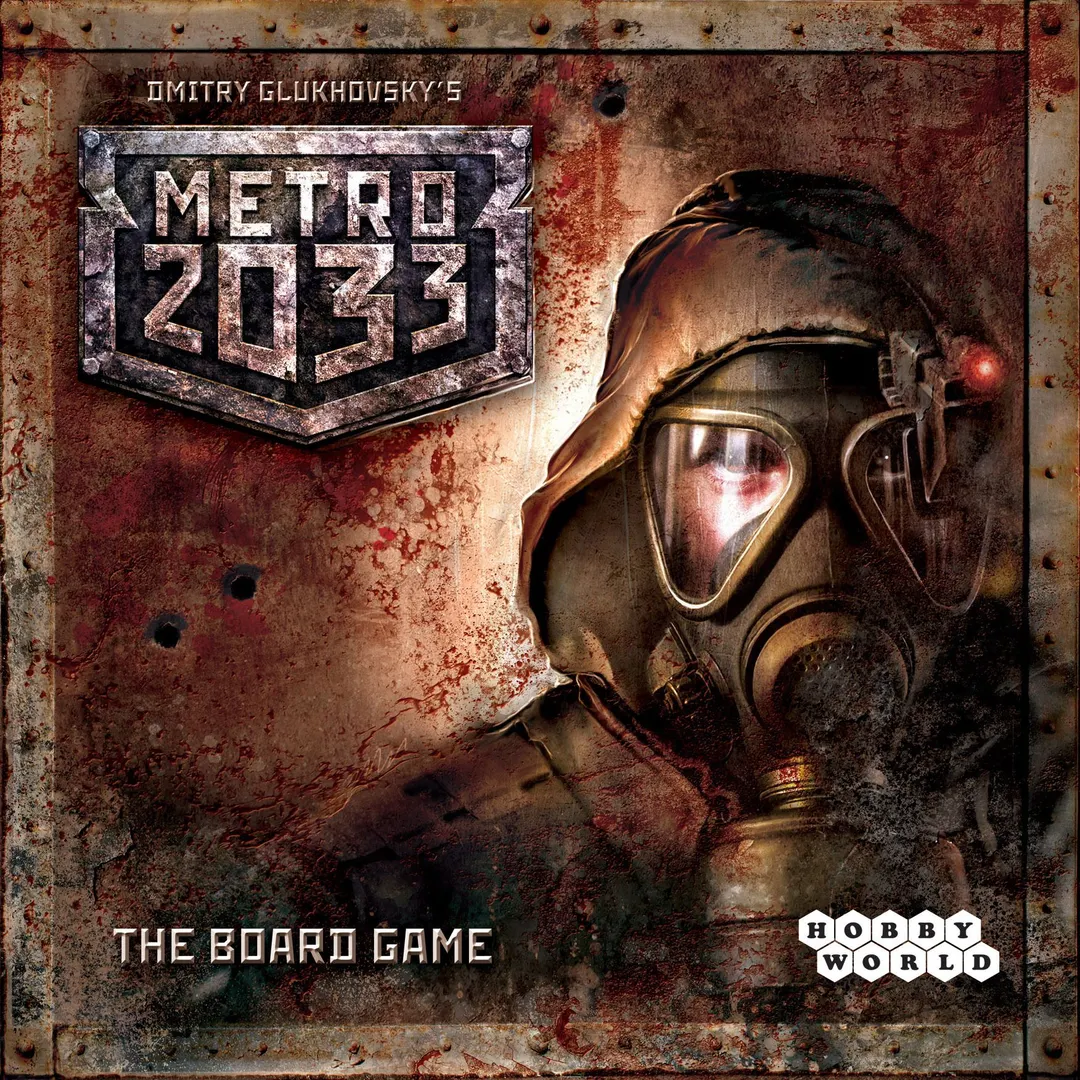
Metro 2033 ist ein Brettspiel aus dem Jahr 2011 für 2–6 Personen, mit 80 Minuten pro Partie und ab 12 Jahren. Entwickelt wurde es von Sergey Golubkin; die wichtigsten Mechaniken sind Area Majority / Influence und Voting.
Auf Englisch
Welcome to the future The year is 2033. The world is in ruins. All the major cities have been wiped away by a nuclear war. Flooded with radiation, the planet surface is largely unfit for life. Handfuls of survivors have found refuge in antinuclear bunkers, the largest of which is the Moscow Metro. The Metro has become humanity’s last haven after Judgment Day. Metro 2033 is based on the popular Metro 2033 universe created by Russian writer and journalist Dmitry Glukhovsky. After the nuclear strike, thousands of survivors have found refuge in the Moscow underground (a.k.a., the Metro) — the biggest shelter in the world. In the stations and tunnels deep below the surface a new civilization emerges. Gameplay Each player is a leader of one of the many factions of post-nuclear underground. In order to win, a faction has to achieve ten victory points (VPs). Each station under the faction's control gives it 1 VP; different quests also bring VPs when completed. The other way to win is to capture all four stations of Polis — the cultural and political heart of Metro. Each faction has a hero at its disposal. Heroes can travel the underground, gain quests and equipment that increases their abilities, fight opponents' heroes, attack stations, and so on. The army of a faction can also attack stations, and usually with better chances to win, but it can target only adjacent stations. Stations under factions' control produce resources — pigs, ammo and mushrooms — that are used to capture new stations, strenghten the army, buy equipment and obtain quests. The production of resources and other game events are determined by a special sequence. This sequence tells what will happen each round: production of certain recources, a vote for a new law, or a sudden attack from the dark that must be repelled. Players can attack stations with their armies or their heroes. Both have strength that may be increased by hiring new troops or buying useful equipment. When attacking a neutral station, the army/hero fights a random threat from the special deck and has to beat its strength. When attacking an opponent, the attacker confronts his army or hero. In battles between players a special set of combat cards is used; these cards give various bonuses to strength depending on the card chosen by the opponent, so the goal is to deduce which combat card will be used by the other side.
Laut Katalog unterstützt Metro 2033 2–6 Personen. Diese Spanne entspricht der vom Verlag angegebenen Spielerzahl, das Spiel lässt sich also für jede Gruppengröße innerhalb dieser Spanne aufbauen. Aufbau, einzelne Regeln und Wertungsdetails können je nach Personenzahl trotzdem abweichen; prüfe daher die genaue Konfiguration in der Anleitung deiner Ausgabe.
Die angegebene Spieldauer für Metro 2033 beträgt 80 Minuten. Das ist die Schätzung des Verlags für eine vollständige Partie. Die tatsächliche Dauer hängt von der Gruppe, der Personenzahl und der Regelkenntnis ab: Erste Partien dauern meist länger, erfahrene Gruppen sind oft schneller fertig. Aufbau und Regelerklärung sind in dieser Schätzung nicht enthalten.
Im Katalog wird Metro 2033 ab 12 Jahren empfohlen. Das ist die Empfehlung des Verlags und berücksichtigt Leseanforderungen, Regelkomplexität und Kleinteile, nicht nur das Thema. Jüngere Kinder können oft mit Hilfe eines Erwachsenen mitspielen; beachte die Altersangabe deiner Ausgabe und die Brettspielerfahrung deiner Gruppe.
Metro 2033 hat bei BoardGameGeek eine Komplexitätswertung von 2,7 von 5 und gilt damit als eher leichtes Spiel. Die Wertung zeigt, wie viel Regelwissen, Planung und Entscheidungen eine typische Partie verlangt. Schwerere Spiele brauchen bei der ersten Erklärung mehr Zeit, daher hilft vor dem Spieleabend eine Vorbereitungsanleitung.
Metro 2033 gehört zu diesen Kategorien: Adventure, Science Fiction und Novel-based. Die wichtigsten Mechaniken sind Area Majority / Influence und Voting. Kategorien beschreiben Thema und Setting eines Spiels, Mechaniken dagegen, was die Spielenden in ihrem Zug tatsächlich tun. Jede Mechanik führt zu einer Katalogseite mit ähnlichen Spielen, falls du etwas Vergleichbares suchst.
Als Autoren von Metro 2033 sind angegeben: Sergey Golubkin. Diese Angaben stammen aus den veröffentlichten Spieldaten und nennen die für das Spieldesign verantwortlichen Personen, nicht die Illustratoren oder Verlage. Die Autorenseiten auf MeepleRules sammeln weitere Titel derselben Autoren – praktisch, wenn dir ein Spiel gefällt und du ähnliche Spiele suchst.
Im Katalog ist Metro 2033 als Grundspiel aufgeführt. Es lässt sich eigenständig mit dem Material aus der Schachtel spielen und benötigt keinen weiteren Titel. Erweiterungen, sofern es welche gibt, ergänzen neues Material oder neue Regeln und sind im Katalog separat mit einem Verweis auf dieses Grundspiel aufgeführt.