
- BGG-Bewertung
- 7,3
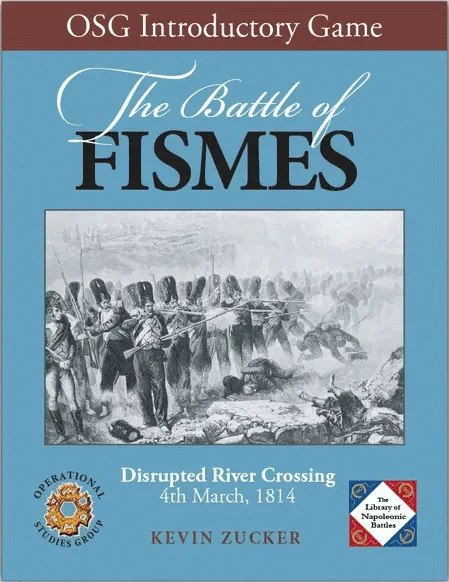
The Battle of Fismes: Disrupted River Crossing
- 2 Spieler
- Komplexität 3,5/5
- 2019
2019
Regelhilfe für Napoleon Retreats: Campaign in France, Part II
Verständliche Erklärungen zu Spielzügen, Karteneffekten und strittigen Situationen mit Verweisen auf offizielle Quellen und gespeichertem Fragenverlauf.
Für 2 Personen
Was möchtest du wissen?
Antworten stammen aus dem offiziellen Regelheft, mit Seitenangabe zum Nachprüfen.
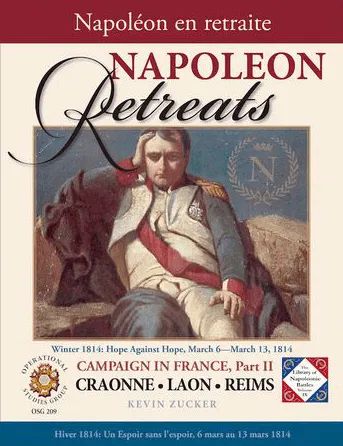
Napoleon Retreats: Campaign in France, Part II ist ein Brettspiel aus dem Jahr 2019 für 2–4 Personen, mit 60 Minuten pro Partie und ab 10 Jahren. Entwickelt wurde es von Kevin Zucker; die wichtigsten Mechaniken sind Dice Rolling, Hexagon Grid und Simulation.

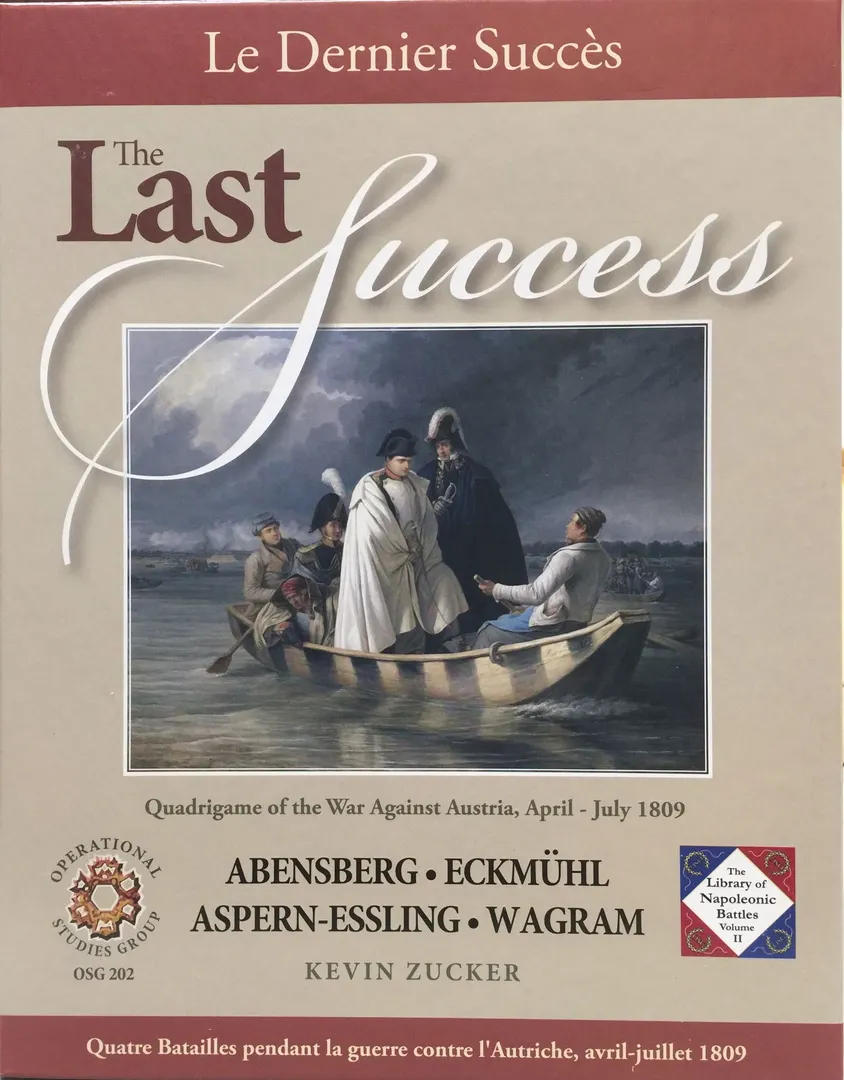
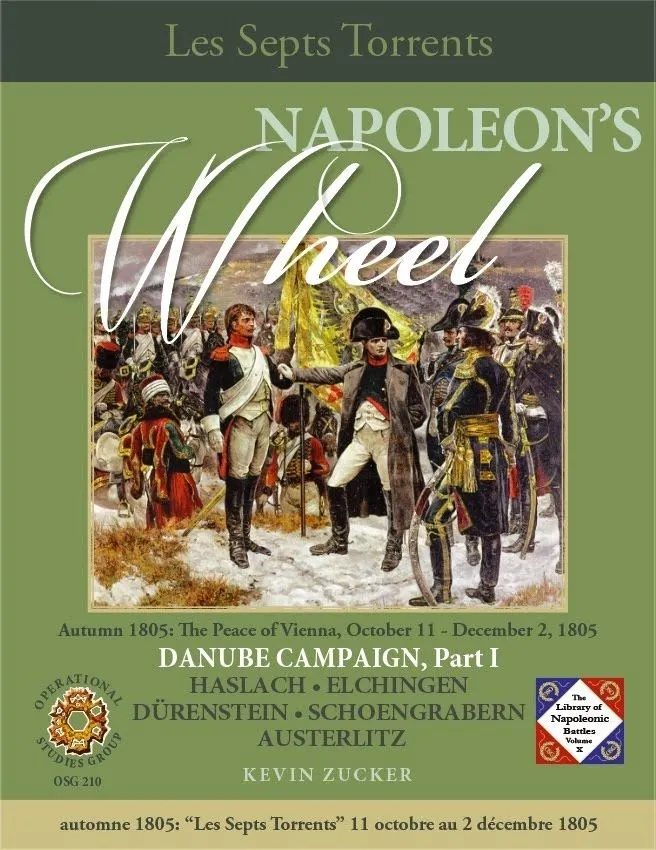
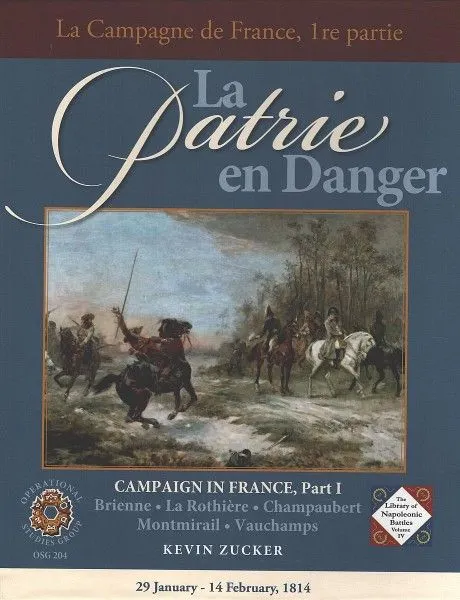
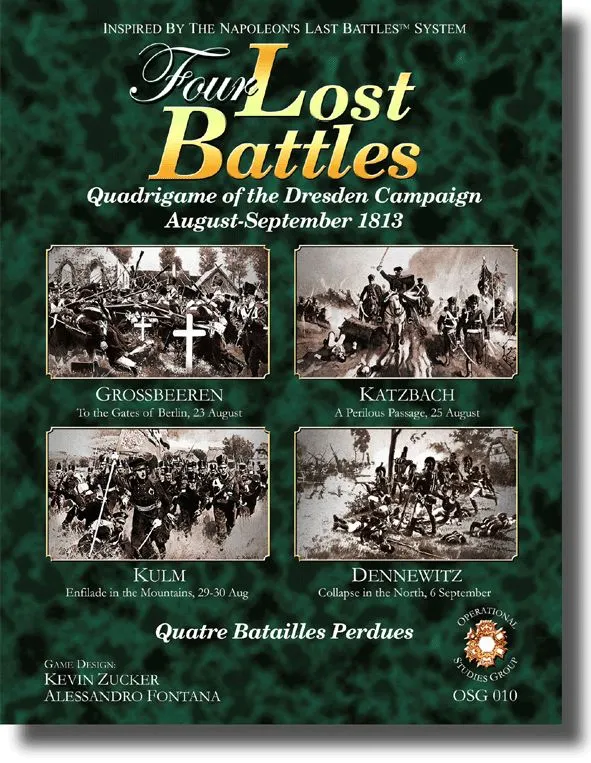
Auf Englisch
Napoleon Retreats - Campaign in France II Winter 1814: Hope Against Hope After dispatching Blücher’s Army of Silesia at Vauchamps, Napoleon diverted temporarily toward the Seine at Montereau, for an inconclusive brush with Schwarzenberg’s Army of Bohemia. His inveterate foe Blücher apparently had learned no lessons and threatened to move again on Paris. By March 3rd Napoleon was returning northward along the bank of the Ourcq River. The fall of Soissons, cheaply surrendered by General Moreau, saw the quarry escape over the Aisne River to link-up with 43,000 reinforcements near Laon, raising his strength to over 100,000. While the Emperor concentrated between Fismes and Berry au Bac, Blücher continued to retreat on Laon. Reaching Craonne, the Emperor decided to advance along the chemin des dames to test Blücher’s position on the plateau, and clear the flank of his advance on Laon. The next game of the TLNB-Series covers the Campaign in France, Part II: 6 March to 13 March 1814. The major battle was Laon, on 9-10 March, when Napoleon, with 37,000, went up against Blücher's position, on the hill of Laon, with 85,000. (Marshal Marmont with a separate VI Corps was supposed to support the attack, but he was dispersed in a night combat.) Blücher wasn't feeling well and failed to pursue. One more battle was to follow (after two days for R&R) and Napoleon won that battle: Reims, against St. Priest. So actually, he won two out of three. Battles Simulated Craonne, Struggle for the plateau des dames, 7 March The chemin des dames runs the length of a continuous ridge from the N2 to the N44, the two main highways leading north to Laon. Blücher stationed Sacken and Woronzoff’s infantry on the plateau just west of Craonne. Napoleon decided on a frontal attack up the chemin on what he believed to be no more than a 20,000-man rearguard. The Russians begrudgingly gave ground, gaining it back in a counterattack, and throwing Ney off the Plateau. Once the French Guard cavalry had stabilized the situation, the Russian right flank began to give way under combined pressure of infantry and cavalry. Napoleon directed 88 guns from the Guard artillery to destroy the Russian center and sent the Guard infantry to attack along the chemin to complete the victory. The Russians withdrew in good order. Laon, Beginning of the End, 9-10 March Marshal Ney advanced on Laon in the morning snow. Bülow with 17,000 men held the suburbs of Semilly and Ardon. On the plain west of Laon, Winzingerode was posted with 25,000 men; east of Laon at Athies, Yorck and Kleist held another 25,000 men; Langeron and Sacken were in reserve with 36,000; Napoleon attacked with fewer than 40,000. As the southern suburbs traded hands, Blücher thought that he was being attacked just by an advanced guard, but Napoleon threw everything into Ney’s attack up until 6 PM. Marmont commanded a separate force of 10,000 which had managed to fight their way to Athies by 5 PM, camping for the night. At 7:30, the Prussian Yorck launched a combined arms attack that routed Marmont’s entire camp. A small group of French Guardsmen managed to halt the pursuit. Marmont lost 45 guns, all his wagons, and 3,500 men. Blücher lost a chance to destroy his foe’s small army. Reims, A Quick Success en passant, 13 March On March 12th the Russian General St. Priest snatched Reims from its small French garrison. Hearing of this, Napoleon and his small force moved east on the 13th, beginning their attack at 4 PM, quickly driving out the enemy, and cutting communications between Blücher and Schwarzenberg at the same time. Only 10,000 French troops were actually engaged against 15,000 of St. Priest. St. Priest was killed along with 3,000 men while losing 23 guns. Campaign Game, 6 -13 March All three maps fit together to create an irregular playing area 44"x68" and covering an entire week of fighting. • Three 22" x 34" maps • 560 die-cut units • 100 playing cards • Two rulebooks • 15 player aid cards • Game Box STANDARD TLNB-GAME SYSTEM: • scale: 480m (525 yards)/ hex; • strength: 500-800 men/SP; • turn-duration: 1 hour/turn
Laut Katalog unterstützt Napoleon Retreats: Campaign in France, Part II 2–4 Personen. Diese Spanne entspricht der vom Verlag angegebenen Spielerzahl, das Spiel lässt sich also für jede Gruppengröße innerhalb dieser Spanne aufbauen. Aufbau, einzelne Regeln und Wertungsdetails können je nach Personenzahl trotzdem abweichen; prüfe daher die genaue Konfiguration in der Anleitung deiner Ausgabe.
Die angegebene Spieldauer für Napoleon Retreats: Campaign in France, Part II beträgt 60 Minuten. Das ist die Schätzung des Verlags für eine vollständige Partie. Die tatsächliche Dauer hängt von der Gruppe, der Personenzahl und der Regelkenntnis ab: Erste Partien dauern meist länger, erfahrene Gruppen sind oft schneller fertig. Aufbau und Regelerklärung sind in dieser Schätzung nicht enthalten.
Im Katalog wird Napoleon Retreats: Campaign in France, Part II ab 10 Jahren empfohlen. Das ist die Empfehlung des Verlags und berücksichtigt Leseanforderungen, Regelkomplexität und Kleinteile, nicht nur das Thema. Jüngere Kinder können oft mit Hilfe eines Erwachsenen mitspielen; beachte die Altersangabe deiner Ausgabe und die Brettspielerfahrung deiner Gruppe.
Napoleon Retreats: Campaign in France, Part II hat bei BoardGameGeek eine Komplexitätswertung von 3,0 von 5 und gilt damit als mittelschweres Spiel. Die Wertung zeigt, wie viel Regelwissen, Planung und Entscheidungen eine typische Partie verlangt. Schwerere Spiele brauchen bei der ersten Erklärung mehr Zeit, daher hilft vor dem Spieleabend eine Vorbereitungsanleitung.
Napoleon Retreats: Campaign in France, Part II gehört zu diesen Kategorien: Wargame und Napoleonic. Die wichtigsten Mechaniken sind Dice Rolling, Hexagon Grid und Simulation. Kategorien beschreiben Thema und Setting eines Spiels, Mechaniken dagegen, was die Spielenden in ihrem Zug tatsächlich tun. Jede Mechanik führt zu einer Katalogseite mit ähnlichen Spielen, falls du etwas Vergleichbares suchst.
Als Autoren von Napoleon Retreats: Campaign in France, Part II sind angegeben: Kevin Zucker. Diese Angaben stammen aus den veröffentlichten Spieldaten und nennen die für das Spieldesign verantwortlichen Personen, nicht die Illustratoren oder Verlage. Die Autorenseiten auf MeepleRules sammeln weitere Titel derselben Autoren – praktisch, wenn dir ein Spiel gefällt und du ähnliche Spiele suchst.
Im Katalog ist Napoleon Retreats: Campaign in France, Part II als Grundspiel aufgeführt. Es lässt sich eigenständig mit dem Material aus der Schachtel spielen und benötigt keinen weiteren Titel. Erweiterungen, sofern es welche gibt, ergänzen neues Material oder neue Regeln und sind im Katalog separat mit einem Verweis auf dieses Grundspiel aufgeführt.