
- BGG-Rang
- BGG #11.286
- BGG-Bewertung
- 7,5
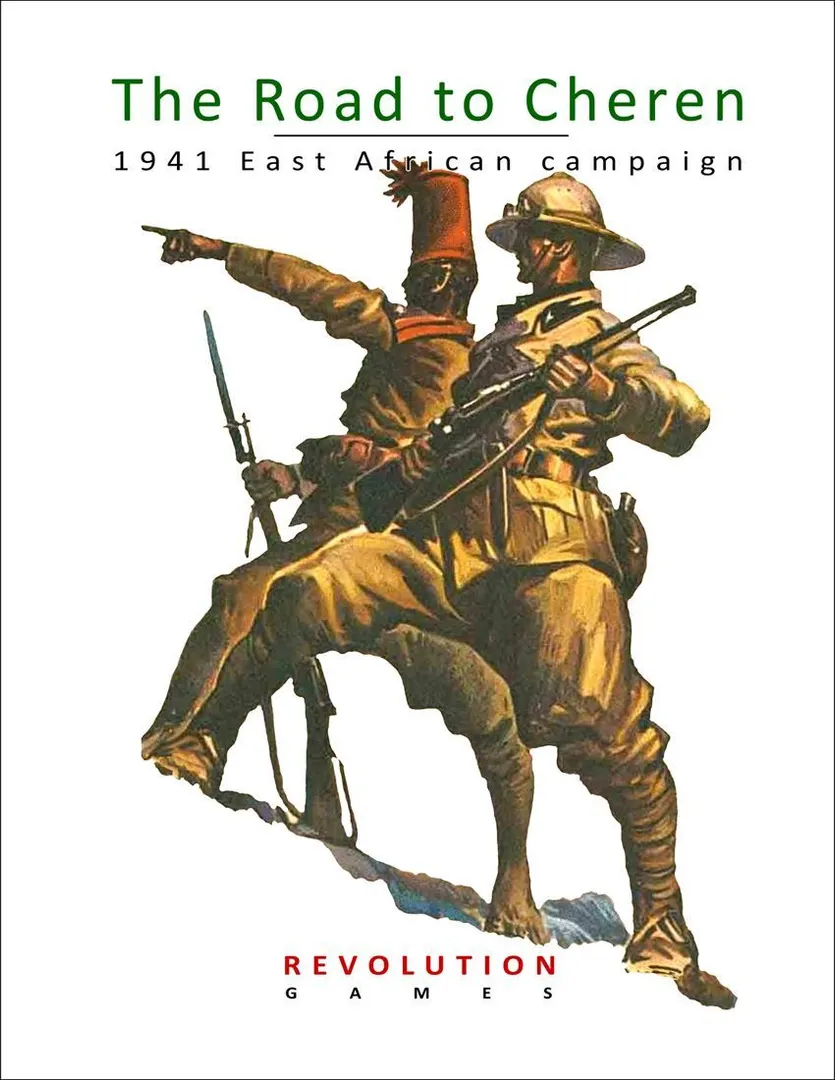
The Road to Cheren
- 2 Spieler
- 240 Min.
- Komplexität 2,3/5
- 2013
2018
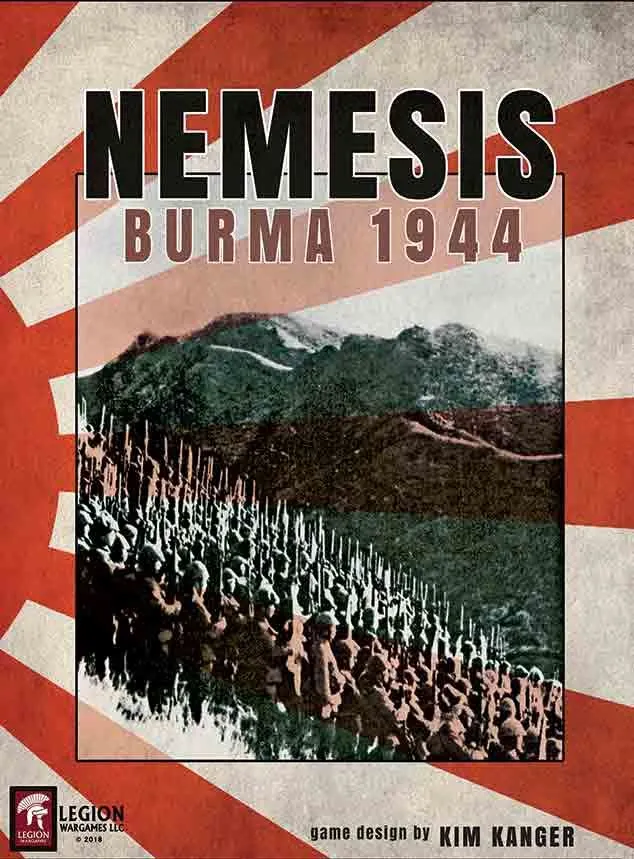
Regelhilfe für Nemesis: Burma 1944
Verständliche Erklärungen zu Spielzügen, Karteneffekten und strittigen Situationen mit Verweisen auf offizielle Quellen und gespeichertem Fragenverlauf.
Für 2 Personen
Was möchtest du wissen?
Antworten stammen aus dem offiziellen Regelheft, mit Seitenangabe zum Nachprüfen.
Nemesis: Burma 1944 ist ein Brettspiel aus dem Jahr 2018 für 2 Personen, mit 360–600 Minuten pro Partie und ab 12 Jahren. Entwickelt wurde es von Kim Kanger; die wichtigsten Mechaniken sind Dice Rolling, Hexagon Grid und Simulation.







Auf Englisch
From the designer: "Nemesis: The spirit of divine retribution against those who succumb to hubris" While Burma was the backwater of WW2, it contained several of the most colorful characters of the war. The background was such that... General Stilwell, who despised both British and Chinese (and the current American, except Marshall) leadership, wanted to fight the Japanese with Chinese troops, in Burma or in China. Roosevelt, while having no interest in rebuilding the British Empire, was at the same time incapable of seeing the Chinese Kuomintang regime as fascist as it really was. He often wanted to sack Stilwell for repeatedly reporting on Chinese incompetence and corruption. Chiang Kai-Shek was more interested in getting his hands on the valuable lend-lease supply the US was sending him through Stilwell, who he hated, than fighting the Japanese. He was not keen on putting Chinese troops under Stilwell's command in Burma since they might become well trained and then possibly turn on Chiang. But he accepted doing so if Stilwell used them for opening up a supply route to China once again. Churchill was not interested in Burma at all and wanted to focus on Singapore. Mountbatten, the Supreme Commander in India and Burma, wanted to attack into Burma, but through an amphibious assault further south instead. Wingate (some thought him to be certifiably insane) wanted to land special trained brigades in the middle of Burma and from there reconquer Southeast Asia. General Slim, who had to put up with his rude and querulous colleagues, Stilwell and Wingate; his flamboyant chief Mountbatten; the hopeless and incompetent Chiang Kai-Shek, just wanted to defeat the Japanese there in the north and from there retake the rest of Burma. In the meantime, in 1944, the Japanese, being outnumbered and with hardly any supply, said "enough is enough" and attacked. Why not? It worked in 1942. But this time Japanese hubris met Slim, the best British General of WW2, in the west; Stilwell's well trained and hard fighting Chinese troops in the North; Wingate's Chindit brigades in the middle amongst them; Chinese Yunnan soldiers who, after Chiang finally let them loose, took heavy casualties when investing the Japanese in the east. This time, after many ferocious battles, the Japanese met their Nemesis and were, in the end, utterly defeated. Nemesis features my "Open Game Turn" system. The Game Turn consists of only four phases: Assault (where a unit may move and "overrun"); Attack; Supply Check; Reinforcement. The phases are drawn as chits, so you will not know in what order they will appear, with the exception of the first chit in a Game Turn which is chosen from the first three drawn chits in the previous Game Turn. Both players have a set of four Phase Chits each and they take turns drawing them. The game mechanics are easy to master. The game play may not. The quality of the unit is the most important feature. Basically it affects four aspects: Not only will a high quality give an edge in combat, it also decides what kind of ZoC the unit is able to exert. The quality will decide how long a unit can be out of supply before attrition strikes, and how capable the unit is to make an operational move (a "double move"). Since ZoC is non-existent except when preventing enemy units conducting operational moves, it is very important which units you position and where you do so. Especially so, if you are uncertain of which phases there remain to be played. The game will also feature my "Active Combat" system. A combat result will have step losses and probably a retreat result. Step losses are straightforward. The retreat result though has to be enforced by the attacker. That is usually not a problem if it is done by a high quality unit. A unit with lesser quality may have to pay with step losses in order to do so. The defender then decides to retreat or resist. If it stays, then it takes step losses, depending on its quality. Before any attack, the Japanese player has the option to get an DRM in its favor (in attack or defense). But it comes with a price. Finally, there will be a two layer Victory Point system. There is a Satisfaction point track for each player. Some points can be actively acquired by you but are given once, usually those that will please your local commander. Some points can be actively acquired by the opponent and will be deducted every Game Turn from your track as long as the enemy controls them, usually those that displease your superiors. Then again, it is the same thing for your opponent. Those that you have received once are also the ones that are deducted each Game Turn from your opponent's track etc. In the end, as the commander, you will have to prioritize, depending on the current situation. Nemesis has a high replay value and if you love tense games when in action as well as games that allow you to ponder on possible "perfect opening moves", then this is the game for you.
Laut Katalog unterstützt Nemesis: Burma 1944 2 Personen. Das ist die vom Verlag angegebene Spielerzahl, das Spiel ist also genau für diese Anzahl von Mitspielenden ausgelegt. Varianten für andere Gruppengrößen sind, sofern vorhanden, in der Anleitung deiner Ausgabe beschrieben; prüfe sie, bevor du eine andere Konfiguration aufbaust.
Die angegebene Spieldauer für Nemesis: Burma 1944 beträgt 360–600 Minuten. Das ist die Schätzung des Verlags für eine vollständige Partie. Die tatsächliche Dauer hängt von der Gruppe, der Personenzahl und der Regelkenntnis ab: Erste Partien dauern meist länger, erfahrene Gruppen sind oft schneller fertig. Aufbau und Regelerklärung sind in dieser Schätzung nicht enthalten.
Im Katalog wird Nemesis: Burma 1944 ab 12 Jahren empfohlen. Das ist die Empfehlung des Verlags und berücksichtigt Leseanforderungen, Regelkomplexität und Kleinteile, nicht nur das Thema. Jüngere Kinder können oft mit Hilfe eines Erwachsenen mitspielen; beachte die Altersangabe deiner Ausgabe und die Brettspielerfahrung deiner Gruppe.
Nemesis: Burma 1944 hat bei BoardGameGeek eine Komplexitätswertung von 3,5 von 5 und gilt damit als mittelschweres Spiel. Die Wertung zeigt, wie viel Regelwissen, Planung und Entscheidungen eine typische Partie verlangt. Schwerere Spiele brauchen bei der ersten Erklärung mehr Zeit, daher hilft vor dem Spieleabend eine Vorbereitungsanleitung.
Nemesis: Burma 1944 gehört zu diesen Kategorien: Wargame und World War II. Die wichtigsten Mechaniken sind Dice Rolling, Hexagon Grid und Simulation. Kategorien beschreiben Thema und Setting eines Spiels, Mechaniken dagegen, was die Spielenden in ihrem Zug tatsächlich tun. Jede Mechanik führt zu einer Katalogseite mit ähnlichen Spielen, falls du etwas Vergleichbares suchst.
Als Autoren von Nemesis: Burma 1944 sind angegeben: Kim Kanger. Diese Angaben stammen aus den veröffentlichten Spieldaten und nennen die für das Spieldesign verantwortlichen Personen, nicht die Illustratoren oder Verlage. Die Autorenseiten auf MeepleRules sammeln weitere Titel derselben Autoren – praktisch, wenn dir ein Spiel gefällt und du ähnliche Spiele suchst.
Im Katalog ist Nemesis: Burma 1944 als Grundspiel aufgeführt. Es lässt sich eigenständig mit dem Material aus der Schachtel spielen und benötigt keinen weiteren Titel. Erweiterungen, sofern es welche gibt, ergänzen neues Material oder neue Regeln und sind im Katalog separat mit einem Verweis auf dieses Grundspiel aufgeführt.