
- BGG-Rang
- BGG #25.289
- BGG-Bewertung
- 5,9
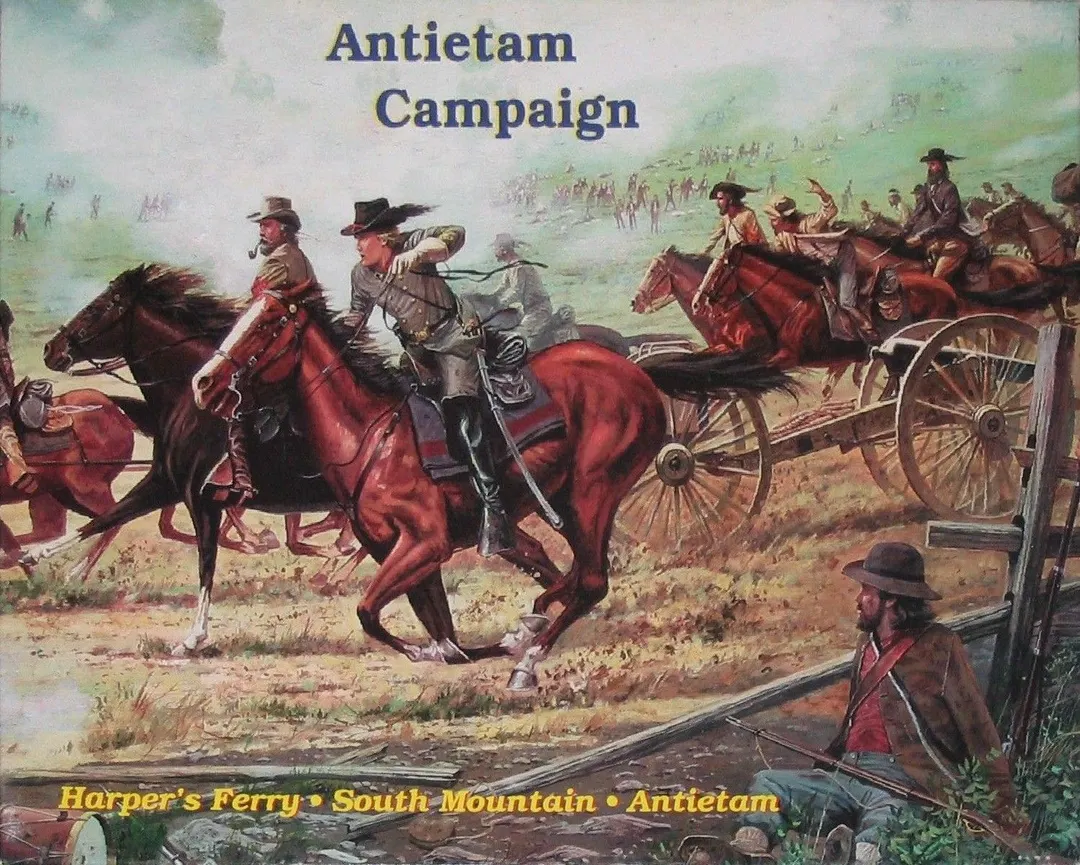
Antietam Campaign
- 1–2 Spieler
- Komplexität 2,2/5
- 1995
1993
Regelhilfe für Olustee
Verständliche Erklärungen zu Spielzügen, Karteneffekten und strittigen Situationen mit Verweisen auf offizielle Quellen und gespeichertem Fragenverlauf.
Für 2 Personen
Was möchtest du wissen?
Antworten stammen aus dem offiziellen Regelheft, mit Seitenangabe zum Nachprüfen.
Olustee ist ein Brettspiel aus dem Jahr 1993 für 2 Personen. Entwickelt wurde es von Charles L. Diamond; die wichtigsten Mechaniken sind Hexagon Grid.
Auf Englisch
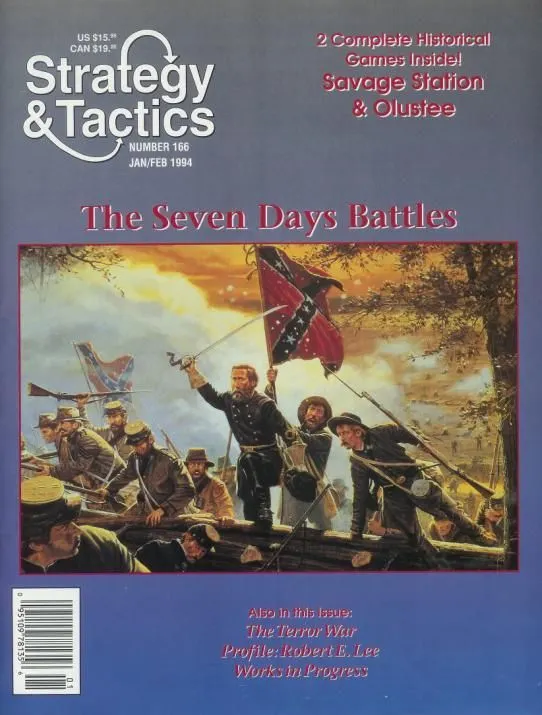
Olustee, is a simulation about The Battle of Olustee was fought on February 20, 1864, during the American Civil War. It was the only major battle fought in Florida during the war. Union General Truman Seymour had landed troops at Jacksonville, aiming chiefly to disrupt Confederate food supply. Meeting little resistance, he proceeded towards the state capital of Tallahassee, against orders, assuming that he would face only the small Florida militia. Confederates in Charleston sent reinforcements under General Alfred H. Colquitt and the two armies collided near Olustee Station. The Union forces were repulsed and retreated to Jacksonville where they stayed for the remainder of the war. Following the Florida, Atlantic and Gulf Central Railroad, Seymour led his 5,500 men in the direction of Lake City. At approximately 2:30 in the afternoon of February 20, the Union force approached General Finnegan's 5,000 Confederates entrenched near Olustee Station. Finnegan sent out an infantry brigade to meet Seymour's advance units and lure them into the Confederate entrenchments, but this plan went awry. The opposing forces met at Ocean Pond and the battle began. Seymour made the mistake of assuming he was once again facing Florida militia units he had previously routed with ease and committed his troops piecemeal into the battle. Finnegan and Seymour both reinforced their engaged units during the afternoon and the battle took place in open pine woods. The Union forces attacked but were savagely repulsed by withering barrages of rifle and cannon fire. The battle raged throughout the afternoon until, as Finnegan committed the last of his reserves, the Union line broke and began to retreat. Finnegan did not exploit the retreat, allowing most of the fleeing Union forces to reach Jacksonville. However, the Confederates did make a final attempt to engage the rear element of Seymour's forces just before nightfall, but they were repulsed by elements of the 54th Massachusetts Volunteer Infantry Regiment and the 35th United States Colored Troops, both composed of black soldiers. The Confederate cavalry commander received criticism for failing to pursue the retreating Union forces. Uses a slightly modified version of SPI's Blue & Gray rules, called Battles of the American Civil War that started with Seven Days Battles. Originally published by Decision Games (I) in Strategy & Tactics magazine #166, along with Savage Station. Note: Some replacement counters for this game, and the rules necessary to use them, were included in S&T 170: Atlanta Campaign. These counters completely replace those found in this game. Game Scale: Turn: approximately 1 hour Hex: 300 yards / 274 meters Units: 1 strength = 250 men Game Inventory: One 22 x 34" full color mapsheet One dual-side printed countersheet (120 1/2" counters) One 12-page combined Olustee/Savage Station rules booklet Complexity: Medium Solitaire Suitability: Medium Players: 1 or more Playing Time: 1-2 Hours Players will have to provide one 6-sided die
Laut Katalog unterstützt Olustee 2 Personen. Das ist die vom Verlag angegebene Spielerzahl, das Spiel ist also genau für diese Anzahl von Mitspielenden ausgelegt. Varianten für andere Gruppengrößen sind, sofern vorhanden, in der Anleitung deiner Ausgabe beschrieben; prüfe sie, bevor du eine andere Konfiguration aufbaust.
Olustee hat bei BoardGameGeek eine Komplexitätswertung von 2,3 von 5 und gilt damit als eher leichtes Spiel. Die Wertung zeigt, wie viel Regelwissen, Planung und Entscheidungen eine typische Partie verlangt. Schwerere Spiele brauchen bei der ersten Erklärung mehr Zeit, daher hilft vor dem Spieleabend eine Vorbereitungsanleitung.
Olustee gehört zu diesen Kategorien: Wargame und American Civil War. Die wichtigsten Mechaniken sind Hexagon Grid. Kategorien beschreiben Thema und Setting eines Spiels, Mechaniken dagegen, was die Spielenden in ihrem Zug tatsächlich tun. Jede Mechanik führt zu einer Katalogseite mit ähnlichen Spielen, falls du etwas Vergleichbares suchst.
Als Autoren von Olustee sind angegeben: Charles L. Diamond. Diese Angaben stammen aus den veröffentlichten Spieldaten und nennen die für das Spieldesign verantwortlichen Personen, nicht die Illustratoren oder Verlage. Die Autorenseiten auf MeepleRules sammeln weitere Titel derselben Autoren – praktisch, wenn dir ein Spiel gefällt und du ähnliche Spiele suchst.
Im Katalog ist Olustee als Grundspiel aufgeführt. Es lässt sich eigenständig mit dem Material aus der Schachtel spielen und benötigt keinen weiteren Titel. Erweiterungen, sofern es welche gibt, ergänzen neues Material oder neue Regeln und sind im Katalog separat mit einem Verweis auf dieses Grundspiel aufgeführt.