- BGG-Rang
- BGG #135
- BGG-Bewertung
- 7,7
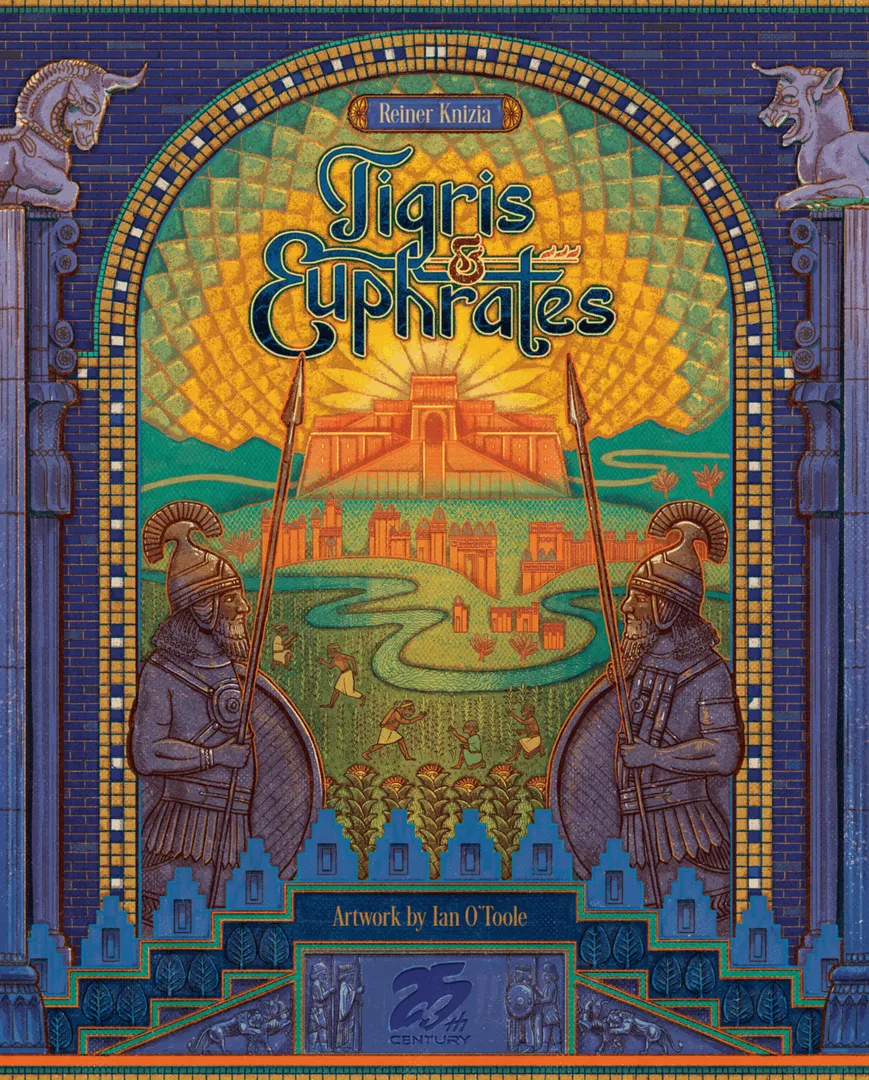
Euphrat & Tigris
2–4 Spieler60–120 Min.1997
Komplexität 3,5/5
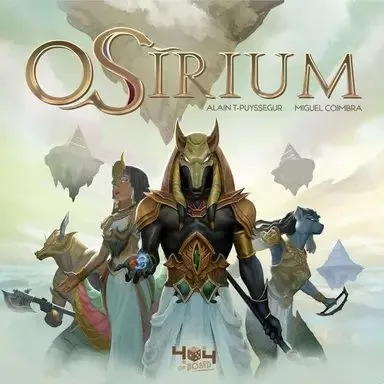
2021
Regelhilfe für OSIRIUM
Verständliche Erklärungen zu Spielzügen, Karteneffekten und strittigen Situationen mit gespeichertem Fragenverlauf.
Was möchtest du wissen?
Antworten stammen aus dem offiziellen Regelheft, mit Seitenangabe zum Nachprüfen.
OSIRIUM ist ein Brettspiel aus dem Jahr 2021 für 2–4 Personen, mit 30–90 Minuten pro Partie und ab 10 Jahren. Die wichtigsten Mechaniken sind Variable Player Powers, Hand Management und Race.
2–4 Spieler60–120 Min.1997

1–4 Spieler40–120 Min.2024
2–4 Spieler120 Min.2020

2–4 Spieler40–60 Min.2020

2–4 Spieler60–120 Min.2023

1–4 Spieler30–60 Min.2019
2–4 Spieler20–25 Min.2023

2–4 Spieler20–40 Min.2019

1–5 Spieler60–150 Min.2020
1–4 Spieler30–45 Min.2025

1–4 Spieler45–90 Min.2014
1–4 Spieler30–60 Min.2020
Auf Englisch
In Ancient Egypt, more than three millenia ago, men confronted each other in the Trial of Osirium under the eyes of the immortal Gods. Inspired by Osiris, the judge of souls who came back from the dead, the Osirium allowed to settle many conficts and to have the truth triumph. If honesty guides your actions, then you won’t be afraid of walking in the duat, and you will make your Deity proud. Goal of the Game Osirium is a trial. Your goal is to defeat your opponents to make the deity to whom you pledged allegiance proud. To do that, you need to collect as many points (or Ankhs) as possible, performing Rituals with various Amulets. 4 deities are available: Isis, Anubis, Bastet and Seth. The Trial The oldest player plays first, since it is assumed that they’ll join the gods sooner than the others… Then, the player on their left plays their turn, and so on. On your turn, You must play one of your 4 Amulet Cards. Place it on any free space of the board, choosing its orientation. Then, draw a new Amulet Card to have 4 Amulet Cards in your hand again. You can either take an Amulet Card from the Deities’ Market, or draw a random Amulet Card from the top of the draw pile. If you take a card from the Market, immediately replace it with a new card from the draw pile. You may cast one of the Rituals of your Deity Board (see Cast a Ritual on p.7). You can do this before or after placing an Amulet on the board. You can cast as many Rituals as you like. Casting a Ritual is not mandatory. Alternatively, you may decide to pass. This allows you to discard your entire hand of Amulet Cards to draw 4 new Amulet Cards instead. When you pass, ignore the two actions listed above. The Trial ends once a player has cast 5 Rituals. Check if any player has completed their Exaltation Card (a secret secondary objective), then proceed to final scoring. Cast a Ritual There are two types of Rituals: Simple Rituals and Advanced Rituals. Players receive Simple Rituals at the beginning of the game. They are easy to cast but do not score many points. Players may draw Advanced Rituals during the game. These Rituals score more points. Each Ritual Card depicts the Amulets required to cast the Ritual. To cast a Ritual, you must make sure that the depicted Amulets are correctly linked to each other: An Amulet is linked to the adjacent Amulet if both arrows are face to face. There must be no other Amulets between the arrows of the Amulets required to cast the Ritual. There can be more Amulets than required, of course. In that case, simply indicate the ones that you are using. A Ritual allows you to gain Ankhs (as many as indicated on the card, in front of the matching symbol). However, casting a Ritual consumes the Amulets’ energy. For this reason, some of them need to be broken. Remove the Amulet(s) of your choice from the ones used for the Ritual and place them in front of you. Rituals can be cast according to two principles: Order OR Chaos. ORDER : Such Rituals score more points and break less Amulets – which means that more Amulets remain available for the other players. CHAOS : The black symbols depict the Chaos Principle. Such Rituals score less points and break more Amulets. —description from the publisher
Laut Katalog unterstützt OSIRIUM 2–4 Personen. Diese Spanne entspricht der vom Verlag angegebenen Spielerzahl, das Spiel lässt sich also für jede Gruppengröße innerhalb dieser Spanne aufbauen. Aufbau, einzelne Regeln und Wertungsdetails können je nach Personenzahl trotzdem abweichen; prüfe daher die genaue Konfiguration in der Anleitung deiner Ausgabe.
Die angegebene Spieldauer für OSIRIUM beträgt 30–90 Minuten. Das ist die Schätzung des Verlags für eine vollständige Partie. Die tatsächliche Dauer hängt von der Gruppe, der Personenzahl und der Regelkenntnis ab: Erste Partien dauern meist länger, erfahrene Gruppen sind oft schneller fertig. Aufbau und Regelerklärung sind in dieser Schätzung nicht enthalten.
Im Katalog wird OSIRIUM ab 10 Jahren empfohlen. Das ist die Empfehlung des Verlags und berücksichtigt Leseanforderungen, Regelkomplexität und Kleinteile, nicht nur das Thema. Jüngere Kinder können oft mit Hilfe eines Erwachsenen mitspielen; beachte die Altersangabe deiner Ausgabe und die Brettspielerfahrung deiner Gruppe.
OSIRIUM hat bei BoardGameGeek eine Komplexitätswertung von 1,7 von 5 und gilt damit als leichtes Spiel. Die Wertung zeigt, wie viel Regelwissen, Planung und Entscheidungen eine typische Partie verlangt. Schwerere Spiele brauchen bei der ersten Erklärung mehr Zeit, daher hilft vor dem Spieleabend eine Vorbereitungsanleitung.
OSIRIUM gehört zu diesen Kategorien: Card Game, Abstract Strategy und Ancient. Die wichtigsten Mechaniken sind Variable Player Powers, Hand Management und Race. Kategorien beschreiben Thema und Setting eines Spiels, Mechaniken dagegen, was die Spielenden in ihrem Zug tatsächlich tun. Jede Mechanik führt zu einer Katalogseite mit ähnlichen Spielen, falls du etwas Vergleichbares suchst.
Im Katalog ist OSIRIUM als Grundspiel aufgeführt. Es lässt sich eigenständig mit dem Material aus der Schachtel spielen und benötigt keinen weiteren Titel. Erweiterungen, sofern es welche gibt, ergänzen neues Material oder neue Regeln und sind im Katalog separat mit einem Verweis auf dieses Grundspiel aufgeführt.
