
- BGG-Rang
- BGG #17.175
- BGG-Bewertung
- 7,5
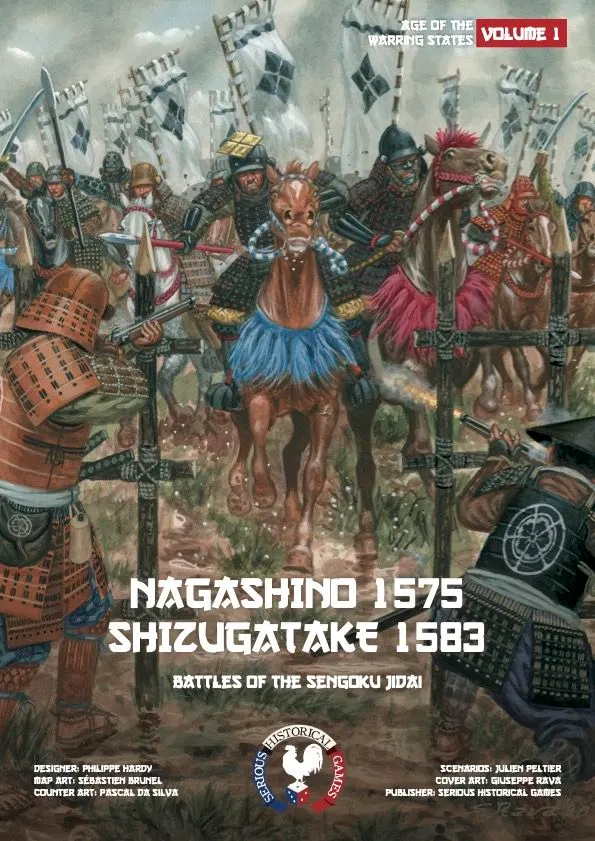
Nagashino 1575 & Shizugatake 1583
- 2 Spieler
- 120–240 Min.
- Komplexität 2,8/5
- 2022
2014
Regelhilfe für Par le Feu, le Fer et la Foi
Verständliche Erklärungen zu Spielzügen, Karteneffekten und strittigen Situationen mit Verweisen auf offizielle Quellen und gespeichertem Fragenverlauf.
Für 2 Personen
Was möchtest du wissen?
Antworten stammen aus dem offiziellen Regelheft, mit Seitenangabe zum Nachprüfen.
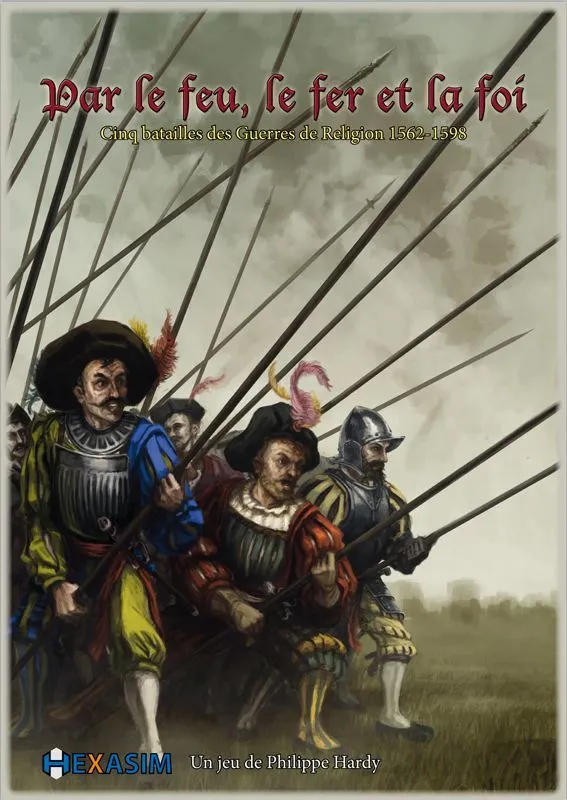
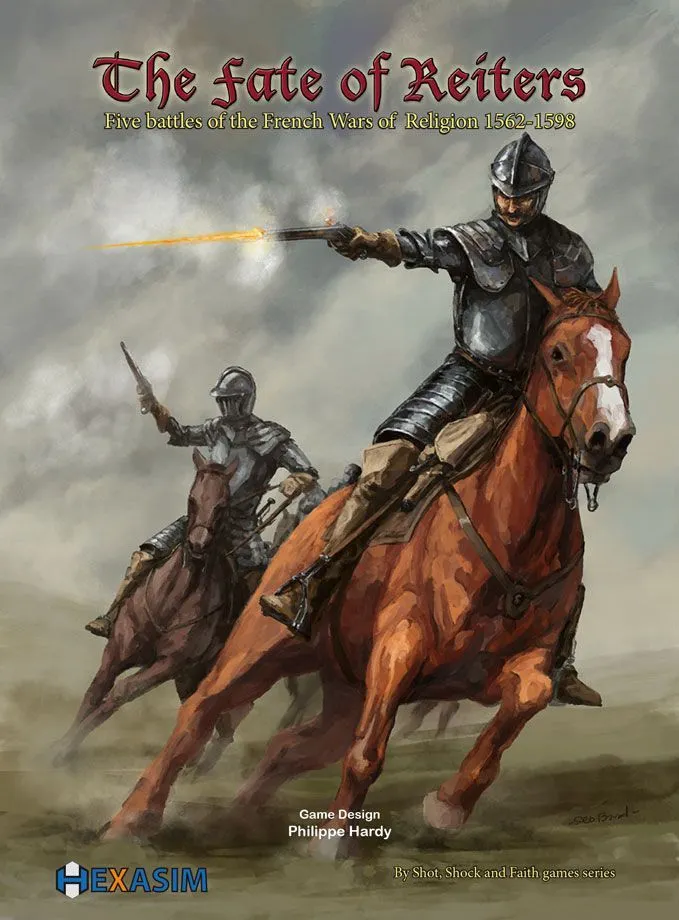
Par le Feu, le Fer et la Foi ist ein Brettspiel aus dem Jahr 2014 für 2 Personen, mit 120 Minuten pro Partie und ab 14 Jahren. Entwickelt wurde es von Philippe Hardy; die wichtigsten Mechaniken sind Area Movement, Dice Rolling und Variable Set-up.




Auf Englisch
Par le Feu, le Fer et la Foi (By Shot, Shock and Faith) is a Grand-Tactical level board-wargame which, for the first time, allows the simulation of five battles of the Late Renaissance era : SAINT-DENIS (November 10th, 1567) JARNAC (March 13th, 1569) LA ROCHE L'ABEILLE (June 25th, 1569) COUTRAS (October 20th, 1587) ARQUES (September 21st, 1589) Par le Feu, le Fer et la Foi (By Shot, Shock and Faith) allows the simulation of Religious Wars that occurred in France from 1562 to 1598. This civil war opposes, in a first conflict phase, Protestants - otherwise known as Huguenots - to Catholics, then Royalists to League members after the accession of Henri IV to the throne in 1589. The art of war during this period of the Renaissance is rapidly changing. The great feudal landlords, steeped in morals, fight alongside mercenaries motivated by sole cupidity. The diversity of the weapons that are used offers great tactical possibilities, based on impact and fire. Gendarmes, cuirassiers, reiters, harquebusiers, lansquenets and Swiss mercenaries confront each other in a merciless fight. This is a classic wargame system ; « I go, You go », of average complexity, including, during the active player's phase, a sequence of reaction from the passive player, such as fire, counter-charge or tactical backstep. The maps are whith areas from 300 to 500 meters by side. A color code allows to easily determine the costs of movements and the line of sight. The scale of the game is one unit for 100 to 500 soldiers or one or two guns. One game turn represents a duration of 20 to 30 minutes. A corps represents either a vanguard or a rearguard, or the main body called battle. The combats allow to simulate charges « in wall », the merciless shocks between pikemen, the artillery fire and highlight, by a support system, the combination of iron -shock- and fire -shooting. The optional rules - caracoles, orders, lost children, looting - add even more realism to the era's battles. The rules and the five battles offered are based on a thorough bibliography and researches made into books written by (non???) contemporary authors, specifically François de la Noue for the Protestants and Blaise de Montluc for the Catholics, and also on precise topographical plans of each battlefield that is still accessible, except for Saint-Denis... Are you ready to put on the Prince of Condé's, the admiral of Coligny's, the constable of Montmorency's, Anne de Joyeuse's or Henri of Navarre's armours and to fight your enemies «By Shot, Shock and Faith» ? P3F, the new HEXASIM opus offers you this option with an innovating and elegant wargame. Components three A2 maps (597x420 mm) (two printed out on both sides, one on one side only) 540 die-cut counters of 15mm (2 sheets in A4 size, 1 in A5 size) A rules booklet printed in full-color (16 pages) An examples booklet printed in full-color (16 pages) Play aids 2 dice (source: Hexasim website)
Laut Katalog unterstützt Par le Feu, le Fer et la Foi 2 Personen. Das ist die vom Verlag angegebene Spielerzahl, das Spiel ist also genau für diese Anzahl von Mitspielenden ausgelegt. Varianten für andere Gruppengrößen sind, sofern vorhanden, in der Anleitung deiner Ausgabe beschrieben; prüfe sie, bevor du eine andere Konfiguration aufbaust.
Die angegebene Spieldauer für Par le Feu, le Fer et la Foi beträgt 120 Minuten. Das ist die Schätzung des Verlags für eine vollständige Partie. Die tatsächliche Dauer hängt von der Gruppe, der Personenzahl und der Regelkenntnis ab: Erste Partien dauern meist länger, erfahrene Gruppen sind oft schneller fertig. Aufbau und Regelerklärung sind in dieser Schätzung nicht enthalten.
Im Katalog wird Par le Feu, le Fer et la Foi ab 14 Jahren empfohlen. Das ist die Empfehlung des Verlags und berücksichtigt Leseanforderungen, Regelkomplexität und Kleinteile, nicht nur das Thema. Jüngere Kinder können oft mit Hilfe eines Erwachsenen mitspielen; beachte die Altersangabe deiner Ausgabe und die Brettspielerfahrung deiner Gruppe.
Par le Feu, le Fer et la Foi hat bei BoardGameGeek eine Komplexitätswertung von 2,8 von 5 und gilt damit als eher leichtes Spiel. Die Wertung zeigt, wie viel Regelwissen, Planung und Entscheidungen eine typische Partie verlangt. Schwerere Spiele brauchen bei der ersten Erklärung mehr Zeit, daher hilft vor dem Spieleabend eine Vorbereitungsanleitung.
Par le Feu, le Fer et la Foi gehört zu diesen Kategorien: Wargame, Renaissance und Pike and Shot. Die wichtigsten Mechaniken sind Area Movement, Dice Rolling und Variable Set-up. Kategorien beschreiben Thema und Setting eines Spiels, Mechaniken dagegen, was die Spielenden in ihrem Zug tatsächlich tun. Jede Mechanik führt zu einer Katalogseite mit ähnlichen Spielen, falls du etwas Vergleichbares suchst.
Als Autoren von Par le Feu, le Fer et la Foi sind angegeben: Philippe Hardy. Diese Angaben stammen aus den veröffentlichten Spieldaten und nennen die für das Spieldesign verantwortlichen Personen, nicht die Illustratoren oder Verlage. Die Autorenseiten auf MeepleRules sammeln weitere Titel derselben Autoren – praktisch, wenn dir ein Spiel gefällt und du ähnliche Spiele suchst.
Im Katalog ist Par le Feu, le Fer et la Foi als Grundspiel aufgeführt. Es lässt sich eigenständig mit dem Material aus der Schachtel spielen und benötigt keinen weiteren Titel. Erweiterungen, sofern es welche gibt, ergänzen neues Material oder neue Regeln und sind im Katalog separat mit einem Verweis auf dieses Grundspiel aufgeführt.