
- BGG-Rang
- BGG #1.521
- BGG-Bewertung
- 7,7
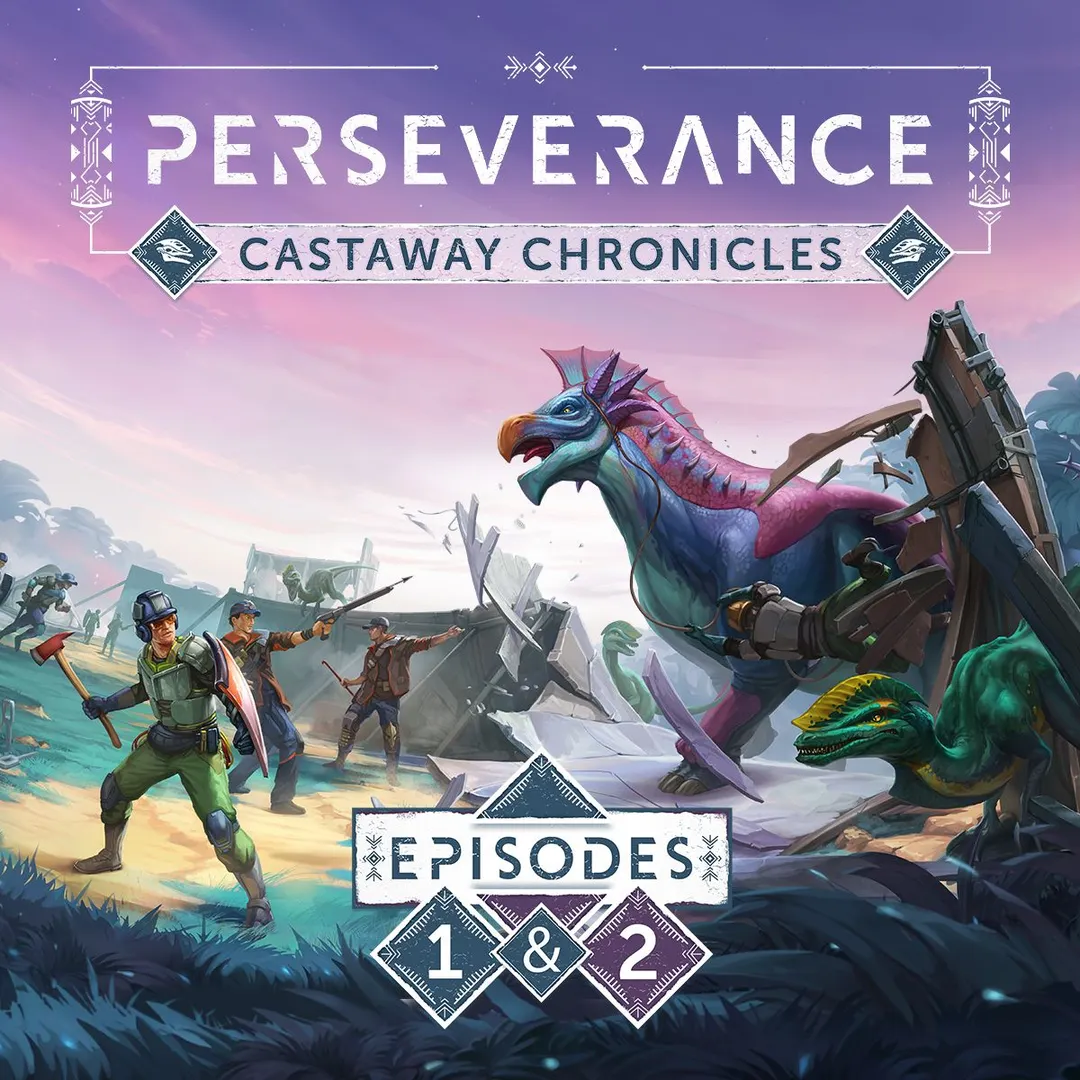
Perseverance: Castaway Chronicles – Episodes 1 & 2
- 1–4 Spieler
- 80–180 Min.
- Komplexität 4,2/5
- 2022
2025
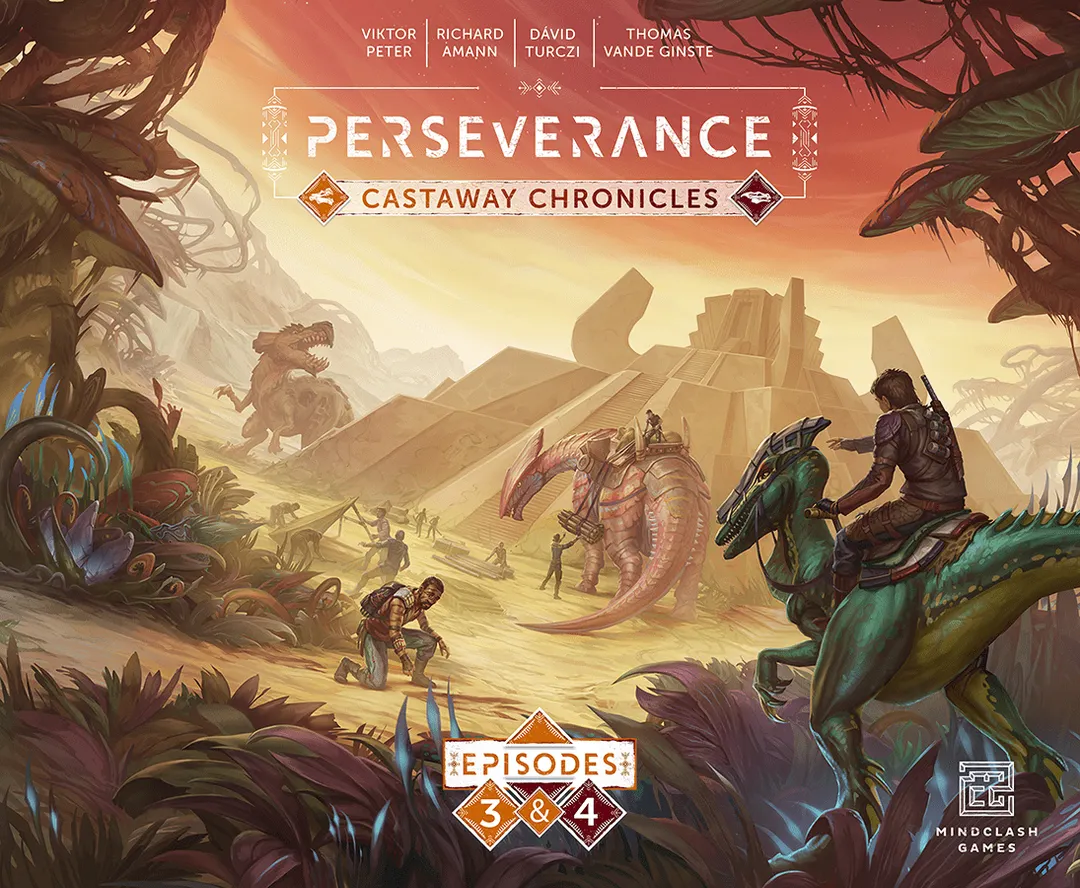
Regelhilfe für Perseverance: Castaway Chronicles – Episodes 3 & 4
Verständliche Erklärungen zu Spielzügen, Karteneffekten und strittigen Situationen mit Verweisen auf offizielle Quellen und gespeichertem Fragenverlauf.
Für 1 Person
Was möchtest du wissen?
Antworten stammen aus dem offiziellen Regelheft, mit Seitenangabe zum Nachprüfen.
Perseverance: Castaway Chronicles – Episodes 3 & 4 ist ein Brettspiel aus dem Jahr 2025 für 1–4 Personen, mit 90–180 Minuten pro Partie und ab 12 Jahren. Entwickelt wurde es von Viktor Péter, Richard Ámann, Dávid Turczi und Thomas Vande Ginste; die wichtigsten Mechaniken sind Area Majority / Influence, Tile Placement und Solo / Solitaire Game.





Auf Englisch
As the months since the shipwreck turn into years and memories of our past life fade, we now call this strange new land our home. Perseverance has grown from a weathered foothold to a bustling city, where new landmarks improve our living standards, and expansive ranches contribute to society’s welfare and the ongoing exploration. The once ferocious Shieldheads now walk among us tamed, and our brave Dino Riders are finally able to chart even the most distant parts of the wilderness. They come back with tales of abandoned structures in the far reaches of the island, similar to the one that held the secret of Shieldhead taming. If the rumors are true, we may be able to make our peace with even the stalwart Thunderhorns and the fearsome Ironjaws, and our society’s influence will soon span the entire island! And while these eerie ruins hold answers, they raise even more questions. Who are their creators? What happened to them? Are they truly gone? The answers are out there, waiting to be discovered. Let’s hope we’re ready for them! Perseverance: Castaway Chronicles - Episodes 3 and 4 are two medium-heavy, thematic Euro games, concluding the story of time-lost survivors on a dinosaur island. Each Episode is playable as a standalone game, or in the Chronicle mode that ties four games - one with each Episode - into a continuous story. As the hallmark of the Perseverance series, each Episode features many unique characteristics and a very distinct game feel, but their core mechanisms and concepts are similar, making each new Episode much easier to learn. In Episode 3, Perseverance is finally safe from the dinosaur attacks and has grown into a bustling city. As players discover how to tame and ride the Dinosaurs (including the new Thunderhorn and Ironjaw species), as their primary action, they may now choose to send a Dino Rider into the far reaches of the island instead of placing a die in the city. Besides streamlining some of the usual area majority elements, Episode 3 takes a new approach, focusing on engine and tableau building. City Landmarks provide powerful passive benefits, while players may build and customize their own Ranches on their player boards, activating them as a secondary action using the new Supply resource acquired from the wilderness. Episode 4 brings the story to an epic conclusion as you face off against the Ancients, a mysterious race that once ruled the island. Even though the situation is dire, the dimensional storm that made their return possible also presents an almost impossible opportunity: to refit the hollowed-out husk of the Pearl of the Seas ocean liner for one last journey, back to your homeworld.
Laut Katalog unterstützt Perseverance: Castaway Chronicles – Episodes 3 & 4 1–4 Personen. Diese Spanne entspricht der vom Verlag angegebenen Spielerzahl, das Spiel lässt sich also für jede Gruppengröße innerhalb dieser Spanne aufbauen. Aufbau, einzelne Regeln und Wertungsdetails können je nach Personenzahl trotzdem abweichen; prüfe daher die genaue Konfiguration in der Anleitung deiner Ausgabe.
Die angegebene Spieldauer für Perseverance: Castaway Chronicles – Episodes 3 & 4 beträgt 90–180 Minuten. Das ist die Schätzung des Verlags für eine vollständige Partie. Die tatsächliche Dauer hängt von der Gruppe, der Personenzahl und der Regelkenntnis ab: Erste Partien dauern meist länger, erfahrene Gruppen sind oft schneller fertig. Aufbau und Regelerklärung sind in dieser Schätzung nicht enthalten.
Im Katalog wird Perseverance: Castaway Chronicles – Episodes 3 & 4 ab 12 Jahren empfohlen. Das ist die Empfehlung des Verlags und berücksichtigt Leseanforderungen, Regelkomplexität und Kleinteile, nicht nur das Thema. Jüngere Kinder können oft mit Hilfe eines Erwachsenen mitspielen; beachte die Altersangabe deiner Ausgabe und die Brettspielerfahrung deiner Gruppe.
Perseverance: Castaway Chronicles – Episodes 3 & 4 hat bei BoardGameGeek eine Komplexitätswertung von 4,6 von 5 und gilt damit als schweres Spiel. Die Wertung zeigt, wie viel Regelwissen, Planung und Entscheidungen eine typische Partie verlangt. Schwerere Spiele brauchen bei der ersten Erklärung mehr Zeit, daher hilft vor dem Spieleabend eine Vorbereitungsanleitung.
Perseverance: Castaway Chronicles – Episodes 3 & 4 gehört zu diesen Kategorien: Dice, Exploration und Adventure. Die wichtigsten Mechaniken sind Area Majority / Influence, Tile Placement und Solo / Solitaire Game. Kategorien beschreiben Thema und Setting eines Spiels, Mechaniken dagegen, was die Spielenden in ihrem Zug tatsächlich tun. Jede Mechanik führt zu einer Katalogseite mit ähnlichen Spielen, falls du etwas Vergleichbares suchst.
Als Autoren von Perseverance: Castaway Chronicles – Episodes 3 & 4 sind angegeben: Viktor Péter, Richard Ámann, Dávid Turczi und Thomas Vande Ginste. Diese Angaben stammen aus den veröffentlichten Spieldaten und nennen die für das Spieldesign verantwortlichen Personen, nicht die Illustratoren oder Verlage. Die Autorenseiten auf MeepleRules sammeln weitere Titel derselben Autoren – praktisch, wenn dir ein Spiel gefällt und du ähnliche Spiele suchst.
Im Katalog ist Perseverance: Castaway Chronicles – Episodes 3 & 4 als Grundspiel aufgeführt. Es lässt sich eigenständig mit dem Material aus der Schachtel spielen und benötigt keinen weiteren Titel. Erweiterungen, sofern es welche gibt, ergänzen neues Material oder neue Regeln und sind im Katalog separat mit einem Verweis auf dieses Grundspiel aufgeführt.