
- BGG-Rang
- BGG #2.576
- BGG-Bewertung
- 7,9
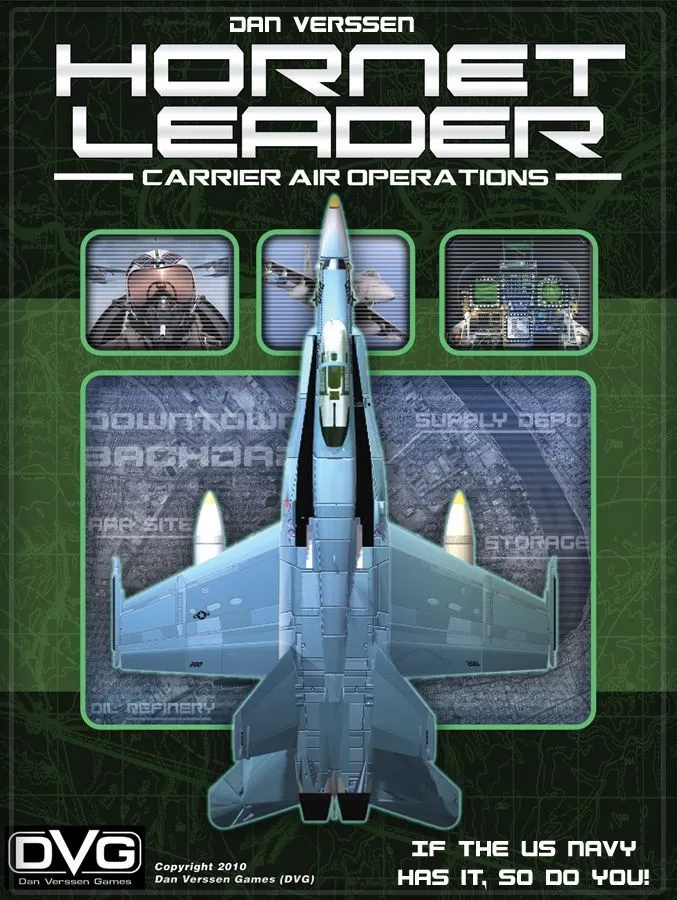
Hornet Leader: Carrier Air Operations
- 1 Spieler
- 60 Min.
- Komplexität 2,8/5
- 2010
2010
Regelhilfe für Phantom Leader
Verständliche Erklärungen zu Spielzügen, Karteneffekten und strittigen Situationen mit Verweisen auf offizielle Quellen und gespeichertem Fragenverlauf.
Für 1 Person
Was möchtest du wissen?
Antworten stammen aus dem offiziellen Regelheft, mit Seitenangabe zum Nachprüfen.
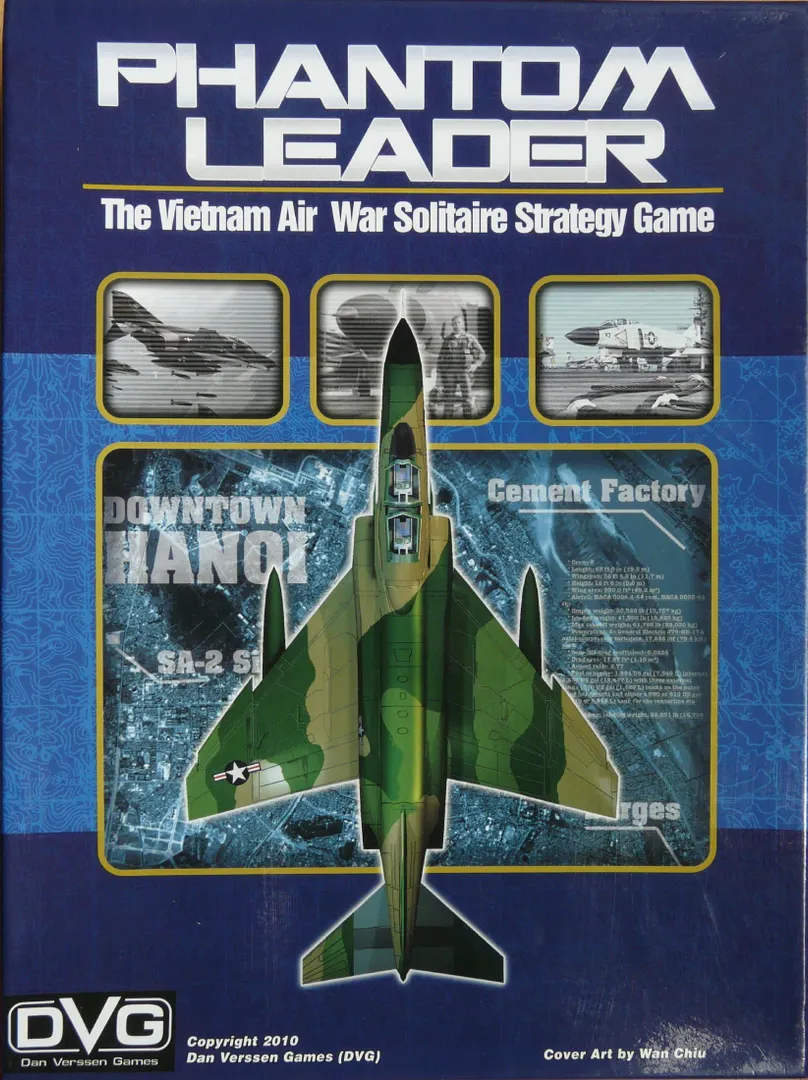
Phantom Leader ist ein Brettspiel aus dem Jahr 2010 für 1 Person, mit 30 Minuten pro Partie und ab 12 Jahren. Entwickelt wurde es von Dan Verssen; die wichtigsten Mechaniken sind Dice Rolling, Simulation und Open Drafting.

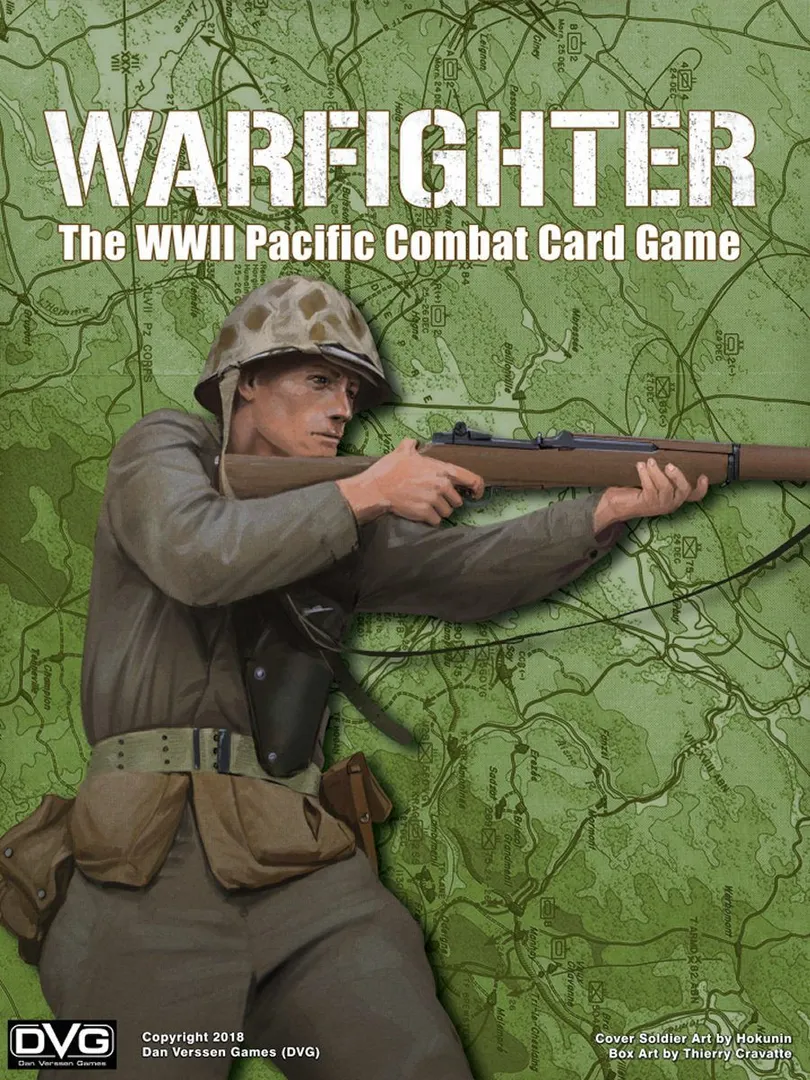
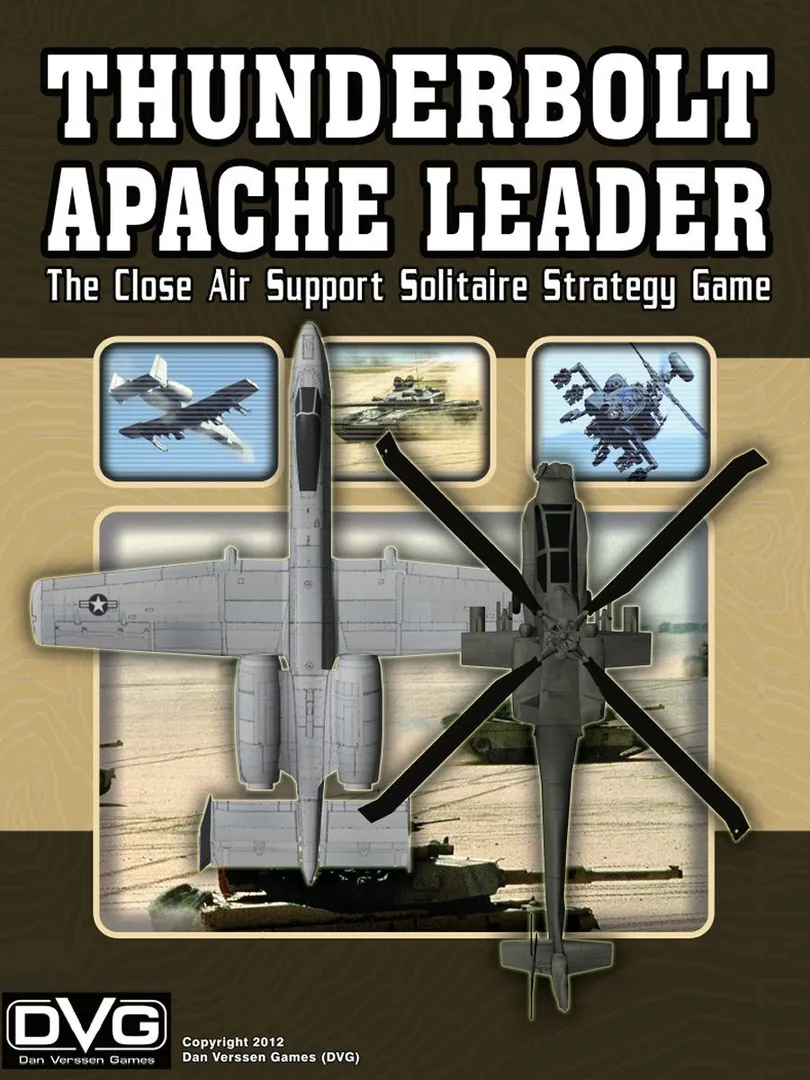
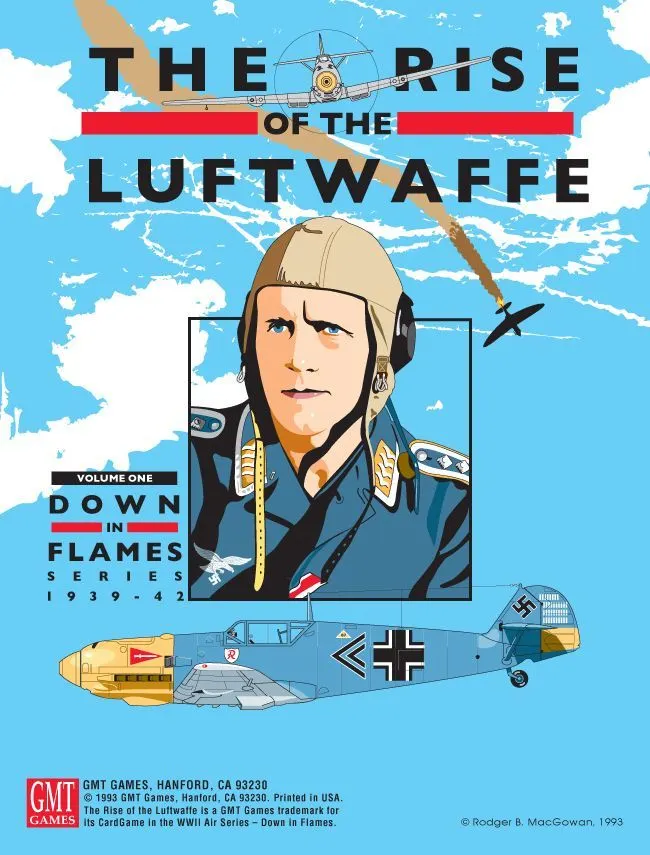
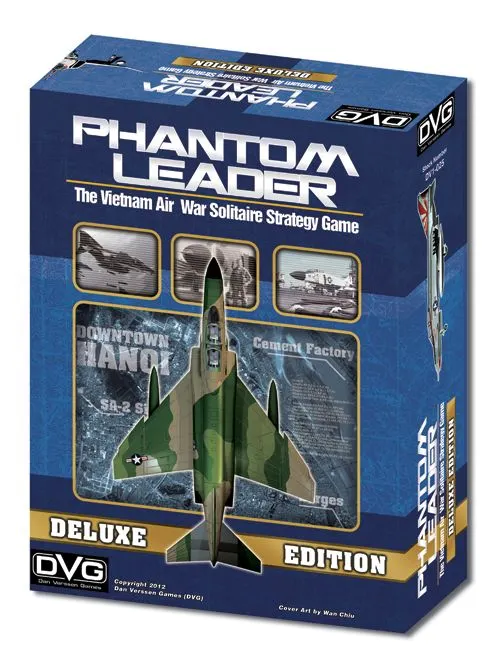


Auf Englisch
Phantom Leader - Solitaire Description: Phantom Leader places you in command of a US Air Force or US Navy Tactical Fighter squadron in Vietnam between 1964 and 1972. You must not only destroy the targets but you must also balance the delicate political repercussions of your attacks. If you strike too hard, your air offensive might be put on hold, strike too light, and you’ll be blamed for losing the war. Welcome to the Vietnam Air War! Each of the campaigns can be played with either an Air Force or Navy squadron. The targets assigned to each service are different and change the complexion of the campaigns. Each campaign can be played with three different durations of: Skirmish, Conflict, or War. Each mission takes roughly 30 minutes to set-up, plan, and resolve. Each of your pilots has their own skills. Selecting the right pilots and weapons for a mission is vital to its success. As you fly missions, your pilots will gain experience and fatigue. With experience, their skills improve, but as their fatigue increases, their skills decrease and they might not be able to fly for several missions. For those of you familiar with our modern era Hornet Leader series of games, you might be wondering what’s different about Phantom Leader… The freedom of being able to select the best mission based on military objectives is something that is commonplace for today’s military. Back in Vietnam, the military was responsible for carrying out their orders, while at the same time being extremely limited in the weapons and tactics they were allowed to use to complete those orders. In many cases, the specific weapons, approach paths, and bombing altitudes were generated target-by-target at the White House. The mission specifics were then sent down the chain of command to the individual pilots flying the mission. As you can imagine, this was not the best way to run an air campaign. Every target has a Political value. If you destroy it, you move the Political counter to the right a number of spaces equal to its value. As the counter gets moved to the right, your future target choices are reduced to those that are less politically sensitive. Which target you choose not to attack is also important. You get to move the Political counter to the left a number of spaces equal its Political value. [this last sentence is not in fact true for the game, though it appears in the game blurb; confirmed by the author] This means that while you might like to flatten a big enemy target and rack up the victory points, it might be better for you to choose a pointless target and move the Political counter in your favor instead. Another difference is in combat power. For the last couple decades, the US Air Force and Navy have enjoyed air superiority due to training and technology. Such was not the case in the skies over Vietnam. The enemy had different, but just as capable, equipment. They also had the training and will to use it to its utmost. They soon became aware of the limitations placed on the US forces by the politicians, and used those limitations to their advantage. For example, at times, US pilots were not permitted to fire on enemy aircraft until they were visually identified. This negated any range advantage conveyed by the radar-homing AIM-7 Sparrow missiles. It was also a common limitation that enemy aircraft could only be attacked in the air. US pilots were not allowed to attack enemy airbases. US aircraft were also limited to flying predictable flight paths, at set times. This made setting up ambushes much easier for the enemy. So, while you might be a Hornet Leader ace, Vietnam is a whole different ballgame! Components: 110 Full color Cards 12 F-4 Phantom IIs (USAF) 8 F-105 Thunderchiefs (USAF) 2 F-105G Wild Weasels (USAF) 4 F-100 Super Sabers (USAF) 2 F-104A Starfighters (USAF) 1 EB-66 Destroyer (USAF) 8 F-4 Phantom IIs (USN) 6 A-4 Skyhawks (USN) 5 A-7 Corsair II (USN) 5 A-6 Intruders (USN) 4 F-8 Crusaders (USN) 1 EA-6A Electric Intruder (USN) 34 Targets 18 Special Events Full Color, 20-page Rulebook Full Color Double-sided Counter Sheet (176 x 5/8" counters) 6 Full Color Campaign Sheets War in the South (1965) USAF & USN Rolling Thunder (1967) USAF & USN Linebacker (1972) USAF & USN 3 Full Color Player Aid Cards Tactical Display Card Diplay Sheet Help Sheet 1 Ten-sided die 1 Player Log master (to be photocopied prior to play) Other Leader series games by Dan Verssen Re-implemented by: Phantom Leader: Deluxe Edition
Laut Katalog unterstützt Phantom Leader 1 Person. Das ist die vom Verlag angegebene Spielerzahl, das Spiel ist also genau für diese Anzahl von Mitspielenden ausgelegt. Varianten für andere Gruppengrößen sind, sofern vorhanden, in der Anleitung deiner Ausgabe beschrieben; prüfe sie, bevor du eine andere Konfiguration aufbaust.
Die angegebene Spieldauer für Phantom Leader beträgt 30 Minuten. Das ist die Schätzung des Verlags für eine vollständige Partie. Die tatsächliche Dauer hängt von der Gruppe, der Personenzahl und der Regelkenntnis ab: Erste Partien dauern meist länger, erfahrene Gruppen sind oft schneller fertig. Aufbau und Regelerklärung sind in dieser Schätzung nicht enthalten.
Im Katalog wird Phantom Leader ab 12 Jahren empfohlen. Das ist die Empfehlung des Verlags und berücksichtigt Leseanforderungen, Regelkomplexität und Kleinteile, nicht nur das Thema. Jüngere Kinder können oft mit Hilfe eines Erwachsenen mitspielen; beachte die Altersangabe deiner Ausgabe und die Brettspielerfahrung deiner Gruppe.
Phantom Leader hat bei BoardGameGeek eine Komplexitätswertung von 2,6 von 5 und gilt damit als eher leichtes Spiel. Die Wertung zeigt, wie viel Regelwissen, Planung und Entscheidungen eine typische Partie verlangt. Schwerere Spiele brauchen bei der ersten Erklärung mehr Zeit, daher hilft vor dem Spieleabend eine Vorbereitungsanleitung.
Phantom Leader gehört zu diesen Kategorien: Wargame, Modern Warfare und Aviation / Flight. Die wichtigsten Mechaniken sind Dice Rolling, Simulation und Open Drafting. Kategorien beschreiben Thema und Setting eines Spiels, Mechaniken dagegen, was die Spielenden in ihrem Zug tatsächlich tun. Jede Mechanik führt zu einer Katalogseite mit ähnlichen Spielen, falls du etwas Vergleichbares suchst.
Als Autoren von Phantom Leader sind angegeben: Dan Verssen. Diese Angaben stammen aus den veröffentlichten Spieldaten und nennen die für das Spieldesign verantwortlichen Personen, nicht die Illustratoren oder Verlage. Die Autorenseiten auf MeepleRules sammeln weitere Titel derselben Autoren – praktisch, wenn dir ein Spiel gefällt und du ähnliche Spiele suchst.
Im Katalog ist Phantom Leader als Grundspiel aufgeführt. Es lässt sich eigenständig mit dem Material aus der Schachtel spielen und benötigt keinen weiteren Titel. Erweiterungen, sofern es welche gibt, ergänzen neues Material oder neue Regeln und sind im Katalog separat mit einem Verweis auf dieses Grundspiel aufgeführt.