
- BGG-Rang
- BGG #13.578
- BGG-Bewertung
- 7,2
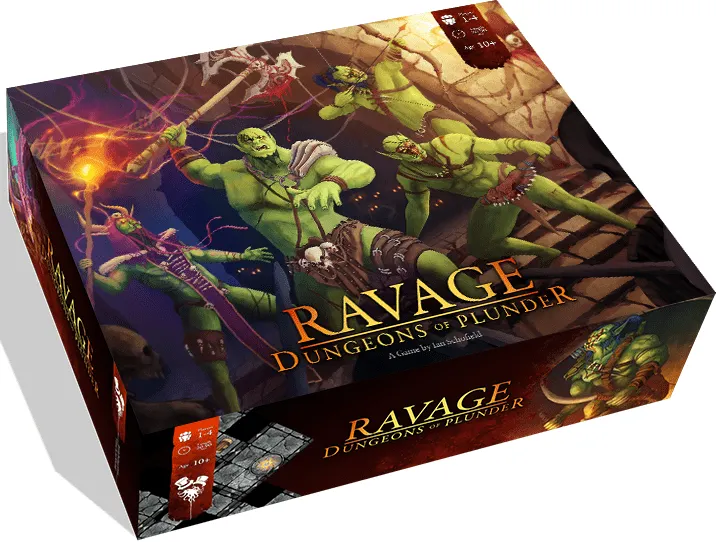
Ravage: Dungeons of Plunder
- 1–5 Spieler
- 30–90 Min.
- Komplexität 2,0/5
- 2018
2017
Regelhilfe für Phoenix Covenant
Verständliche Erklärungen zu Spielzügen, Karteneffekten und strittigen Situationen mit Verweisen auf offizielle Quellen und gespeichertem Fragenverlauf.
Für 2 Personen
Was möchtest du wissen?
Antworten stammen aus dem offiziellen Regelheft, mit Seitenangabe zum Nachprüfen.
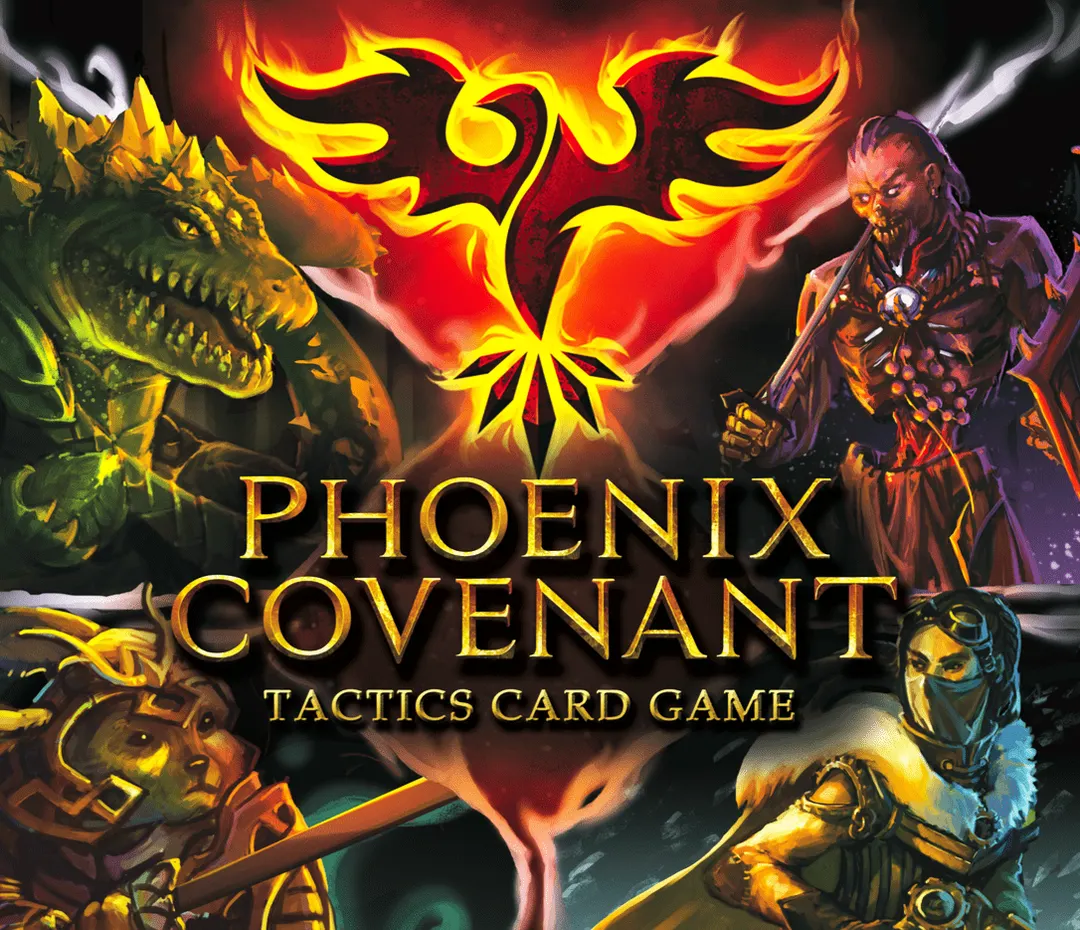
Phoenix Covenant ist ein Brettspiel aus dem Jahr 2017 für 2–4 Personen, mit 30–90 Minuten pro Partie und ab 14 Jahren. Entwickelt wurde es von Soren Fox, Easwaran Subbaraman, Sriraman Subbaraman und Adam Porroni; die wichtigsten Mechaniken sind Variable Player Powers, Take That und Grid Movement.




Auf Englisch
Introduction Worlds are dying, as if someone is toying with fate itself, shredding the very fabric of the universe. This spectre does not distinguish between gods and men, all are crushed beneath the feet of what can only be called...The Cataclysm. Five great beings have formed a Covenant to halt the devastation. Battle rivals to prove that you’re a commander that The Five need in order to stop The Cataclysm and earn your place amongst their great champions. The Game Phoenix Covenant is a tactics battle card game that fans have called "like Magic meets Final Fantasy Tactics" - and yes, you can believe them. It's far more than "cards on a board;" there's real strategic depth and you're not subject to mere dice rolls at every critical moment. In this universe, you are a great commander trying to prove yourself as the best of them all in a battle of wills. Outmaneuver your foes and create tactical formations by turning your cards, outwit others with well-timed unit abilities, combos and spells, and outplay opponents by taking advantage of our unique special-summoning Commander cards, directional armor and attack system, and built-right-on-the-field structure cards. More Details Commander Units allow players to forward-deploy units against opposing forces. While you can use them for their native abilities or attack power, forward-deploying can turn the tide of a battle. Position-based mechanics augment keyword-based and event-based mechanics seen in card games up to now. Some cards grow in power based on their position on the board, others might protect units next to them, and others might deflect enemy attacks. The unique square (80mm x 80mm) card units come with a combination of armor and weakpoints. Damage is reduced when a unit is attacked on an armored side, while a unit suffers a critical hit (extra damage) when hit in a weakpoint. You'll need to maneuver and turn your units to attack your enemies' unarmored sides and weakpoints while protecting your own in deadly tactical duels across the game board. In the Player vs. Player (PvP) head-to-head mode, you test your tactical and strategic might against everyone at once. Choose your army well, learn spells, and consider constructing powerful structures to support your forces. There is also a 2v2 team battle mode for all out there who want to test their skills while bringing a friend along for the fight! A Player vs. Environment (PvE) cooperative mode is under development, and multiple scenarios are being tested. With it, you will play alongside friends and take on missions that The Five require you and other great commanders to complete. You may even be able to design your own scenarios.
Laut Katalog unterstützt Phoenix Covenant 2–4 Personen. Diese Spanne entspricht der vom Verlag angegebenen Spielerzahl, das Spiel lässt sich also für jede Gruppengröße innerhalb dieser Spanne aufbauen. Aufbau, einzelne Regeln und Wertungsdetails können je nach Personenzahl trotzdem abweichen; prüfe daher die genaue Konfiguration in der Anleitung deiner Ausgabe.
Die angegebene Spieldauer für Phoenix Covenant beträgt 30–90 Minuten. Das ist die Schätzung des Verlags für eine vollständige Partie. Die tatsächliche Dauer hängt von der Gruppe, der Personenzahl und der Regelkenntnis ab: Erste Partien dauern meist länger, erfahrene Gruppen sind oft schneller fertig. Aufbau und Regelerklärung sind in dieser Schätzung nicht enthalten.
Im Katalog wird Phoenix Covenant ab 14 Jahren empfohlen. Das ist die Empfehlung des Verlags und berücksichtigt Leseanforderungen, Regelkomplexität und Kleinteile, nicht nur das Thema. Jüngere Kinder können oft mit Hilfe eines Erwachsenen mitspielen; beachte die Altersangabe deiner Ausgabe und die Brettspielerfahrung deiner Gruppe.
Phoenix Covenant hat bei BoardGameGeek eine Komplexitätswertung von 3,8 von 5 und gilt damit als schweres Spiel. Die Wertung zeigt, wie viel Regelwissen, Planung und Entscheidungen eine typische Partie verlangt. Schwerere Spiele brauchen bei der ersten Erklärung mehr Zeit, daher hilft vor dem Spieleabend eine Vorbereitungsanleitung.
Phoenix Covenant gehört zu diesen Kategorien: Card Game und Fantasy. Die wichtigsten Mechaniken sind Variable Player Powers, Take That und Grid Movement. Kategorien beschreiben Thema und Setting eines Spiels, Mechaniken dagegen, was die Spielenden in ihrem Zug tatsächlich tun. Jede Mechanik führt zu einer Katalogseite mit ähnlichen Spielen, falls du etwas Vergleichbares suchst.
Als Autoren von Phoenix Covenant sind angegeben: Soren Fox, Easwaran Subbaraman, Sriraman Subbaraman und Adam Porroni. Diese Angaben stammen aus den veröffentlichten Spieldaten und nennen die für das Spieldesign verantwortlichen Personen, nicht die Illustratoren oder Verlage. Die Autorenseiten auf MeepleRules sammeln weitere Titel derselben Autoren – praktisch, wenn dir ein Spiel gefällt und du ähnliche Spiele suchst.
Im Katalog ist Phoenix Covenant als Grundspiel aufgeführt. Es lässt sich eigenständig mit dem Material aus der Schachtel spielen und benötigt keinen weiteren Titel. Erweiterungen, sofern es welche gibt, ergänzen neues Material oder neue Regeln und sind im Katalog separat mit einem Verweis auf dieses Grundspiel aufgeführt.