
- BGG-Rang
- BGG #1.986
- BGG-Bewertung
- 7,2
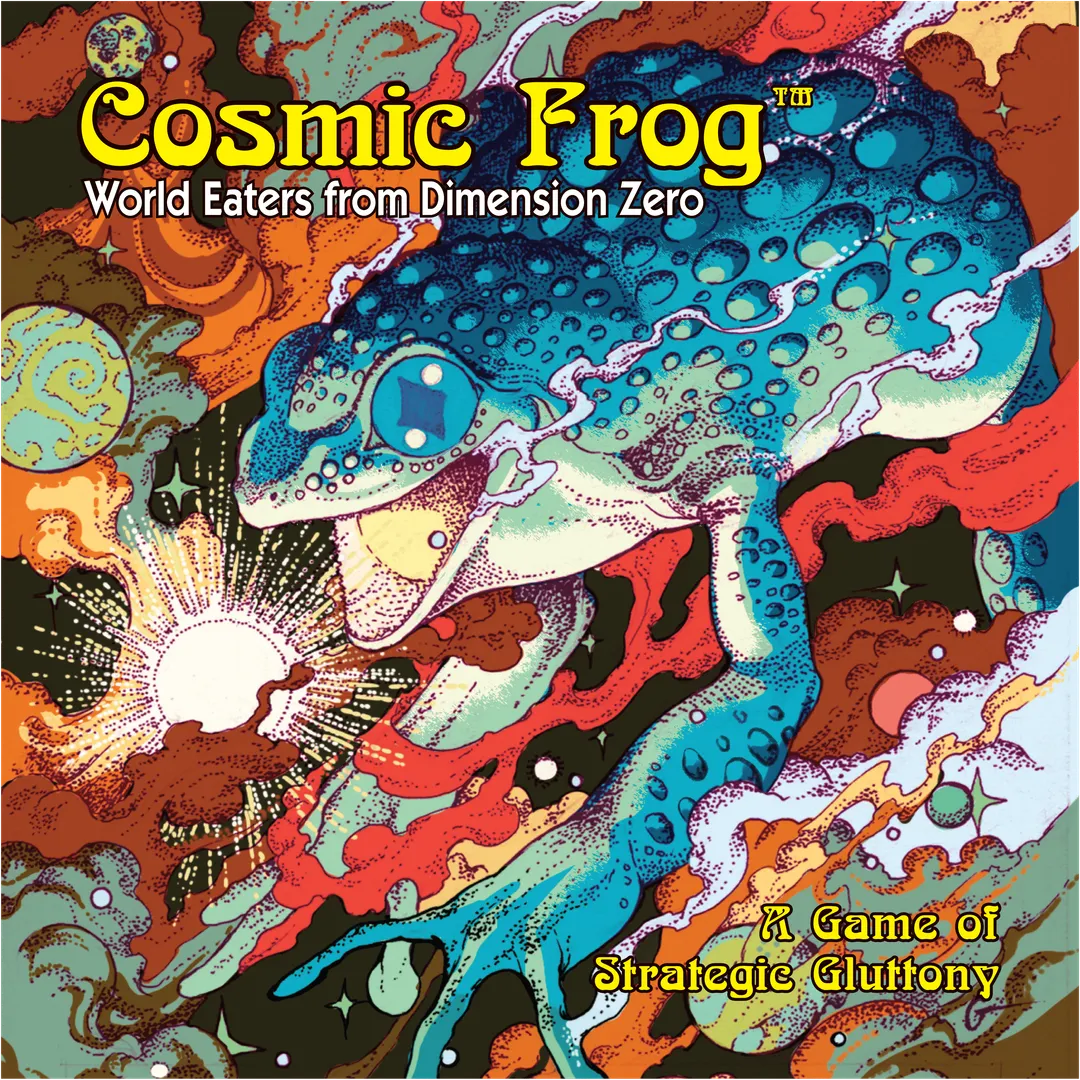
Cosmic Frog
- 2–6 Spieler
- 45–90 Min.
- Komplexität 3,0/5
- 2020
2005
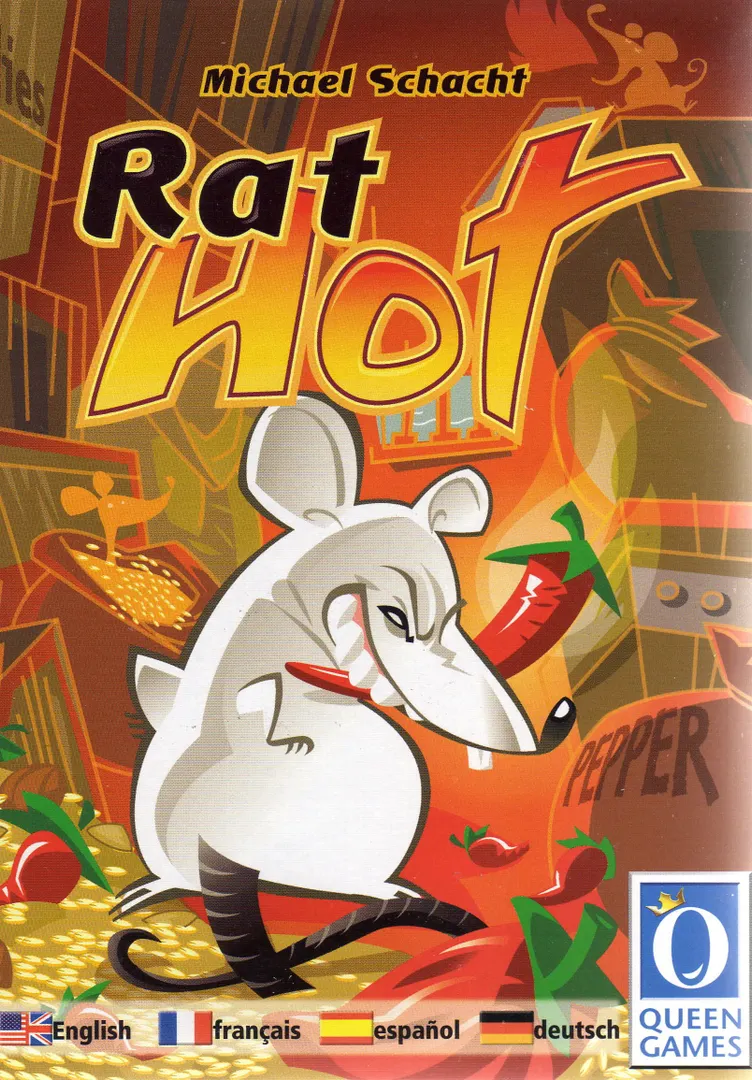
Regelhilfe für Rat Hot
Verständliche Erklärungen zu Spielzügen, Karteneffekten und strittigen Situationen mit Verweisen auf offizielle Quellen und gespeichertem Fragenverlauf.
Für 2 Personen
Was möchtest du wissen?
Antworten stammen aus dem offiziellen Regelheft, mit Seitenangabe zum Nachprüfen.
Rat Hot ist ein Brettspiel aus dem Jahr 2005 für 2 Personen, mit 30 Minuten pro Partie und ab 8 Jahren. Entwickelt wurde es von Michael Schacht; die wichtigsten Mechaniken sind Take That, Tile Placement und Layering.

Auf Englisch
Two spice dealers share a storehouse with a number of hungry rats, who want to put them out of business. The two dealers want to store spices so that they know where everything is, but they also have to keep the rats at bay. Stack your crates, keep your spices together, and cover up the rats. Rat Hot is a two-player game developed from Michael Schacht's Dschunke: Das Legespiel on his own label Spiel aus Timbuktu, which in turn was developed from his game Dschunke, also published by Queen. The Rat Hot tile distribution differs slightly from Dschunke: das Legespiel but you can very nearly use the Dschunke: das Legespiel rules with a Rat Hot set. All the games use the clever mechanism of stacking long 3x1 tiles so that the upper tiles obscure some parts of the tiles underneath. In Rat Hot, the two players simply take turns to draw 2 tiles from a face down pile, and add them to the existing layout. The tiles are all 1x3 and show a combination of rats, spices or empty crates. Each player has four different types of spice in their player colour which they are trying to form into large groups. Many of the tiles have spices of both colours. The game is scored with grey and yellow chips which represent 1 and 2 points. Each time you place a tile, you and your opponent can score points from groups created or changed by that tile. Whenever a group of two of the same spice is formed, the owning player receives one point, or two points for groups of three or more. Beware! If there are three rats of your own colour visible at the end of your turn, you instantly lose. When the draw pile is exhausted and the tiles all placed, the board is scored once more for all players, so trying to preserve existing groups also counts. The real trick in the game comes in the tile placement. Tiles must be adjacent by at least one square. Tiles can placed on top of other tiles, so that stacks build up. But a tile can not sit exactly on top of another, so there must always be some offset, and all three squares of a tile must be supported by other tiles, or the table. Rat Hot can be very tricky. You want to keep your opponent's rats exposed in awkward places, so they have to spend both their moves trying to keep the rats covered. But you also want to set up scoring positions, and cover your own rats, and avoid giving your opponent points as well. There's a good mental challenge here, as you puzzle over the best use and arrangement of your tiles. Do you dare leave two of your rats open, because your opponent may draw more of your rats and make it impossible for you to finish your next turn with less than three showing. Can you get a good group of spices going and also break up your opponent's groups? Tricky problems for tricky minds. Rat Hot is a quick, fun game and is a good addition to Queen's line of small 2-player games. The wood chips make it easy to see who is leading, the tiles are nicely made, the graphics are fun, and the game plays quickly and fairly. You can be stuffed by unlucky tile draws, but perhaps your low score is more to do with your choices, or maybe the other player is just smarter than you. Fast play, easy rules, and the risk of sudden death give Rat Hot a high replay value.
Laut Katalog unterstützt Rat Hot 2 Personen. Das ist die vom Verlag angegebene Spielerzahl, das Spiel ist also genau für diese Anzahl von Mitspielenden ausgelegt. Varianten für andere Gruppengrößen sind, sofern vorhanden, in der Anleitung deiner Ausgabe beschrieben; prüfe sie, bevor du eine andere Konfiguration aufbaust.
Die angegebene Spieldauer für Rat Hot beträgt 30 Minuten. Das ist die Schätzung des Verlags für eine vollständige Partie. Die tatsächliche Dauer hängt von der Gruppe, der Personenzahl und der Regelkenntnis ab: Erste Partien dauern meist länger, erfahrene Gruppen sind oft schneller fertig. Aufbau und Regelerklärung sind in dieser Schätzung nicht enthalten.
Im Katalog wird Rat Hot ab 8 Jahren empfohlen. Das ist die Empfehlung des Verlags und berücksichtigt Leseanforderungen, Regelkomplexität und Kleinteile, nicht nur das Thema. Jüngere Kinder können oft mit Hilfe eines Erwachsenen mitspielen; beachte die Altersangabe deiner Ausgabe und die Brettspielerfahrung deiner Gruppe.
Rat Hot hat bei BoardGameGeek eine Komplexitätswertung von 1,5 von 5 und gilt damit als leichtes Spiel. Die Wertung zeigt, wie viel Regelwissen, Planung und Entscheidungen eine typische Partie verlangt. Schwerere Spiele brauchen bei der ersten Erklärung mehr Zeit, daher hilft vor dem Spieleabend eine Vorbereitungsanleitung.
Rat Hot gehört zu diesen Kategorien: Print & Play und Abstract Strategy. Die wichtigsten Mechaniken sind Take That, Tile Placement und Layering. Kategorien beschreiben Thema und Setting eines Spiels, Mechaniken dagegen, was die Spielenden in ihrem Zug tatsächlich tun. Jede Mechanik führt zu einer Katalogseite mit ähnlichen Spielen, falls du etwas Vergleichbares suchst.
Als Autoren von Rat Hot sind angegeben: Michael Schacht. Diese Angaben stammen aus den veröffentlichten Spieldaten und nennen die für das Spieldesign verantwortlichen Personen, nicht die Illustratoren oder Verlage. Die Autorenseiten auf MeepleRules sammeln weitere Titel derselben Autoren – praktisch, wenn dir ein Spiel gefällt und du ähnliche Spiele suchst.
Im Katalog ist Rat Hot als Grundspiel aufgeführt. Es lässt sich eigenständig mit dem Material aus der Schachtel spielen und benötigt keinen weiteren Titel. Erweiterungen, sofern es welche gibt, ergänzen neues Material oder neue Regeln und sind im Katalog separat mit einem Verweis auf dieses Grundspiel aufgeführt.