
- BGG-Rang
- BGG #297
- BGG-Bewertung
- 7,8
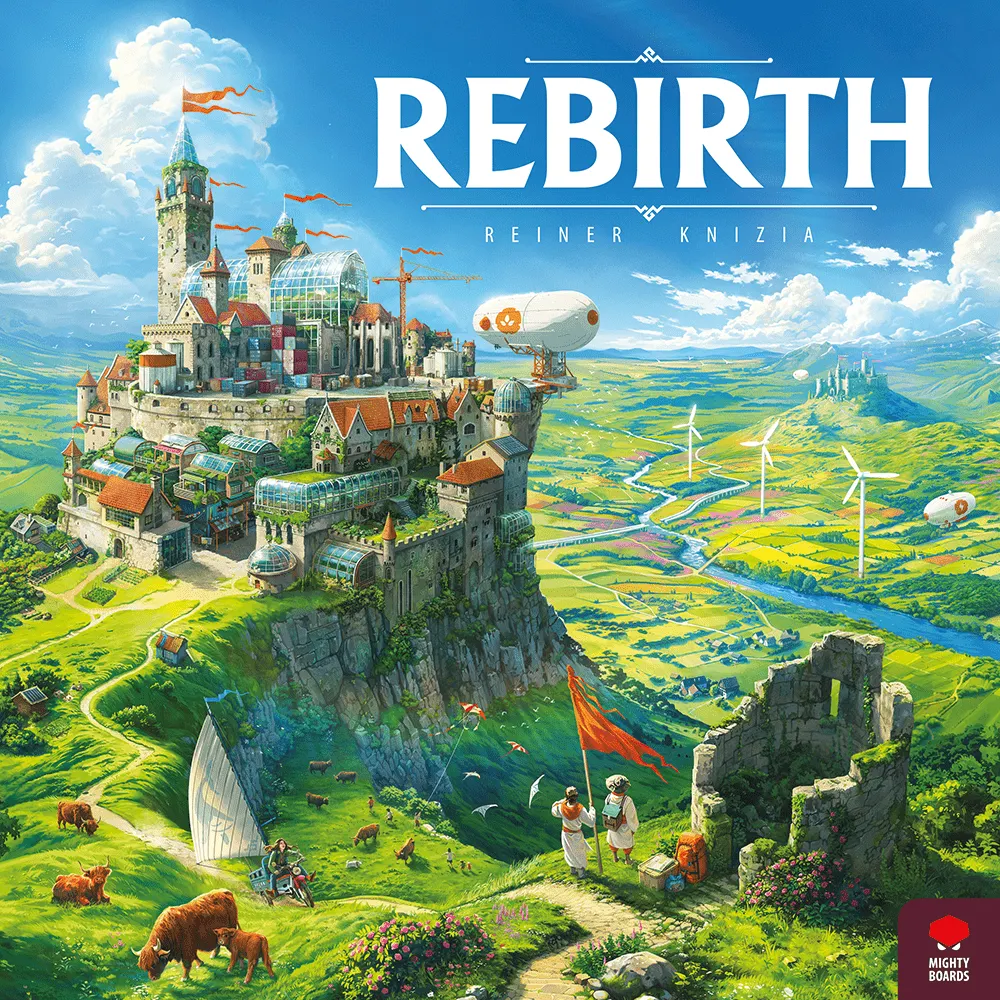
Rebirth
- 2–4 Spieler
- 45–60 Min.
- Komplexität 2,0/5
- 2024
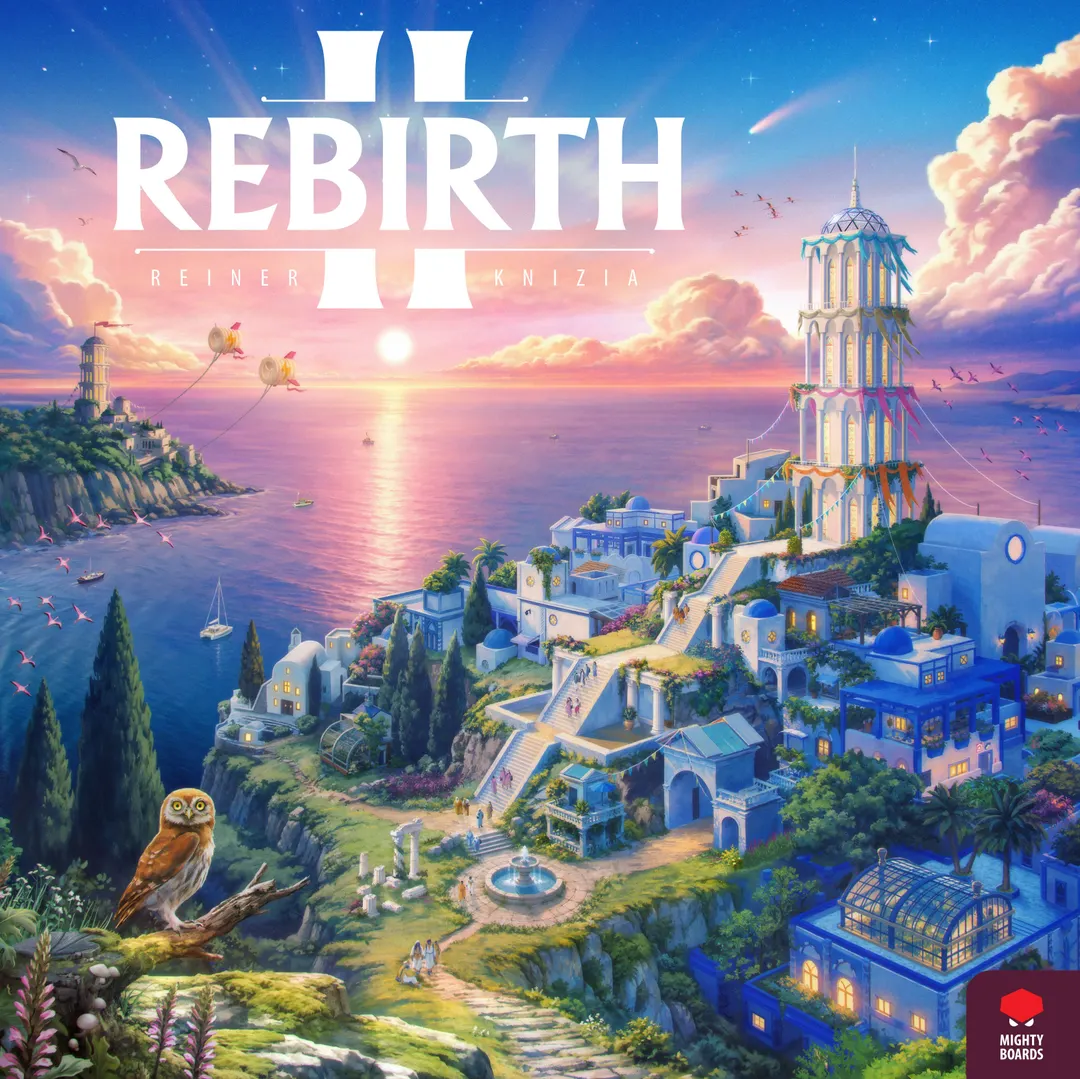
2027
Regelhilfe für Rebirth II
Verständliche Erklärungen zu Spielzügen, Karteneffekten und strittigen Situationen mit Verweisen auf offizielle Quellen und gespeichertem Fragenverlauf.
Für 2 Personen
Was möchtest du wissen?
Antworten stammen aus dem offiziellen Regelheft, mit Seitenangabe zum Nachprüfen.
Rebirth II ist ein Brettspiel aus dem Jahr 2027 für 2–4 Personen und ab 10 Jahren. Entwickelt wurde es von Reiner Knizia; die wichtigsten Mechaniken sind Area Majority / Influence, Tile Placement und End Game Bonuses.




Auf Englisch
Far from Scotland, the old world fell into greater devastation. Survivors make their way back to their ancient homelands to found self-governing city states in place of the nations that failed them. Lead an Order of Oracles dedicated to serving them all: restore the farmland, settle the cities and uncover ancient mysteries buried beneath the ravaged lands. Rebirth II presents two new standalone maps: Greece and Italy. The tile laying heart of Rebirth remains the same; players draw a tile and then place it on the board, but each map takes the Rebirth spirit into a new direction. Both maps make use of the new City-State system, where the map is split into various self-governing regions. Greece focuses on open-endedness and flexibility. The map features no distinct spaces defining where food farms and energy farms must be placed. Players, through the new "Exploration tokens" system, have the opportunity to modify the map as the game plays, creating varying play scenarios each game. Players exert influence on the City-States, establishing Temples, and scoring a large number of points for being the only ones with a significant hold within each City-State. Italy focuses on the individual powers of each city state. When players place settlements within a city-state, they are able to elect an Arbitrer within that city-state's government, gaining the ability of that particular state. In the meantime, visiting monasteries across the map grants players a blessing, granting them a one time effect. Both blessings and Arbitrers' positions refresh and reset dynamically through player's actions, creating a player-controlled cadence for the progress of play. —description from the publisher
Laut Katalog unterstützt Rebirth II 2–4 Personen. Diese Spanne entspricht der vom Verlag angegebenen Spielerzahl, das Spiel lässt sich also für jede Gruppengröße innerhalb dieser Spanne aufbauen. Aufbau, einzelne Regeln und Wertungsdetails können je nach Personenzahl trotzdem abweichen; prüfe daher die genaue Konfiguration in der Anleitung deiner Ausgabe.
Im Katalog wird Rebirth II ab 10 Jahren empfohlen. Das ist die Empfehlung des Verlags und berücksichtigt Leseanforderungen, Regelkomplexität und Kleinteile, nicht nur das Thema. Jüngere Kinder können oft mit Hilfe eines Erwachsenen mitspielen; beachte die Altersangabe deiner Ausgabe und die Brettspielerfahrung deiner Gruppe.
Rebirth II gehört zu diesen Kategorien: Fantasy, Farming und Science Fiction. Die wichtigsten Mechaniken sind Area Majority / Influence, Tile Placement und End Game Bonuses. Kategorien beschreiben Thema und Setting eines Spiels, Mechaniken dagegen, was die Spielenden in ihrem Zug tatsächlich tun. Jede Mechanik führt zu einer Katalogseite mit ähnlichen Spielen, falls du etwas Vergleichbares suchst.
Als Autoren von Rebirth II sind angegeben: Reiner Knizia. Diese Angaben stammen aus den veröffentlichten Spieldaten und nennen die für das Spieldesign verantwortlichen Personen, nicht die Illustratoren oder Verlage. Die Autorenseiten auf MeepleRules sammeln weitere Titel derselben Autoren – praktisch, wenn dir ein Spiel gefällt und du ähnliche Spiele suchst.
Im Katalog ist Rebirth II als Grundspiel aufgeführt. Es lässt sich eigenständig mit dem Material aus der Schachtel spielen und benötigt keinen weiteren Titel. Erweiterungen, sofern es welche gibt, ergänzen neues Material oder neue Regeln und sind im Katalog separat mit einem Verweis auf dieses Grundspiel aufgeführt.