

- BGG-Bewertung
- 7,3
Rogue Dungeon: 3p Add-on Pack
- 1–3 Spieler
- 30–60 Min.
- 2020
2020
Regelhilfe für Rogue Dungeon
Verständliche Erklärungen zu Spielzügen, Karteneffekten und strittigen Situationen mit Verweisen auf offizielle Quellen und gespeichertem Fragenverlauf.
Für 1 Person
Was möchtest du wissen?
Antworten stammen aus dem offiziellen Regelheft, mit Seitenangabe zum Nachprüfen.
Rogue Dungeon ist ein Brettspiel aus dem Jahr 2020 für 1 Person und mit 30–60 Minuten pro Partie. Entwickelt wurde es von Chad Randall Maniccia, Albert Danysh und Jon Smith; die wichtigsten Mechaniken sind Hand Management, Trading und Dice Rolling.

Auf Englisch
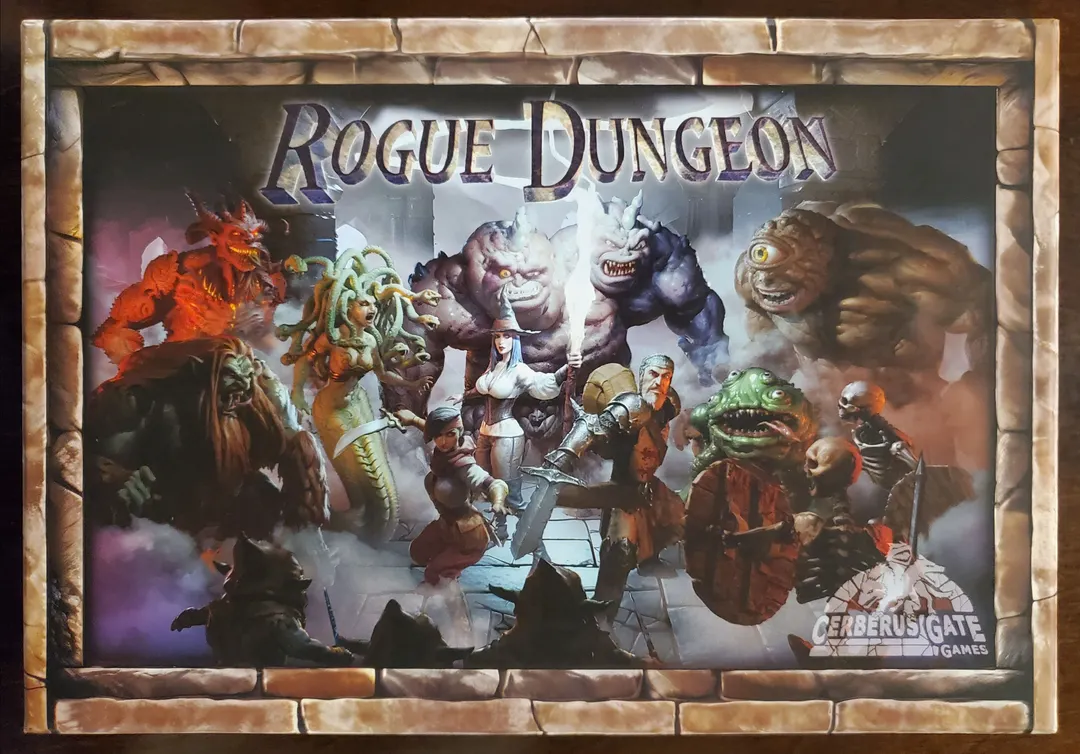
Rogue Dungeon is a solo roguelike dungeon crawl. It's a premium offering that is more than just a stinking deck of cards. It comes with a play mat that emulates the UI of a CRPG that organizes play into thematic slots for your weapon, shield, armor, helmet, gauntlets, boots, scrolls and your backpack full of loot. Rogue Dungeon is highly replayable and is dripping with theme. Not very many games let you go from zero to hero in one hour. It's a loot management game at its core and that's where its charm comes from. You might start the game with a hunk of meat, that you use to charm a wolf who helps you defeat the zombie who drops a lockpick, which you use to open the safe where you find the jeweled goblet, which you trade for a lucky shield which you use to negate the Dragon's fire. Rogue Dungeon is hard and you will DIE! However, experience and skillful play will ensure that veteran Rogues will make it out of the dungeon alive, more than you will. You, your going to end up in a Goblins belly. Prove us wrong! Pick your Rogue, grab your starting loot, grab your skills, set your starting stats and enter the dungeon. Choose which room to navigate to via the mini maps. Rooms are divided into the following types.... Traders - Offer you a choice to trade loot or stats for other loot, stats, or henchman. Some trades involve a stat test or the luck of a die. Loot traders typically trade two items for any one item they offer for trade. They make exceptions for the shiny stuff and will trade any item for a single treasure. Combat - Most combat room have you draw 1 to 3 monsters from the monster deck equal to the dungeon level. Combat is resolved using your Rogues primary stat and a D10. If the two combined are greater than the monsters combat stat your Rogue hits the monster. If they are equal both are hit. If it's less than only the Rogue is hit. Damage can be negated by discarding an armor or by playing a skill or magical item. Potions and food can be consumed at any time to increase your hitpoints to prevent your death. Some monsters have a weakness to specific thematic loot and are vanquished immediately such as when the Medusa gets a look at your face in the mirrors reflection. Once the monsters hitpoints reach zero the monster dies and you receive one loot and XP equal to the dungeon level. Traps - traps litter the dungeon but most can be disarmed or bypassed if you have the appropriate equipment. Even if the gremlins ran off with your rope there is always a chance you can come out unscathed if you pass an appropriate Strength, Agility or Intelligence test. Successful, tests result in an XP reward and negation of any potential damage. Your Mom called and insisted that you should get at least one XP even if you fail the challenge just like in High School. All rolls maybe manipulated with the use of the luck stat. Spending one luck will allow you to modify a die result by 1 up or down or allow for a complete reroll. Play progresses through 5 dungeon levels separated by a staircase. You may camp at the stairs without the threat of a wandering monster interrupting your siesta. You may level your Rogue at anytime so long as you have the XP. When you get to the final room draw a boss monster and fight. Boss monsters have special abilities activated depending on your attack roll they can summon additional monsters, drain your level, heal, etc... Upon slaying the boss monster... Do: Take a photo of your Rogue and discuss your victory on the forums. Then email your Mom, let her know you did do something with your life after all. Don't: Call your primary school bully and challenge her to a rematch. She's busy running a fortune 500 company and driving her Lambo. —description from the designer
Laut Katalog unterstützt Rogue Dungeon 1 Person. Das ist die vom Verlag angegebene Spielerzahl, das Spiel ist also genau für diese Anzahl von Mitspielenden ausgelegt. Varianten für andere Gruppengrößen sind, sofern vorhanden, in der Anleitung deiner Ausgabe beschrieben; prüfe sie, bevor du eine andere Konfiguration aufbaust.
Die angegebene Spieldauer für Rogue Dungeon beträgt 30–60 Minuten. Das ist die Schätzung des Verlags für eine vollständige Partie. Die tatsächliche Dauer hängt von der Gruppe, der Personenzahl und der Regelkenntnis ab: Erste Partien dauern meist länger, erfahrene Gruppen sind oft schneller fertig. Aufbau und Regelerklärung sind in dieser Schätzung nicht enthalten.
Rogue Dungeon hat bei BoardGameGeek eine Komplexitätswertung von 2,0 von 5 und gilt damit als eher leichtes Spiel. Die Wertung zeigt, wie viel Regelwissen, Planung und Entscheidungen eine typische Partie verlangt. Schwerere Spiele brauchen bei der ersten Erklärung mehr Zeit, daher hilft vor dem Spieleabend eine Vorbereitungsanleitung.
Rogue Dungeon gehört zu diesen Kategorien: Fantasy, Fighting und Dice. Die wichtigsten Mechaniken sind Hand Management, Trading und Dice Rolling. Kategorien beschreiben Thema und Setting eines Spiels, Mechaniken dagegen, was die Spielenden in ihrem Zug tatsächlich tun. Jede Mechanik führt zu einer Katalogseite mit ähnlichen Spielen, falls du etwas Vergleichbares suchst.
Als Autoren von Rogue Dungeon sind angegeben: Chad Randall Maniccia, Albert Danysh und Jon Smith. Diese Angaben stammen aus den veröffentlichten Spieldaten und nennen die für das Spieldesign verantwortlichen Personen, nicht die Illustratoren oder Verlage. Die Autorenseiten auf MeepleRules sammeln weitere Titel derselben Autoren – praktisch, wenn dir ein Spiel gefällt und du ähnliche Spiele suchst.
Im Katalog ist Rogue Dungeon als Grundspiel aufgeführt. Es lässt sich eigenständig mit dem Material aus der Schachtel spielen und benötigt keinen weiteren Titel. Erweiterungen, sofern es welche gibt, ergänzen neues Material oder neue Regeln und sind im Katalog separat mit einem Verweis auf dieses Grundspiel aufgeführt.