

- BGG-Rang
- BGG #9.866
- BGG-Bewertung
- 6,6
1572: The Lost Expedition
- 1 Spieler
- 45–90 Min.
- Komplexität 2,0/5
- 2016
2020
Regelhilfe für Rollway Station
Verständliche Erklärungen zu Spielzügen, Karteneffekten und strittigen Situationen mit Verweisen auf offizielle Quellen und gespeichertem Fragenverlauf.
Für 1 Person
Was möchtest du wissen?
Antworten stammen aus dem offiziellen Regelheft, mit Seitenangabe zum Nachprüfen.
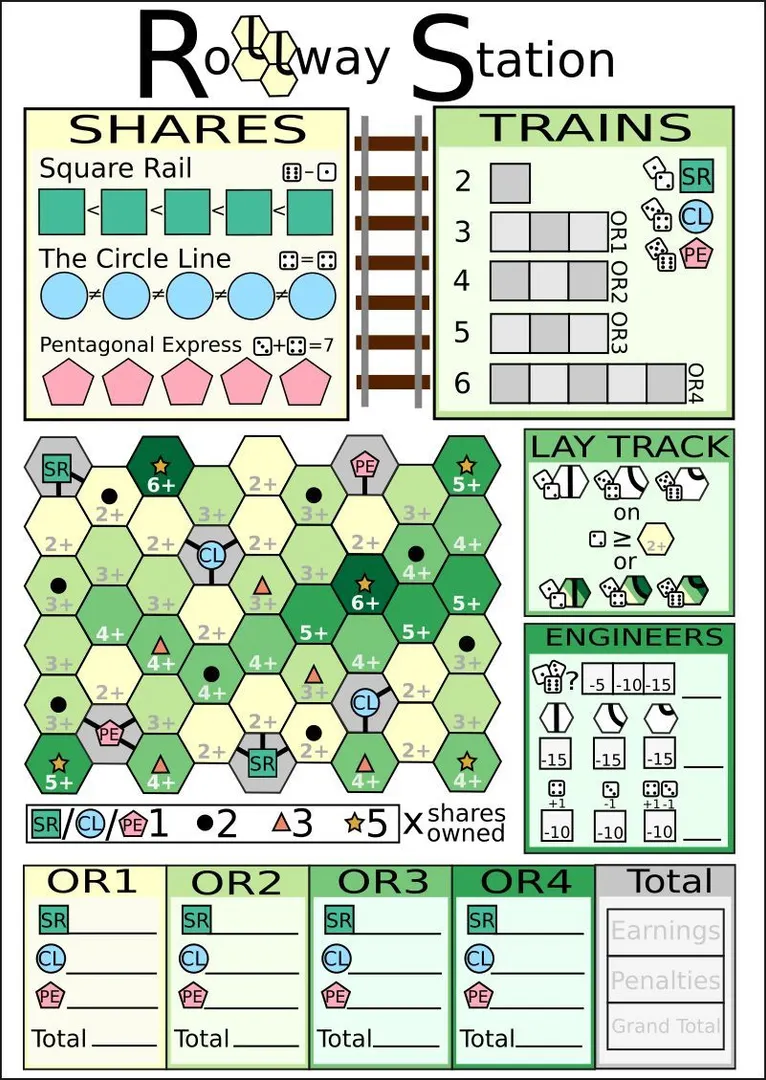
Rollway Station ist ein Brettspiel aus dem Jahr 2020 für 1 Person und mit 30–45 Minuten pro Partie. Entwickelt wurde es von Kendall McKenzie; die wichtigsten Mechaniken sind Push Your Luck, Dice Rolling und Paper-and-Pencil.






Auf Englisch
Rollway Station is a roll and write game inspired by the 18xx series of games. In these games players take on the role of an investor, trading stocks and shares in train companies in order to beat the competition and earn the most money. Rollway Station distils the experience into a short solo experience, using dice to add a layer of unpredictability. The game is played over fifteen turns, in which the player will roll five dice and assign them to three different actions: buying shares, auctioning trains, and laying track. The values of the dice determine the options a player has. Every few turns there is an operating round where the companies run the best routes they can and earn money for the player based on the number of stops they make and the number of shares the player owns. The player also has access to Engineers who will help to lay additional track at the cost of money. The aim of the game is to earn the most money possible. There are three different maps available with different starting layouts and special advanced rules. There is also a multiplayer variant in which all players play the standard solo game but using the same dice rolls, comparing their score at the end. —description from the designer
Laut Katalog unterstützt Rollway Station 1 Person. Das ist die vom Verlag angegebene Spielerzahl, das Spiel ist also genau für diese Anzahl von Mitspielenden ausgelegt. Varianten für andere Gruppengrößen sind, sofern vorhanden, in der Anleitung deiner Ausgabe beschrieben; prüfe sie, bevor du eine andere Konfiguration aufbaust.
Die angegebene Spieldauer für Rollway Station beträgt 30–45 Minuten. Das ist die Schätzung des Verlags für eine vollständige Partie. Die tatsächliche Dauer hängt von der Gruppe, der Personenzahl und der Regelkenntnis ab: Erste Partien dauern meist länger, erfahrene Gruppen sind oft schneller fertig. Aufbau und Regelerklärung sind in dieser Schätzung nicht enthalten.
Rollway Station hat bei BoardGameGeek eine Komplexitätswertung von 2,4 von 5 und gilt damit als eher leichtes Spiel. Die Wertung zeigt, wie viel Regelwissen, Planung und Entscheidungen eine typische Partie verlangt. Schwerere Spiele brauchen bei der ersten Erklärung mehr Zeit, daher hilft vor dem Spieleabend eine Vorbereitungsanleitung.
Rollway Station gehört zu diesen Kategorien: Print & Play. Die wichtigsten Mechaniken sind Push Your Luck, Dice Rolling und Paper-and-Pencil. Kategorien beschreiben Thema und Setting eines Spiels, Mechaniken dagegen, was die Spielenden in ihrem Zug tatsächlich tun. Jede Mechanik führt zu einer Katalogseite mit ähnlichen Spielen, falls du etwas Vergleichbares suchst.
Als Autoren von Rollway Station sind angegeben: Kendall McKenzie. Diese Angaben stammen aus den veröffentlichten Spieldaten und nennen die für das Spieldesign verantwortlichen Personen, nicht die Illustratoren oder Verlage. Die Autorenseiten auf MeepleRules sammeln weitere Titel derselben Autoren – praktisch, wenn dir ein Spiel gefällt und du ähnliche Spiele suchst.
Im Katalog ist Rollway Station als Grundspiel aufgeführt. Es lässt sich eigenständig mit dem Material aus der Schachtel spielen und benötigt keinen weiteren Titel. Erweiterungen, sofern es welche gibt, ergänzen neues Material oder neue Regeln und sind im Katalog separat mit einem Verweis auf dieses Grundspiel aufgeführt.