
- BGG-Rang
- BGG #3.103
- BGG-Bewertung
- 6,9
Surfosaurus MAX
- 2–6 Spieler
- 20 Min.
- Komplexität 1,2/5
- 2023
1796
Regelhilfe für Roulette
Verständliche Erklärungen zu Spielzügen, Karteneffekten und strittigen Situationen mit Verweisen auf offizielle Quellen und gespeichertem Fragenverlauf.
Was möchtest du wissen?
Antworten stammen aus dem offiziellen Regelheft, mit Seitenangabe zum Nachprüfen.
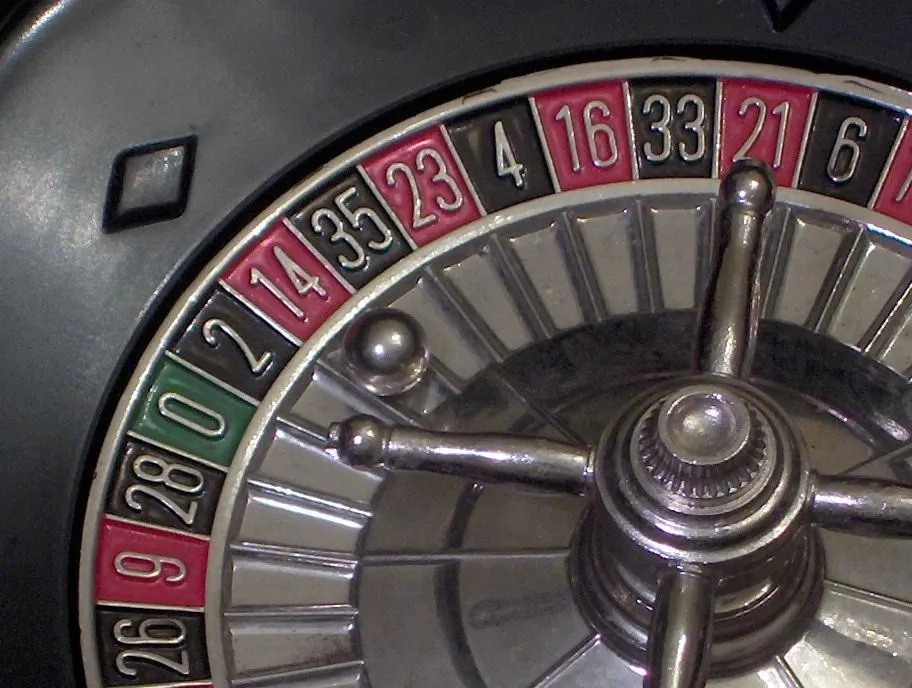
Roulette ist ein Brettspiel aus dem Jahr 1796 für 2–6 Personen, mit 1 Minute pro Partie und ab 8 Jahren. Entwickelt wurde es von François Blanc; die wichtigsten Mechaniken sind Betting and Bluffing.







Auf Englisch
Roulette is a French word meaning "small wheel". It is the oldest casino game still in existence today. The exact origins of the game are unknown - there's probably been gambling using a wheel since the invention of the wheel. Some say it was invented in 1655 by the French scientist Blaise Pascal while working on a perpetual motion machine. Others say it derives from a Chinese game in which player try to move 36 statues into a magic circle. The Roulette layout that we know today first appeared in 1765 in Paris, but the modern version of the game did not appear until around 1842 when Frenchmen Francois and Louis Blanc are said to have invented the single "0" roulette game. Another mystic legend tells that Francois Blanc, who founded the first casinos in Monte Carlo, sold a soul to the devil for the secret of roulette. As proof, they point out that the sum of all the numbers on a Roulette wheel added together total 666 - the number of the beast. The single "0" wheel became known as the "French Wheel". When French immigrants brought the game to America a double zero "00" was also added and this became known as the "American Wheel". The game became popular in the old west of America during the California Gold Rush. Modern Roulette is a perfectly balanced wheel with a slot for each number. The numbers alternate between black and red (the 0 and 00 are green) and exactly opposite each other number is the corresponding higher and lower number (0 is opposite the 00, 1 is opposite the 2, and so on up to the 35 being directly opposite the 36). Players may place a multitude of wagers: Single Number pays 35:1, Two Numbers pays 17:1, Three numbers pays 11:1, Four Numbers pays 8:1, Five Numbers (American Wheel) pays 6:1, Six Numbers pays 5:1, Column or Dozen pays 2:1, High/Low Black/Red or Odd/Even pays 1:1. The 0 and 00 are not counted when calculating the odds which gives the house its edge. Ironically, no matter where you place your chips, the house edge remains almost constant (5.26% American Wheel, 2.70% French Wheel). When all the bets are placed the croupier rolls a little ivory ball along the inner edge of the wheel in the opposite direction of its spin. As the wheel turns, the ball loses momentum, bounces among the slots and finally falls into one of the numbered slots. The number that the ball rests on is the declared as the winning number for that game and winning wagers are paid off.
Laut Katalog unterstützt Roulette 2–6 Personen. Diese Spanne entspricht der vom Verlag angegebenen Spielerzahl, das Spiel lässt sich also für jede Gruppengröße innerhalb dieser Spanne aufbauen. Aufbau, einzelne Regeln und Wertungsdetails können je nach Personenzahl trotzdem abweichen; prüfe daher die genaue Konfiguration in der Anleitung deiner Ausgabe.
Die angegebene Spieldauer für Roulette beträgt 1 Minute. Das ist die Schätzung des Verlags für eine vollständige Partie. Die tatsächliche Dauer hängt von der Gruppe, der Personenzahl und der Regelkenntnis ab: Erste Partien dauern meist länger, erfahrene Gruppen sind oft schneller fertig. Aufbau und Regelerklärung sind in dieser Schätzung nicht enthalten.
Im Katalog wird Roulette ab 8 Jahren empfohlen. Das ist die Empfehlung des Verlags und berücksichtigt Leseanforderungen, Regelkomplexität und Kleinteile, nicht nur das Thema. Jüngere Kinder können oft mit Hilfe eines Erwachsenen mitspielen; beachte die Altersangabe deiner Ausgabe und die Brettspielerfahrung deiner Gruppe.
Roulette hat bei BoardGameGeek eine Komplexitätswertung von 1,1 von 5 und gilt damit als leichtes Spiel. Die Wertung zeigt, wie viel Regelwissen, Planung und Entscheidungen eine typische Partie verlangt. Schwerere Spiele brauchen bei der ersten Erklärung mehr Zeit, daher hilft vor dem Spieleabend eine Vorbereitungsanleitung.
Roulette gehört zu diesen Kategorien: Number. Die wichtigsten Mechaniken sind Betting and Bluffing. Kategorien beschreiben Thema und Setting eines Spiels, Mechaniken dagegen, was die Spielenden in ihrem Zug tatsächlich tun. Jede Mechanik führt zu einer Katalogseite mit ähnlichen Spielen, falls du etwas Vergleichbares suchst.
Als Autoren von Roulette sind angegeben: François Blanc. Diese Angaben stammen aus den veröffentlichten Spieldaten und nennen die für das Spieldesign verantwortlichen Personen, nicht die Illustratoren oder Verlage. Die Autorenseiten auf MeepleRules sammeln weitere Titel derselben Autoren – praktisch, wenn dir ein Spiel gefällt und du ähnliche Spiele suchst.
Im Katalog ist Roulette als Grundspiel aufgeführt. Es lässt sich eigenständig mit dem Material aus der Schachtel spielen und benötigt keinen weiteren Titel. Erweiterungen, sofern es welche gibt, ergänzen neues Material oder neue Regeln und sind im Katalog separat mit einem Verweis auf dieses Grundspiel aufgeführt.


