

- BGG-Rang
- BGG #4.659
- BGG-Bewertung
- 8,0
Hearts and Minds: Vietnam 1965-1975 (Third Edition)
- 1–2 Spieler
- 45–360 Min.
- Komplexität 3,0/5
- 2019
1978
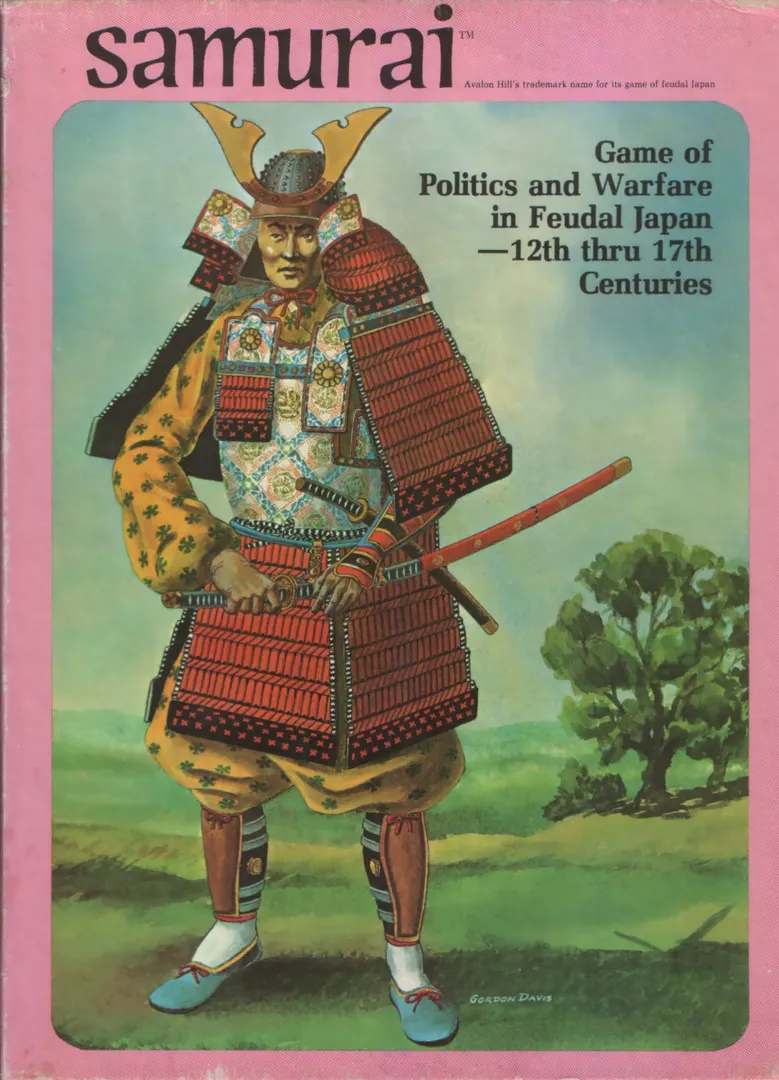
Regelhilfe für Samurai: Game of Politics and Warfare in Feudal Japan
Verständliche Erklärungen zu Spielzügen, Karteneffekten und strittigen Situationen mit Verweisen auf offizielle Quellen und gespeichertem Fragenverlauf.
Für 2 Personen
Was möchtest du wissen?
Antworten stammen aus dem offiziellen Regelheft, mit Seitenangabe zum Nachprüfen.
Samurai: Game of Politics and Warfare in Feudal Japan ist ein Brettspiel aus dem Jahr 1978 für 2–8 Personen, mit 180 Minuten pro Partie und ab 12 Jahren. Entwickelt wurde es von Dan Campagna; die wichtigsten Mechaniken sind Area Movement, Dice Rolling und Simulation.







Auf Englisch
(from the back of the box:) You are now back in time-12th through 17th century Japan, to be exact. Your objective: the exalted title of "Shogun". As "Shogun", you will have the right to enforce the emperor's will, and become the real ruler of Japan. Samurai allows you to take control of Japan. In medieval Japan, the central government of the emperor was dissolved. He become a powerless figurehead while various clans competed to take control of the country. These clans were similar to the noble houses of Europe; and their leaders the equivalent of medieval Dukes, Barons, Counts, and the like. Using formldable samurai warriors, the clans waged endless wars across the major islands of the Japanese archipelago. Concept of Play Each player controls a clan, with one or more lords. Each lord has a province representing his personal "fief" or home, and often has additional holdings of troops, titles, ships, castles, and more provinces. The game is played in 20 turns, each representing a pace of historical events running between a few months to a few years. In each turn, moves are conducted on a mapboard that portrays the three major islands of Japan. The playing pieces-360 in all-include Samurai Lords, clan control markers, holdings and title counters, troops, garrisons, and more; all explained in the easy to-follow prose of the 18-page rules folder. Many Games in One An excellent game for 2 to 8 players. Samurai is suitable for beginning and intermedlate play, with plenty of optional rules and strategic options for even the expert. And for the really hard-core power-politics fanatics, special rules create a nearly "perpetual" game representing tho true ebb and flow of Japanese feudal confilct. Samurai includes a variety of playing aids to make learning and playing the game truly an effortless task. The rules manual contains historical background and designer's notes that offer the player the full flavor and authenticity of what medieval conflict was all about in the age of the "Shogun" struggles. (BGG description:) Samurai is a game about warfare and politics in feudal Japan. The aim of the game is to gain the title "Shogun" by game end. To become Shogun, the player has to gain control of two out of four Imperial Articles scattered across the mapboard. These are: the Emperor, The Heir, The Imperial Regalia and Kyoto Castle. Playing pieces are the samurai lords of various houses. Each lord has a home province which provides him with troops. Additional troops may be added through offices, other provinces, castles, etc.
Laut Katalog unterstützt Samurai: Game of Politics and Warfare in Feudal Japan 2–8 Personen. Diese Spanne entspricht der vom Verlag angegebenen Spielerzahl, das Spiel lässt sich also für jede Gruppengröße innerhalb dieser Spanne aufbauen. Aufbau, einzelne Regeln und Wertungsdetails können je nach Personenzahl trotzdem abweichen; prüfe daher die genaue Konfiguration in der Anleitung deiner Ausgabe.
Die angegebene Spieldauer für Samurai: Game of Politics and Warfare in Feudal Japan beträgt 180 Minuten. Das ist die Schätzung des Verlags für eine vollständige Partie. Die tatsächliche Dauer hängt von der Gruppe, der Personenzahl und der Regelkenntnis ab: Erste Partien dauern meist länger, erfahrene Gruppen sind oft schneller fertig. Aufbau und Regelerklärung sind in dieser Schätzung nicht enthalten.
Im Katalog wird Samurai: Game of Politics and Warfare in Feudal Japan ab 12 Jahren empfohlen. Das ist die Empfehlung des Verlags und berücksichtigt Leseanforderungen, Regelkomplexität und Kleinteile, nicht nur das Thema. Jüngere Kinder können oft mit Hilfe eines Erwachsenen mitspielen; beachte die Altersangabe deiner Ausgabe und die Brettspielerfahrung deiner Gruppe.
Samurai: Game of Politics and Warfare in Feudal Japan hat bei BoardGameGeek eine Komplexitätswertung von 2,6 von 5 und gilt damit als eher leichtes Spiel. Die Wertung zeigt, wie viel Regelwissen, Planung und Entscheidungen eine typische Partie verlangt. Schwerere Spiele brauchen bei der ersten Erklärung mehr Zeit, daher hilft vor dem Spieleabend eine Vorbereitungsanleitung.
Samurai: Game of Politics and Warfare in Feudal Japan gehört zu diesen Kategorien: Wargame, Medieval und Political. Die wichtigsten Mechaniken sind Area Movement, Dice Rolling und Simulation. Kategorien beschreiben Thema und Setting eines Spiels, Mechaniken dagegen, was die Spielenden in ihrem Zug tatsächlich tun. Jede Mechanik führt zu einer Katalogseite mit ähnlichen Spielen, falls du etwas Vergleichbares suchst.
Als Autoren von Samurai: Game of Politics and Warfare in Feudal Japan sind angegeben: Dan Campagna. Diese Angaben stammen aus den veröffentlichten Spieldaten und nennen die für das Spieldesign verantwortlichen Personen, nicht die Illustratoren oder Verlage. Die Autorenseiten auf MeepleRules sammeln weitere Titel derselben Autoren – praktisch, wenn dir ein Spiel gefällt und du ähnliche Spiele suchst.
Im Katalog ist Samurai: Game of Politics and Warfare in Feudal Japan als Grundspiel aufgeführt. Es lässt sich eigenständig mit dem Material aus der Schachtel spielen und benötigt keinen weiteren Titel. Erweiterungen, sofern es welche gibt, ergänzen neues Material oder neue Regeln und sind im Katalog separat mit einem Verweis auf dieses Grundspiel aufgeführt.