
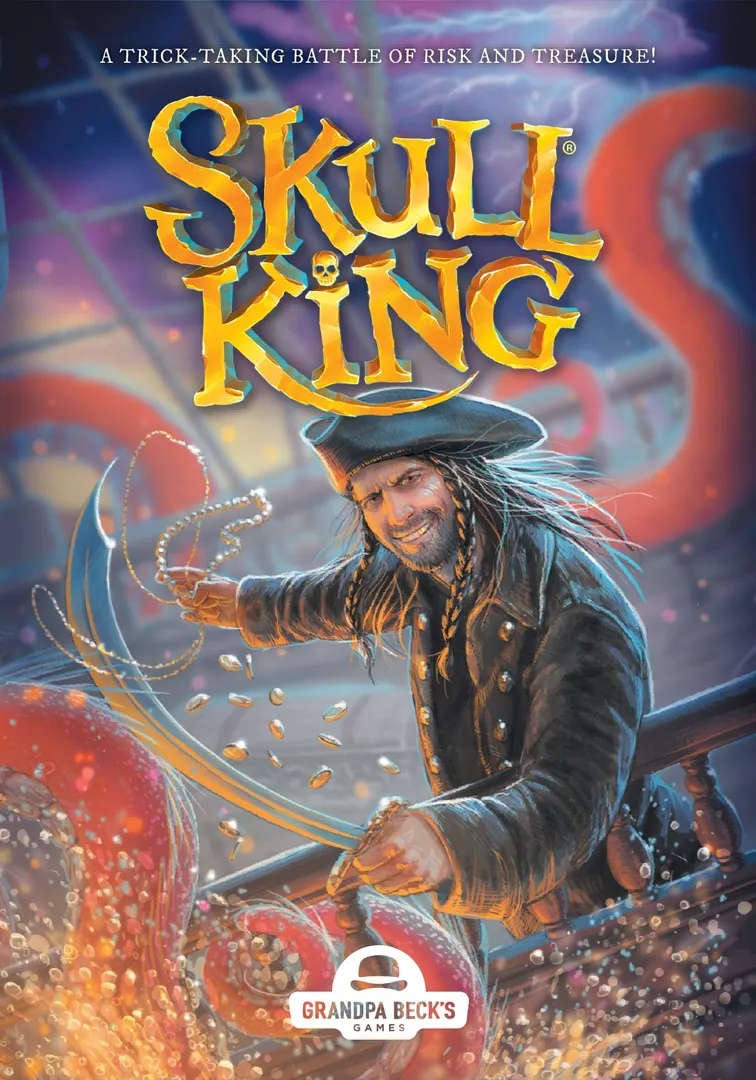
- BGG-Rang
- BGG #284
- BGG-Bewertung
- 7,5
Skull King
- 2–8 Spieler
- 30 Min.
- Komplexität 1,7/5
- 2013
Regelhilfe für Skitgubbe
Verständliche Erklärungen zu Spielzügen, Karteneffekten und strittigen Situationen mit Verweisen auf offizielle Quellen und gespeichertem Fragenverlauf.
Für 2 Personen
Was möchtest du wissen?
Antworten stammen aus dem offiziellen Regelheft, mit Seitenangabe zum Nachprüfen.
Skitgubbe ist ein Brettspiel für 2–8 Personen, mit 15 Minuten pro Partie und ab 7 Jahren. Die wichtigsten Mechaniken sind Hand Management und Trick-taking.



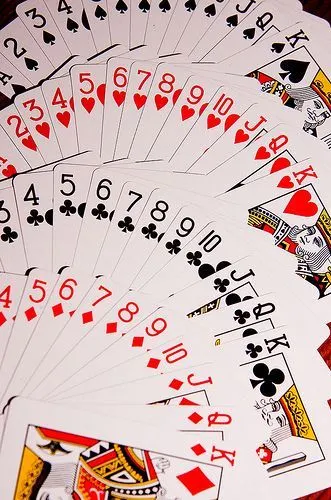
Auf Englisch
This popular Swedish game for three players is also known as Mjölnarmatte or Mas and in Norwegian it is called Mattis. Players, cards and deal The game is best for three players, but it is also possible for two or four to play. A standard 52 card pack, without joker, is used. The cards rank in the usual order: A (highest) K Q J T 9 8 7 6 5 4 3 2 (lowest). Deal and play are clockwise. Each player receives 3 cards. The rest of the cards are laid face down in a pile on the table (stock). Object of the game Skitgubbe has two phases. In the first phase players collect cards for the second phase. In the second phase the object is to get rid of one's cards as fast as possible. The last player left with cards in hand is the loser and becomes the skitgubbe. Play in the first phase The first phase consists of tricks of 2 cards. The player to dealer's left leads first. Any card can be led and the player to the left of the leader plays any card to complete the trick. At this stage the suits have no significance and there is no requirement to follow suit. Each player draws a card from the stock immediately after playing, so that each player always has a hand of three cards so long as there are still cards in the stock. Whoever played the higher card wins the trick, places the two cards face down in front of himself, and leads to the next trick. If the player who led wins the trick, he leads again and the same two players are involved in the next trick. If the two cards played to a trick are equal it is called a stunsa (bounce); the cards are left on the table, the two players each draw a card from the stock and the same player leads again. This continues until one of the players wins the trick and takes all the cards played, including the cards from the tied tricks. In this first phase, the second player to a trick is under no obligation to try to beat the card led. If a low card is led the second player may wish to play lower and give the trick to the leader, for it is important to collect strong cards in the first phase of the game, so gain an advantage in the second phase. Throughout the first phase, when it is your turn to play and there is still more than one card in the stock, instead of playing from your hand you may turn up the top card of the stock. If you turn a card from the stock you must play it - you may not put it in your hand. The last card from the stock determines the trump suit for the second phase. The player who has to draw this card takes it but does not add it to his hand but keeps it face down until the first phase is over. When the stock is exhausted, the play continues as long as possible with the cards players have in their hands. If some players have cards left in hand at the end of the first phase they keep them for the second phase. If the final trick of the first phase is a bounce, the players take back the cards they played to it and keep them for the second phase. Play in the second phase The players have now divided the 52 cards between themselves, but the cards are probably not divided equally; some players have more cards than others. The player who drew the trump card leads. The object is to get rid of one's cards as fast as possible. Now you must either beat the previous card played or pick it up. A card may be beaten by a higher card of the same suit, and a non-trump may be beaten by any trump. It is never lawful to duck. If you cannot or do not wish to beat the card in front of you, you must take it up into your hand, and it is then the next player's turn to lead to a new trick. If there is more than one card lying on the table and you cannot beat the last card played, it is only this last card which you must take up into your hand. It is then the next player's turn to beat the card which was underneath it. A trick is complete when either: the number of cards in it is equal to the number of players who were in the game when the trick began, or all its cards have been picked up. In the first case, the cards in the trick are set aside and the player who played last (and therefore highest) to the trick leads to the next. In the second case, the player to the left of the player who picked up the last card leads to a new trick. Suppose there are 3 players; player A has led and player B beaten A's card. If C now beats B's card, C puts aside the cards and leads to the next trick; but if C does not beat B's card but picks it up, it is now A's turn to beat the card showing on the table (which is in fact A's own lead). If A does this, and then B beats A's card, it is B who has completed the trick; B sets aside the three cards and leads to the next trick. Another possibility is: A leads, B beats A's card, C picks up B's card, and A picks up his own card. It is now B's lead. Note that as players run out of cards, the number of cards in each trick reduces. If there are three players, one of whom runs out of cards during a trick, that trick still requires three cards to be completed (or all its cards to be picked up), but the next trick will require only two cards. For example suppose there are 3 players: A, B, C. A leads his last card, B beats it, C picks B's card up, B beats A's card again, and now C beats B's card. The trick is now over, and C leads to the next trick. As there are now only two players, the new trick will have only two cards. Another example with three players: A leads; B beats with his last card, C picks this card up, and A picks up the card he led. It is now B's lead and the next trick will be complete with two cards. A player who gets rid of all his cards can draw a sigh of relief, for he is not the loser. The loser is the player who is left with the last card in his hand, and is called "Skitgubbe" (or "Mas" or "Mattis"). Skitgubbe means "dirty old man" (in the sense of unwashed, rather than obscence); Mas and Mattis mean fool." - Description and rules credited to John McLeod from his excellent website here: http://www.pagat.com/beating/mattis.html
Laut Katalog unterstützt Skitgubbe 2–8 Personen. Diese Spanne entspricht der vom Verlag angegebenen Spielerzahl, das Spiel lässt sich also für jede Gruppengröße innerhalb dieser Spanne aufbauen. Aufbau, einzelne Regeln und Wertungsdetails können je nach Personenzahl trotzdem abweichen; prüfe daher die genaue Konfiguration in der Anleitung deiner Ausgabe.
Die angegebene Spieldauer für Skitgubbe beträgt 15 Minuten. Das ist die Schätzung des Verlags für eine vollständige Partie. Die tatsächliche Dauer hängt von der Gruppe, der Personenzahl und der Regelkenntnis ab: Erste Partien dauern meist länger, erfahrene Gruppen sind oft schneller fertig. Aufbau und Regelerklärung sind in dieser Schätzung nicht enthalten.
Im Katalog wird Skitgubbe ab 7 Jahren empfohlen. Das ist die Empfehlung des Verlags und berücksichtigt Leseanforderungen, Regelkomplexität und Kleinteile, nicht nur das Thema. Jüngere Kinder können oft mit Hilfe eines Erwachsenen mitspielen; beachte die Altersangabe deiner Ausgabe und die Brettspielerfahrung deiner Gruppe.
Skitgubbe hat bei BoardGameGeek eine Komplexitätswertung von 1,3 von 5 und gilt damit als leichtes Spiel. Die Wertung zeigt, wie viel Regelwissen, Planung und Entscheidungen eine typische Partie verlangt. Schwerere Spiele brauchen bei der ersten Erklärung mehr Zeit, daher hilft vor dem Spieleabend eine Vorbereitungsanleitung.
Skitgubbe gehört zu diesen Kategorien: Card Game. Die wichtigsten Mechaniken sind Hand Management und Trick-taking. Kategorien beschreiben Thema und Setting eines Spiels, Mechaniken dagegen, was die Spielenden in ihrem Zug tatsächlich tun. Jede Mechanik führt zu einer Katalogseite mit ähnlichen Spielen, falls du etwas Vergleichbares suchst.
Im Katalog ist Skitgubbe als Grundspiel aufgeführt. Es lässt sich eigenständig mit dem Material aus der Schachtel spielen und benötigt keinen weiteren Titel. Erweiterungen, sofern es welche gibt, ergänzen neues Material oder neue Regeln und sind im Katalog separat mit einem Verweis auf dieses Grundspiel aufgeführt.