
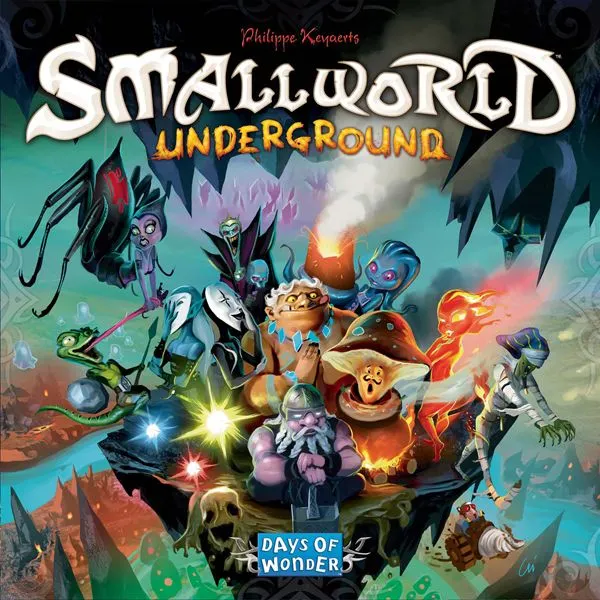
- BGG-Rang
- BGG #656
- BGG-Bewertung
- 7,2
Small World Underground
- 2–5 Spieler
- 30–90 Min.
- Komplexität 2,6/5
- 2011
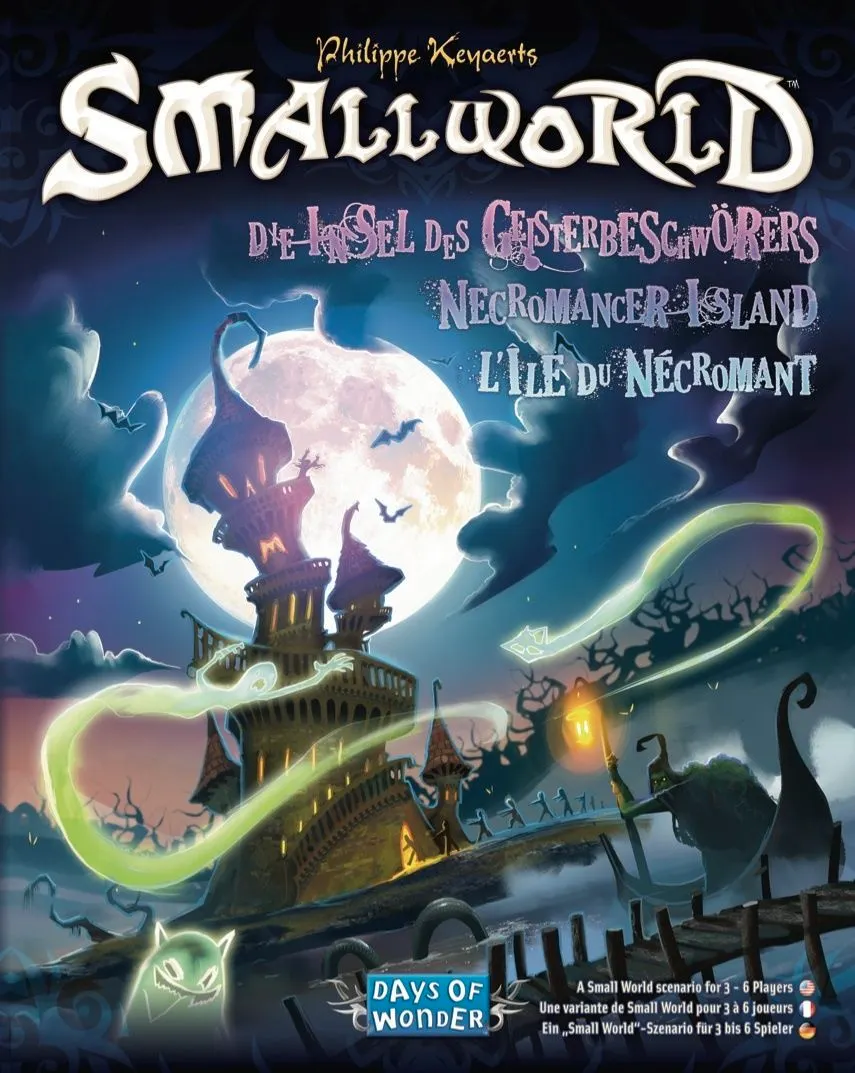
Regelhilfe für Small World: Necromancer Island
Verständliche Erklärungen zu Spielzügen, Karteneffekten und strittigen Situationen mit Verweisen auf offizielle Quellen und gespeichertem Fragenverlauf.
Was möchtest du wissen?
Antworten stammen aus dem offiziellen Regelheft, mit Seitenangabe zum Nachprüfen.
Small World: Necromancer Island ist eine Erweiterung für Small World aus dem Jahr 2010 für 3–6 Personen, mit 40–80 Minuten pro Partie und ab 8 Jahren. Entwickelt wurde es von Philippe Keyaerts; die wichtigsten Mechaniken sind Variable Player Powers, Area Movement und Dice Rolling.

Auf Englisch
Publisher blurb: A Small World Scenario for 3 to 6 players At first no one noticed the small island on the lake - nor paid any attention to the gnarly pretense of a man who drifted onto it, sitting astride a wooden log with a huge grimoire on his lap employing a shovel as his unlikely paddle. A ghastly green mist soon shrouded the island, wrapping it in a ghostly silence pierced only by a maniacal laughter and some intermittent curses. Then, one moonlit night, an impossibly crooked tower emerged high above the mist, casting a long and dark shadow on the surrounding land... The Necromancer had arrived! In Necromancer Island, one of the players assumes the role of a dreaded Necromancer who inhabits an island in the center of Small World's central Lake region. He captures the souls of all Race tokens lost to conquests, using them to progressively spawn Ghosts who invade the surrounding Regions. To make matters worse, his Powers grow as his reach across the land increases. If the Necromancer succeeds in bringing all of his Ghosts into play, anytime before the game's end, he wins!
Laut Katalog unterstützt Small World: Necromancer Island 3–6 Personen. Diese Spanne entspricht der vom Verlag angegebenen Spielerzahl, das Spiel lässt sich also für jede Gruppengröße innerhalb dieser Spanne aufbauen. Aufbau, einzelne Regeln und Wertungsdetails können je nach Personenzahl trotzdem abweichen; prüfe daher die genaue Konfiguration in der Anleitung deiner Ausgabe.
Die angegebene Spieldauer für Small World: Necromancer Island beträgt 40–80 Minuten. Das ist die Schätzung des Verlags für eine vollständige Partie. Die tatsächliche Dauer hängt von der Gruppe, der Personenzahl und der Regelkenntnis ab: Erste Partien dauern meist länger, erfahrene Gruppen sind oft schneller fertig. Aufbau und Regelerklärung sind in dieser Schätzung nicht enthalten.
Im Katalog wird Small World: Necromancer Island ab 8 Jahren empfohlen. Das ist die Empfehlung des Verlags und berücksichtigt Leseanforderungen, Regelkomplexität und Kleinteile, nicht nur das Thema. Jüngere Kinder können oft mit Hilfe eines Erwachsenen mitspielen; beachte die Altersangabe deiner Ausgabe und die Brettspielerfahrung deiner Gruppe.
Small World: Necromancer Island hat bei BoardGameGeek eine Komplexitätswertung von 2,2 von 5 und gilt damit als eher leichtes Spiel. Die Wertung zeigt, wie viel Regelwissen, Planung und Entscheidungen eine typische Partie verlangt. Schwerere Spiele brauchen bei der ersten Erklärung mehr Zeit, daher hilft vor dem Spieleabend eine Vorbereitungsanleitung.
Small World: Necromancer Island gehört zu diesen Kategorien: Fantasy, Fighting und Territory Building. Die wichtigsten Mechaniken sind Variable Player Powers, Area Movement und Dice Rolling. Kategorien beschreiben Thema und Setting eines Spiels, Mechaniken dagegen, was die Spielenden in ihrem Zug tatsächlich tun. Jede Mechanik führt zu einer Katalogseite mit ähnlichen Spielen, falls du etwas Vergleichbares suchst.
Als Autoren von Small World: Necromancer Island sind angegeben: Philippe Keyaerts. Diese Angaben stammen aus den veröffentlichten Spieldaten und nennen die für das Spieldesign verantwortlichen Personen, nicht die Illustratoren oder Verlage. Die Autorenseiten auf MeepleRules sammeln weitere Titel derselben Autoren – praktisch, wenn dir ein Spiel gefällt und du ähnliche Spiele suchst.
Im Katalog ist Small World: Necromancer Island als Erweiterung zu Small World aufgeführt. Erweiterungen ergänzen das Grundspiel um neues Material, neue Regeln oder Szenarien und sind meist nicht eigenständig spielbar; du brauchst also Small World, um sie zu nutzen. Prüfe, ob deine Ausgabe von Small World kompatibel ist, da manche Erweiterungen zwischen den Auflagen überarbeitet wurden.