

- BGG-Rang
- BGG #109
- BGG-Bewertung
- 7,9
Aeon's End
- 1–4 Spieler
- 60 Min.
- Komplexität 2,8/5
- 2016
2016
Regelhilfe für Steam Court
Verständliche Erklärungen zu Spielzügen, Karteneffekten und strittigen Situationen mit Verweisen auf offizielle Quellen und gespeichertem Fragenverlauf.
Was möchtest du wissen?
Antworten stammen aus dem offiziellen Regelheft, mit Seitenangabe zum Nachprüfen.
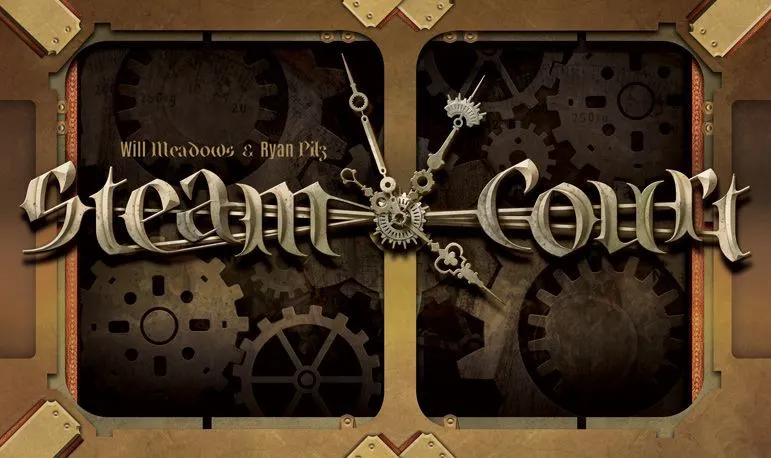
Steam Court ist ein Brettspiel aus dem Jahr 2016 für 1–12 Personen, mit 30–90 Minuten pro Partie und ab 13 Jahren. Entwickelt wurde es von Will Meadows und Ryan Pilz; die wichtigsten Mechaniken sind Variable Player Powers, Hand Management und Solo / Solitaire Game.










Auf Englisch
In a place where politics, magic and science are covered in a heavy layer of coal dust lies the world of Steam Court. Steam Court is a 1–12 player card game that mixes elements of traditional trick-taking, with character based abilities and victory point win conditions. Steam Court is a game of Victorian hierarchy where the more powerful your position, the greater your opportunity in the game. You'll want to try and hold onto the throne, but don't play your cards right and you'll end up serving the lousy Tea Boy. Each round, players rotate position at the table, and depending on their seat they gain/lose privileges. Even though the game is stacked in favor of those at the top, the luck of the deal, use of special cards, and player strategy are guaranteed to make it interesting. There are multiple variations on how to play, but the typical game involves four rounds of cards and usually takes around 60 minutes. The original artwork, intriguing theme, and clever game play will have you ratcheting for the top in Steam Court. Goal: get rid of the cards in your hand before other players do. There are many strategies you can employ do this, but the most common is to be the controlling player to start the trick. The player who wins the trick starts the next trick. This allows you to decide how many cards of the same number you will play. Then all other players must match the quantity of cards played and also beat the number that is on the cards. For example, if a player lays three 1s, then the next player must lay three cards of a higher number - like three 2s or three 3s. What gives this game an extra dimension are the variable character privileges. Each Engineer is granted a different privilege by their Courtier that can be employed at the beginning of the Quarter or throughout the game. For example, the Duke can lay matching numbered cards instead of having to play higher numbered cards on a set of cards. End of the Quarter: After everyone's cards have been played the Quarter ends and players re-seat based on the order they went out in (first player out becomes the Queen, and so on). They then gain the privileges of a different character for the next Quarter. 7-12 players: When playing with a large group a new element is added to the game -- a second table full of Renegades. Players who do poorly in the Royal Court are banished to the Renegade table, while the top two engineers at the Renegade Table are promoted to the Royal Court. In Steam Court, anything can happen. The lowest of low can climb to the top, or the Queen’s engineer can wind up working for the vagabond.
Laut Katalog unterstützt Steam Court 1–12 Personen. Diese Spanne entspricht der vom Verlag angegebenen Spielerzahl, das Spiel lässt sich also für jede Gruppengröße innerhalb dieser Spanne aufbauen. Aufbau, einzelne Regeln und Wertungsdetails können je nach Personenzahl trotzdem abweichen; prüfe daher die genaue Konfiguration in der Anleitung deiner Ausgabe.
Die angegebene Spieldauer für Steam Court beträgt 30–90 Minuten. Das ist die Schätzung des Verlags für eine vollständige Partie. Die tatsächliche Dauer hängt von der Gruppe, der Personenzahl und der Regelkenntnis ab: Erste Partien dauern meist länger, erfahrene Gruppen sind oft schneller fertig. Aufbau und Regelerklärung sind in dieser Schätzung nicht enthalten.
Im Katalog wird Steam Court ab 13 Jahren empfohlen. Das ist die Empfehlung des Verlags und berücksichtigt Leseanforderungen, Regelkomplexität und Kleinteile, nicht nur das Thema. Jüngere Kinder können oft mit Hilfe eines Erwachsenen mitspielen; beachte die Altersangabe deiner Ausgabe und die Brettspielerfahrung deiner Gruppe.
Steam Court hat bei BoardGameGeek eine Komplexitätswertung von 1,5 von 5 und gilt damit als leichtes Spiel. Die Wertung zeigt, wie viel Regelwissen, Planung und Entscheidungen eine typische Partie verlangt. Schwerere Spiele brauchen bei der ersten Erklärung mehr Zeit, daher hilft vor dem Spieleabend eine Vorbereitungsanleitung.
Steam Court gehört zu diesen Kategorien: Card Game, Party Game und Science Fiction. Die wichtigsten Mechaniken sind Variable Player Powers, Hand Management und Solo / Solitaire Game. Kategorien beschreiben Thema und Setting eines Spiels, Mechaniken dagegen, was die Spielenden in ihrem Zug tatsächlich tun. Jede Mechanik führt zu einer Katalogseite mit ähnlichen Spielen, falls du etwas Vergleichbares suchst.
Als Autoren von Steam Court sind angegeben: Will Meadows und Ryan Pilz. Diese Angaben stammen aus den veröffentlichten Spieldaten und nennen die für das Spieldesign verantwortlichen Personen, nicht die Illustratoren oder Verlage. Die Autorenseiten auf MeepleRules sammeln weitere Titel derselben Autoren – praktisch, wenn dir ein Spiel gefällt und du ähnliche Spiele suchst.
Im Katalog ist Steam Court als Grundspiel aufgeführt. Es lässt sich eigenständig mit dem Material aus der Schachtel spielen und benötigt keinen weiteren Titel. Erweiterungen, sofern es welche gibt, ergänzen neues Material oder neue Regeln und sind im Katalog separat mit einem Verweis auf dieses Grundspiel aufgeführt.