
- BGG-Rang
- BGG #11.041
- BGG-Bewertung
- 7,0
Warehouse 13: The Board Game
- 2–5 Spieler
- 120–150 Min.
- Komplexität 3,1/5
- 2019
2013
Regelhilfe für StelCon: Infinity
Verständliche Erklärungen zu Spielzügen, Karteneffekten und strittigen Situationen mit Verweisen auf offizielle Quellen und gespeichertem Fragenverlauf.
Was möchtest du wissen?
Antworten stammen aus dem offiziellen Regelheft, mit Seitenangabe zum Nachprüfen.
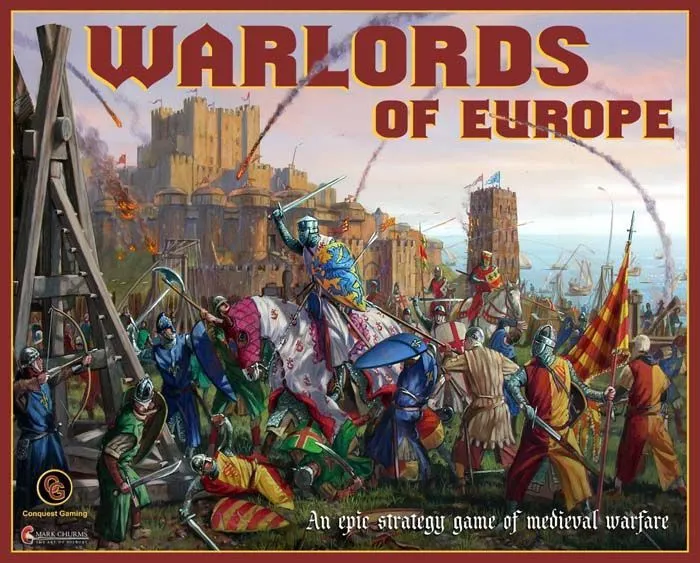
StelCon: Infinity ist ein Brettspiel aus dem Jahr 2013 für 2–6 Personen, mit 60–270 Minuten pro Partie und ab 13 Jahren. Entwickelt wurde es von Russ Rupe; die wichtigsten Mechaniken sind Hand Management, Dice Rolling und Point to Point Movement.
Auf Englisch
As Marshal of the interstellar fleet, it is your duty to oversee the colonization of nearby regions of the galaxy and thereby ensure the perpetuation of your people at any cost. But your race is not alone in its aspirations for dominance of the cosmos, or in having the power to realize that goal. Races hailing from various star systems venture out in all directions. Many paths are dead ends, but some sectors have sizable deposits of rare minerals that can be refined into the precious fuel crystals that drive your space fleets onward. Soon, a trail of colonies leads out from your homeworld, and soon the races venture into the same cosmic regions. Don’t get too attached to your fleets or interstellar empire, because tides can and will turn quickly. Only you can determine the fate of your people: interstellar conquest or infinite servitude. StelCon: Infinity is a light strategy war game on a galactic scale. 2-6 players can expect around 30-45 minutes per player, so 2 players can often power through a game in about an hour. The 6 player game is kept short by combining into 3 teams of 2 where the teammates execute their turns simultaneously. Variable game board. There are 6 races to choose from, each with its own strengths. Although the jump lanes that connect the sectors forming the galactic map are printed on the game boards, each sector location is covered by a different card from the sector deck each game. Sectors are drawn from the deck and placed as the players explore the galaxy, so you never know what you're going to get...unless you do some scouting with your fighter squads or happen to have some telepaths on board your ship (telepaths are handy that way). Some of the sector cards are identical and therefore also create a "bridge" which is a unique adjacency in addition to the normal jump lanes. All this makes for a very different board every time. Moving your space fleet around is straight forward. Each ship can move 1 sector per turn, plus 1 extra sector per turn per engine MOD. Your space ships are modular in design, both from a gameplay and a literal perspective. You physically insert engines, extra guns, and fighter squads into holes in the space ships. We call these MODs. Combat is simple but tense. Add up your firepower present at the battle site and then toss in a d6 roll. The opponent does the same. Compare the two totals, and the winner keeps the sector in question while the loser retreats and loses a ship from his fleet. While the game is a conquest type game, it ends immediately when one player conquers any homeworld, so there's no eliminated player stuck waiting around for the game to finish. Conquest cards are the soul of the game. The deck of 120 cards gives tons of gotcha moments, and serious replay value. They allow you to do all sorts of fun things: Modify the firepower of your sector or your ship Boost fuel crystal production (the economy of the game) Steal or stop opponent's cards Cheat the dice Wipe out a whole sector Even influence battles your forces are not involved in, adding an element of table-talking diplomacy to the game
Laut Katalog unterstützt StelCon: Infinity 2–6 Personen. Diese Spanne entspricht der vom Verlag angegebenen Spielerzahl, das Spiel lässt sich also für jede Gruppengröße innerhalb dieser Spanne aufbauen. Aufbau, einzelne Regeln und Wertungsdetails können je nach Personenzahl trotzdem abweichen; prüfe daher die genaue Konfiguration in der Anleitung deiner Ausgabe.
Die angegebene Spieldauer für StelCon: Infinity beträgt 60–270 Minuten. Das ist die Schätzung des Verlags für eine vollständige Partie. Die tatsächliche Dauer hängt von der Gruppe, der Personenzahl und der Regelkenntnis ab: Erste Partien dauern meist länger, erfahrene Gruppen sind oft schneller fertig. Aufbau und Regelerklärung sind in dieser Schätzung nicht enthalten.
Im Katalog wird StelCon: Infinity ab 13 Jahren empfohlen. Das ist die Empfehlung des Verlags und berücksichtigt Leseanforderungen, Regelkomplexität und Kleinteile, nicht nur das Thema. Jüngere Kinder können oft mit Hilfe eines Erwachsenen mitspielen; beachte die Altersangabe deiner Ausgabe und die Brettspielerfahrung deiner Gruppe.
StelCon: Infinity hat bei BoardGameGeek eine Komplexitätswertung von 2,3 von 5 und gilt damit als eher leichtes Spiel. Die Wertung zeigt, wie viel Regelwissen, Planung und Entscheidungen eine typische Partie verlangt. Schwerere Spiele brauchen bei der ersten Erklärung mehr Zeit, daher hilft vor dem Spieleabend eine Vorbereitungsanleitung.
StelCon: Infinity gehört zu diesen Kategorien: Wargame, Science Fiction und Space Exploration. Die wichtigsten Mechaniken sind Hand Management, Dice Rolling und Point to Point Movement. Kategorien beschreiben Thema und Setting eines Spiels, Mechaniken dagegen, was die Spielenden in ihrem Zug tatsächlich tun. Jede Mechanik führt zu einer Katalogseite mit ähnlichen Spielen, falls du etwas Vergleichbares suchst.
Als Autoren von StelCon: Infinity sind angegeben: Russ Rupe. Diese Angaben stammen aus den veröffentlichten Spieldaten und nennen die für das Spieldesign verantwortlichen Personen, nicht die Illustratoren oder Verlage. Die Autorenseiten auf MeepleRules sammeln weitere Titel derselben Autoren – praktisch, wenn dir ein Spiel gefällt und du ähnliche Spiele suchst.
Im Katalog ist StelCon: Infinity als Grundspiel aufgeführt. Es lässt sich eigenständig mit dem Material aus der Schachtel spielen und benötigt keinen weiteren Titel. Erweiterungen, sofern es welche gibt, ergänzen neues Material oder neue Regeln und sind im Katalog separat mit einem Verweis auf dieses Grundspiel aufgeführt.