

- BGG-Rang
- BGG #4.144
- BGG-Bewertung
- 7,4
World at War: Eisenbach Gap
- 2 Spieler
- 90 Min.
- Komplexität 2,6/5
- 2007

2015
Regelhilfe für Sticks and Stones: Platoon-level Combat in World War IV
Verständliche Erklärungen zu Spielzügen, Karteneffekten und strittigen Situationen mit Verweisen auf offizielle Quellen und gespeichertem Fragenverlauf.
Für 2 Personen
Was möchtest du wissen?
Antworten stammen aus dem offiziellen Regelheft, mit Seitenangabe zum Nachprüfen.
Sticks and Stones: Platoon-level Combat in World War IV ist ein Brettspiel aus dem Jahr 2015 für 2 Personen und mit 45–120 Minuten pro Partie. Entwickelt wurde es von Mark H. Walker; die wichtigsten Mechaniken sind Dice Rolling, Hexagon Grid und Simulation.




Auf Englisch
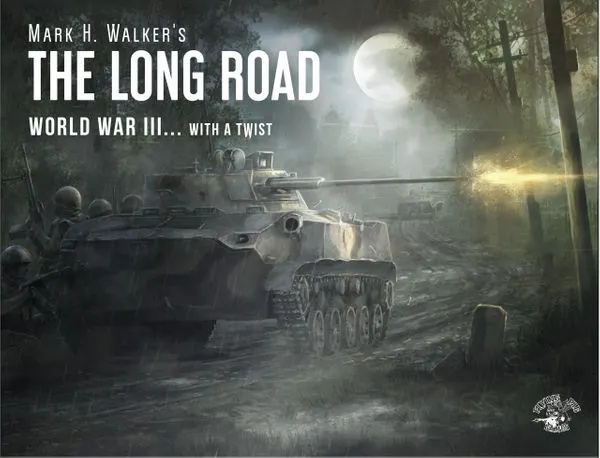
“I know not with what weapons World War III will be fought, but World War IV will be fought with sticks and stones.” -Albert Einstein STICKS AND STONES 2ND EDITION Seven days after a limited nuclear exchange has irradiated most of Russia and the United States, Soviets roll across the West German border, eager to claim precious non-irradiated ground for the Politburo. American armor stationed at the border rushes forward to meet them, and World War IV begins, fought with much more than Einstein's sticks and stones. BUT SECOND EDITION? WHAT'S UP WITH THAT? GOOD QUESTION. HERE'S WHAT'S NEW. The rules have been updated, revised, and polished. Mark's goal was to create an error-free, easily understood version of the rules. We turned our polished writ over to one of the best layout artist in the industry to make the rules look as good as they read. We hope you'll like the results. We gave the same treatment to the Player Aid Cards. Again, our goal was to give you error-free, easily understood information, presented in an attractive manner. Additionally, the Fire Results Table as been modified to more closely align with Poland Strikes, and better fit the capabilities of the units in Sticks and Stones. The attractive counters, map, and Action Cards remain the same. So bottom line, if you bought the 1st edition, all you need to do is download the rules and PACs right here. For free. HOW DO YOU PLAY? Glad you asked. In Sticks and Stones each turn is gamed through several phases. At the beginning of the turn, the players determine initiative with a unique dice-off system in which ties award the initiative to whomever lacked it the previous turn and applying the Commander's Focus to the roll might tilt the odds in your favor. Next, players will draw a scenario-designated number Action Cards that may be used for anything from fire support (air and artillery strikes), through rally assists, to negating the opponent's just-played card. Then it is time to rally disrupted units with a simple D6 roll against a unit's morale. Action Cards, in addition to the special Aid chit, may be used to improve a unit's chances of preparing for combat. Next comes the Fire Phase and players alternate firing with individual units or stacks of units against in-range and in-sight enemy units. When firing on the enemy tanks, the target's Armor Factor is subtracted from the firing unit's Armor Piercing Factor, a D6 is rolled, and the results checked on the appropriate column on the Fire Results Table, yielding a number of potential hits. The target rolls a die for each potential hit and compares it to their morale. Pass the morale check, that hit is negated. These columns and die rolls can be modified by the target's terrain, flanking fire, the Focus marker (represents the commander's presence), and most importantly Action Cards, which can grant column shifts or even allow the same unit to fire again, adding a delicious uncertainty that the chaos of war. Players continue to alternate attacks until neither wishes to attack. Now it is time to move. Unlike the preceding Fire Phase, one player moves ALL his eligible units before the opposition gets to move. Certain units can move and fire or vice versa (with a penalty), unfired opposing units can opportunity fire on enemies moving within their line of sight. As in many other facets of the game, the insightful play of Action Cards during the movement phase is critical, allowing additional movement or opportunity fire conducted by units that have already fired or even the placement of a minefield. Finally, we reach the Aid and Focus Phase. Platoon Commander eschews the use of HQs that can be unrealistically targeted. Instead both players have Aid and Focus markers, representing where the commander intends to place emphasis or send additional assets (ammunition, weapons, etc) or first aid. The placement of these markers provides combat and morale bonuses to the units underneath them. Additionally, if the player chooses, the Focus marker can be used to influence the initiative roll. And that's how you play Sticks and Stones. EACH GAME INCLUDES: 88 die-cut counters, depicting M901s, M113s, T-72s, T-80s, and M1 Abrams. 1 super hot, only slightly radioactive, post-nuclear playing map. Easy rules and scenarios, so you can start playing before WWV. Three Player Aid Cards. 18 Action Cards. A spiffy Ziploc bag for containment. You'll need to take two six-sided dice with you to the fallout shelter. Game Design: Mark Holt Walker Players: 2 Duration: 60-90 minutes Complexity: Medium Solitaire Suitability: High
Laut Katalog unterstützt Sticks and Stones: Platoon-level Combat in World War IV 2 Personen. Das ist die vom Verlag angegebene Spielerzahl, das Spiel ist also genau für diese Anzahl von Mitspielenden ausgelegt. Varianten für andere Gruppengrößen sind, sofern vorhanden, in der Anleitung deiner Ausgabe beschrieben; prüfe sie, bevor du eine andere Konfiguration aufbaust.
Die angegebene Spieldauer für Sticks and Stones: Platoon-level Combat in World War IV beträgt 45–120 Minuten. Das ist die Schätzung des Verlags für eine vollständige Partie. Die tatsächliche Dauer hängt von der Gruppe, der Personenzahl und der Regelkenntnis ab: Erste Partien dauern meist länger, erfahrene Gruppen sind oft schneller fertig. Aufbau und Regelerklärung sind in dieser Schätzung nicht enthalten.
Sticks and Stones: Platoon-level Combat in World War IV hat bei BoardGameGeek eine Komplexitätswertung von 2,2 von 5 und gilt damit als eher leichtes Spiel. Die Wertung zeigt, wie viel Regelwissen, Planung und Entscheidungen eine typische Partie verlangt. Schwerere Spiele brauchen bei der ersten Erklärung mehr Zeit, daher hilft vor dem Spieleabend eine Vorbereitungsanleitung.
Sticks and Stones: Platoon-level Combat in World War IV gehört zu diesen Kategorien: Wargame, Science Fiction und Modern Warfare. Die wichtigsten Mechaniken sind Dice Rolling, Hexagon Grid und Simulation. Kategorien beschreiben Thema und Setting eines Spiels, Mechaniken dagegen, was die Spielenden in ihrem Zug tatsächlich tun. Jede Mechanik führt zu einer Katalogseite mit ähnlichen Spielen, falls du etwas Vergleichbares suchst.
Als Autoren von Sticks and Stones: Platoon-level Combat in World War IV sind angegeben: Mark H. Walker. Diese Angaben stammen aus den veröffentlichten Spieldaten und nennen die für das Spieldesign verantwortlichen Personen, nicht die Illustratoren oder Verlage. Die Autorenseiten auf MeepleRules sammeln weitere Titel derselben Autoren – praktisch, wenn dir ein Spiel gefällt und du ähnliche Spiele suchst.
Im Katalog ist Sticks and Stones: Platoon-level Combat in World War IV als Grundspiel aufgeführt. Es lässt sich eigenständig mit dem Material aus der Schachtel spielen und benötigt keinen weiteren Titel. Erweiterungen, sofern es welche gibt, ergänzen neues Material oder neue Regeln und sind im Katalog separat mit einem Verweis auf dieses Grundspiel aufgeführt.