
- BGG-Rang
- BGG #5.031
- BGG-Bewertung
- 6,4
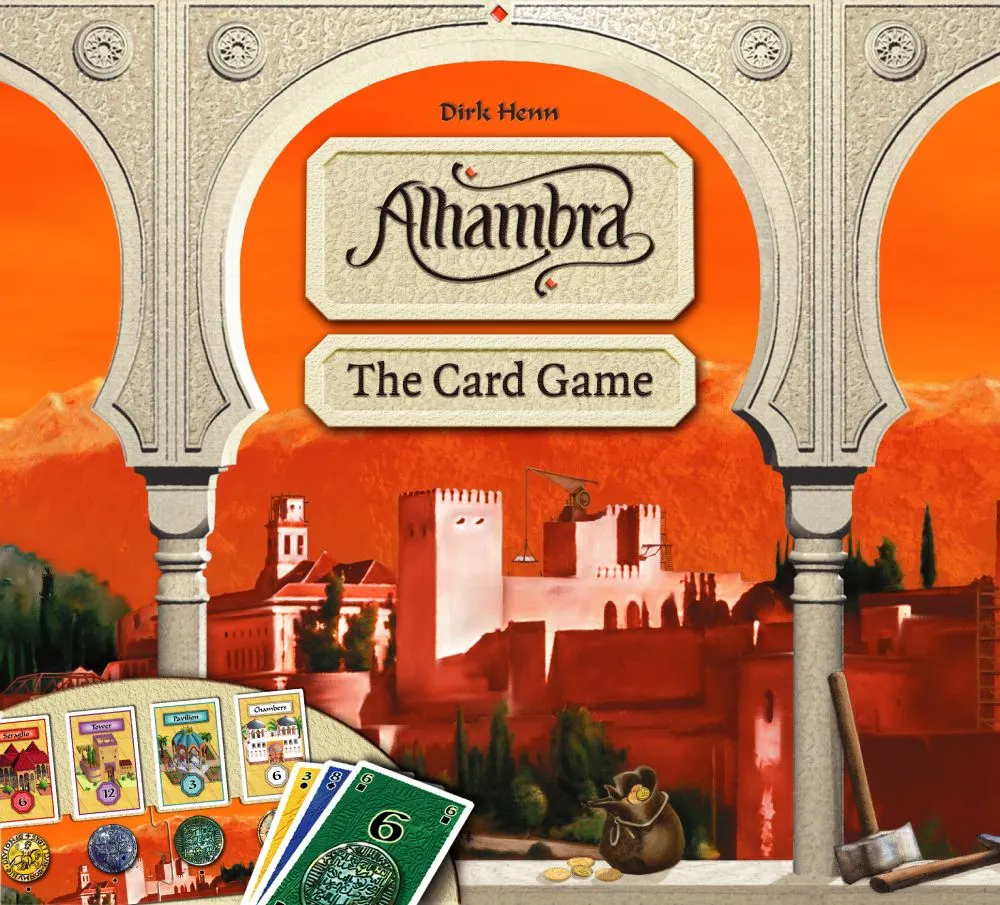
Alhambra: The Card Game
- 2–6 Spieler
- 45 Min.
- Komplexität 1,7/5
- 1992
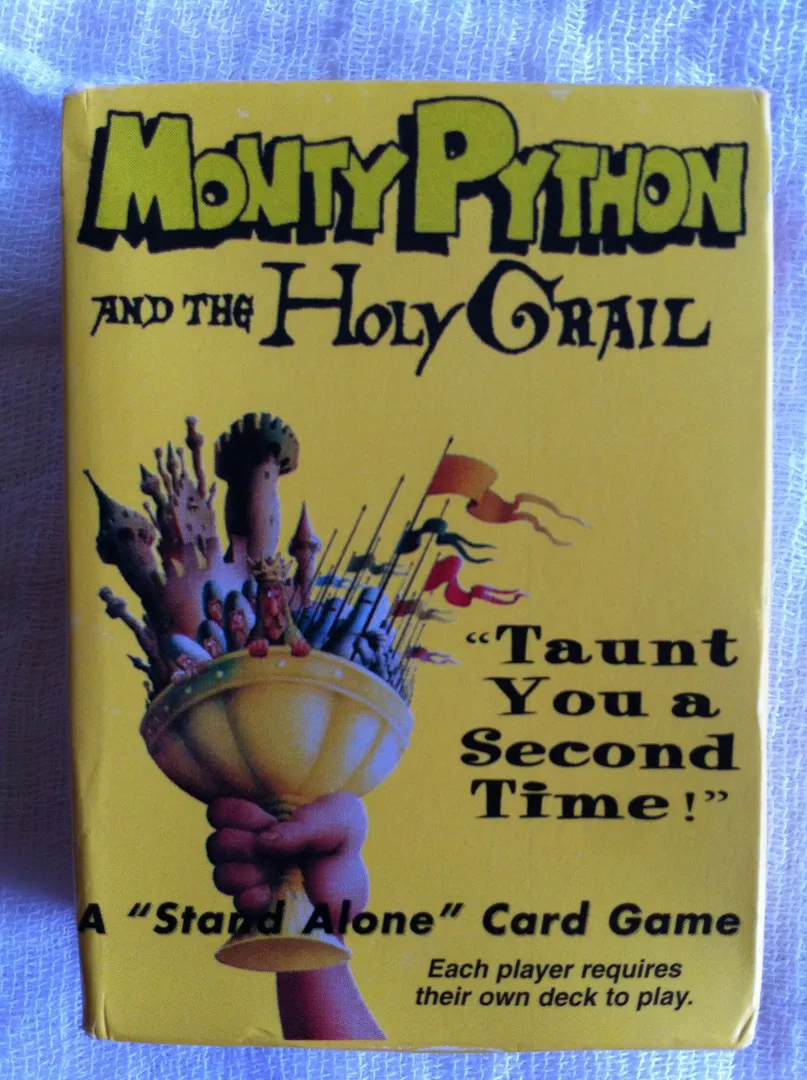
Regelhilfe für Taunt You a Second Time
Verständliche Erklärungen zu Spielzügen, Karteneffekten und strittigen Situationen mit Verweisen auf offizielle Quellen und gespeichertem Fragenverlauf.
Was möchtest du wissen?
Antworten stammen aus dem offiziellen Regelheft, mit Seitenangabe zum Nachprüfen.
Taunt You a Second Time ist eine Erweiterung für Monty Python and the Holy Grail CCG aus dem Jahr 2000 für 2 Personen, mit 30 Minuten pro Partie und ab 12 Jahren. Die wichtigsten Mechaniken sind Open Drafting.





Auf Englisch
This is an expansion for the Monty Python and the Holy Grail CCG. It is in non-collectible format with 150 new cards. It is also a stand alone game and contains "marquee cards like Tim the Enchanter, the Black Knight, and the Trojan Rabbit. The tuck box proudly proclaims that "no llamas were harmed during the testing of this product". From the back of the Taunt You A Second Time yellow deck box: "The Monty Python and the Holy Grail CCG just got even sillier. This much anticipated expansion set to Kenzer and Company's popular card game is produced in a non-collectible format with over 150 new cards. One deck is all each player needs. Taunt you a Second Time is a stand alone game and also completely compatible with the original game. The set contains marquee cards like Tim the Enchanter, the Black Knight and the Trojan Rabbit. Playing this game is like rewriting each scene from every gamer's favorite movie. And if you think you got a nasty taunting last time, you ain't seen nothin' yet!"
Laut Katalog unterstützt Taunt You a Second Time 2 Personen. Das ist die vom Verlag angegebene Spielerzahl, das Spiel ist also genau für diese Anzahl von Mitspielenden ausgelegt. Varianten für andere Gruppengrößen sind, sofern vorhanden, in der Anleitung deiner Ausgabe beschrieben; prüfe sie, bevor du eine andere Konfiguration aufbaust.
Die angegebene Spieldauer für Taunt You a Second Time beträgt 30 Minuten. Das ist die Schätzung des Verlags für eine vollständige Partie. Die tatsächliche Dauer hängt von der Gruppe, der Personenzahl und der Regelkenntnis ab: Erste Partien dauern meist länger, erfahrene Gruppen sind oft schneller fertig. Aufbau und Regelerklärung sind in dieser Schätzung nicht enthalten.
Im Katalog wird Taunt You a Second Time ab 12 Jahren empfohlen. Das ist die Empfehlung des Verlags und berücksichtigt Leseanforderungen, Regelkomplexität und Kleinteile, nicht nur das Thema. Jüngere Kinder können oft mit Hilfe eines Erwachsenen mitspielen; beachte die Altersangabe deiner Ausgabe und die Brettspielerfahrung deiner Gruppe.
Taunt You a Second Time gehört zu diesen Kategorien: Card Game, Humor und Movies / TV / Radio theme. Die wichtigsten Mechaniken sind Open Drafting. Kategorien beschreiben Thema und Setting eines Spiels, Mechaniken dagegen, was die Spielenden in ihrem Zug tatsächlich tun. Jede Mechanik führt zu einer Katalogseite mit ähnlichen Spielen, falls du etwas Vergleichbares suchst.
Im Katalog ist Taunt You a Second Time als Erweiterung zu Monty Python and the Holy Grail CCG aufgeführt. Erweiterungen ergänzen das Grundspiel um neues Material, neue Regeln oder Szenarien und sind meist nicht eigenständig spielbar; du brauchst also Monty Python and the Holy Grail CCG, um sie zu nutzen. Prüfe, ob deine Ausgabe von Monty Python and the Holy Grail CCG kompatibel ist, da manche Erweiterungen zwischen den Auflagen überarbeitet wurden.