
- BGG-Rang
- BGG #9.223
- BGG-Bewertung
- 6,3
The Maiden in the Forest
- 1 Spieler
- 15 Min.
- Komplexität 1,7/5
- 2015
2014
Regelhilfe für The Draugr
Verständliche Erklärungen zu Spielzügen, Karteneffekten und strittigen Situationen mit Verweisen auf offizielle Quellen und gespeichertem Fragenverlauf.
Für 1 Person
Was möchtest du wissen?
Antworten stammen aus dem offiziellen Regelheft, mit Seitenangabe zum Nachprüfen.
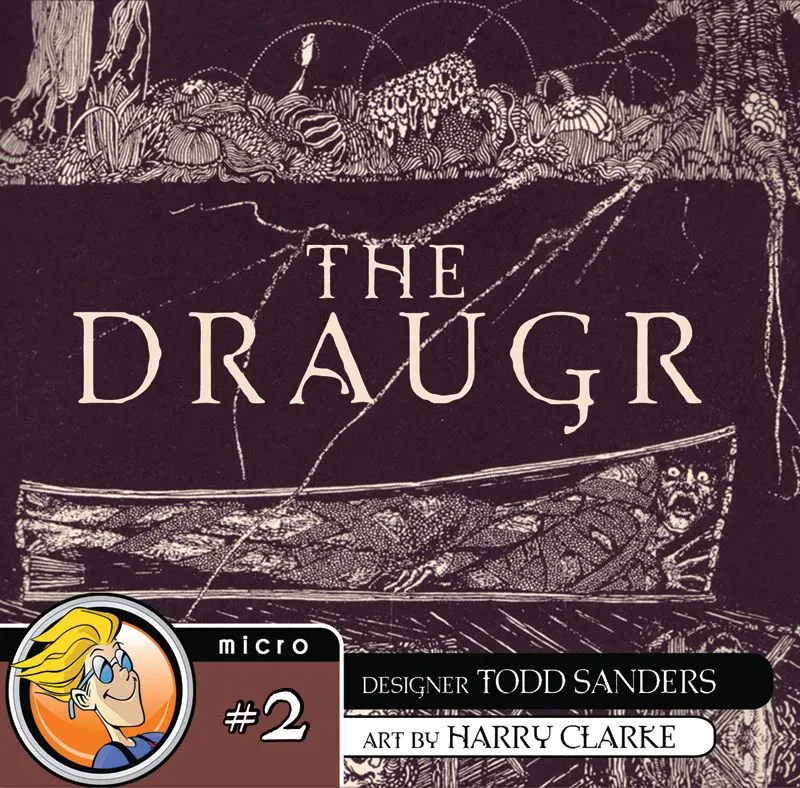
The Draugr ist ein Brettspiel aus dem Jahr 2014 für 1 Person, mit 20 Minuten pro Partie und ab 10 Jahren. Entwickelt wurde es von Todd Sanders; die wichtigsten Mechaniken sind Dice Rolling, Area Majority / Influence und Modular Board.

Auf Englisch
The Draugr, reanimated dead imbued with magical powers, have come to the region of Trøndelag seeking to corrupt the town of Stjørdal. Only you, a lone revenant hunter, can protect the town and slay they who walk again. Armed with limited supply of holy water and iron spikes you enter the town square and prepare for the coming onslaught. The Draugr is a solitaire game playing in about 20 minutes. To Win: You must slay 4 of the 6 Draugr. To Lose: If at anytime during Phase 1 all 7 Townspeople, or more than 7 of the cards (a combination of Townspeople and Locations) are corrupted you lose. Playing the Game: The game is played in rounds consisting of two phases: Corruption and Hunt. Phase 1 - Corruption Roll the six-sided die once to see which Draugr will hold sway over Stjørdal for the round and will corrupt Locations and Townspeople in the row they are adjacent to, matching the die face to the image on a Draugr Card. Roll the die a second time and look at the symbol in the upper left corner of the die. Place a Corruption Marker on each card in that Draugr’s row with the matching Corruption Sigil. (See the section on the Shepherdess for protection from this rule.) If a Townsperson card has been turned over you do not need to place additional Corruption Markers on the card. Phase 2 - The Hunt You must now move your player marker up to two adjacent cards in distance (The Nunnery and Foundry are the only two cards to supersede this rule). All movement is orthogonal (horizontally and vertically). Once you have finished moving you may choose a Special Action of that Townsperson or Location. Some cards have only 1 Special Action, some allow for a choice between 2 Special Actions. You do not have to choose a Special Action if you do not wish to. If you land on a Townsperson card that has been turned over, no Special Action can be chosen. If a Special Action allows you to place Holy Water or Iron Markers on a Draugr, take one from your supply on the Town Square card and place it on a Draugr of your choice. If you match the number of markers as indicated in the upper left of the Draugr card, that Draugr is slain and removed from the game. Return all Holy Water and Iron Markers on that Draugr to your supply. Once a Draugr is slain and their card removed, slide one of the adjacent Draugr cards up or down so that is partially spans either 2 rows (or if 2 Draugr have been slain, 3 rows). The Draugr now holds sway over 10 (or 15) cards for rolls during the Corruption Phase. If you slay all 3 Draugr on one side, no further Draugr are moved to replace those slain. Game End: If you are able to slay 4 of the 6 Draugr you are successful and the other Draugr are forced to flee. If at anytime during Phase 1 all the Townspeople, or more than 7 of the cards (a combination of Townspeople and Locations) are corrupted you lose.
Laut Katalog unterstützt The Draugr 1 Person. Das ist die vom Verlag angegebene Spielerzahl, das Spiel ist also genau für diese Anzahl von Mitspielenden ausgelegt. Varianten für andere Gruppengrößen sind, sofern vorhanden, in der Anleitung deiner Ausgabe beschrieben; prüfe sie, bevor du eine andere Konfiguration aufbaust.
Die angegebene Spieldauer für The Draugr beträgt 20 Minuten. Das ist die Schätzung des Verlags für eine vollständige Partie. Die tatsächliche Dauer hängt von der Gruppe, der Personenzahl und der Regelkenntnis ab: Erste Partien dauern meist länger, erfahrene Gruppen sind oft schneller fertig. Aufbau und Regelerklärung sind in dieser Schätzung nicht enthalten.
Im Katalog wird The Draugr ab 10 Jahren empfohlen. Das ist die Empfehlung des Verlags und berücksichtigt Leseanforderungen, Regelkomplexität und Kleinteile, nicht nur das Thema. Jüngere Kinder können oft mit Hilfe eines Erwachsenen mitspielen; beachte die Altersangabe deiner Ausgabe und die Brettspielerfahrung deiner Gruppe.
The Draugr hat bei BoardGameGeek eine Komplexitätswertung von 1,7 von 5 und gilt damit als leichtes Spiel. Die Wertung zeigt, wie viel Regelwissen, Planung und Entscheidungen eine typische Partie verlangt. Schwerere Spiele brauchen bei der ersten Erklärung mehr Zeit, daher hilft vor dem Spieleabend eine Vorbereitungsanleitung.
The Draugr gehört zu diesen Kategorien: Card Game, Print & Play und Dice. Die wichtigsten Mechaniken sind Dice Rolling, Area Majority / Influence und Modular Board. Kategorien beschreiben Thema und Setting eines Spiels, Mechaniken dagegen, was die Spielenden in ihrem Zug tatsächlich tun. Jede Mechanik führt zu einer Katalogseite mit ähnlichen Spielen, falls du etwas Vergleichbares suchst.
Als Autoren von The Draugr sind angegeben: Todd Sanders. Diese Angaben stammen aus den veröffentlichten Spieldaten und nennen die für das Spieldesign verantwortlichen Personen, nicht die Illustratoren oder Verlage. Die Autorenseiten auf MeepleRules sammeln weitere Titel derselben Autoren – praktisch, wenn dir ein Spiel gefällt und du ähnliche Spiele suchst.
Im Katalog ist The Draugr als Grundspiel aufgeführt. Es lässt sich eigenständig mit dem Material aus der Schachtel spielen und benötigt keinen weiteren Titel. Erweiterungen, sofern es welche gibt, ergänzen neues Material oder neue Regeln und sind im Katalog separat mit einem Verweis auf dieses Grundspiel aufgeführt.