
- BGG-Rang
- BGG #13.332
- BGG-Bewertung
- 6,7
The Franco-Prussian War
- 2 Spieler
- 360–600 Min.
- Komplexität 3,1/5
- 1992
1992
Regelhilfe für The Russo-Turkish War, 1877-78
Verständliche Erklärungen zu Spielzügen, Karteneffekten und strittigen Situationen mit Verweisen auf offizielle Quellen und gespeichertem Fragenverlauf.
Für 2 Personen
Was möchtest du wissen?
Antworten stammen aus dem offiziellen Regelheft, mit Seitenangabe zum Nachprüfen.
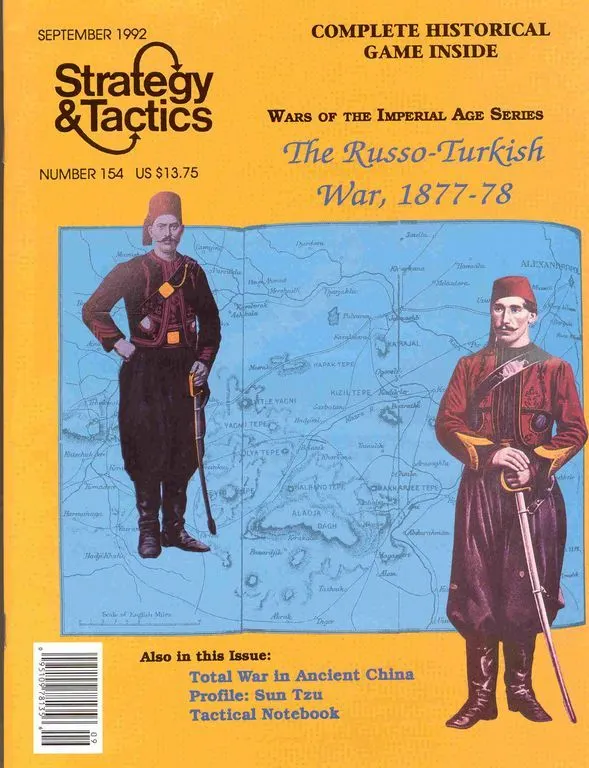
The Russo-Turkish War, 1877-78 ist ein Brettspiel aus dem Jahr 1992 für 2 Personen, mit 120 Minuten pro Partie und ab 12 Jahren. Entwickelt wurde es von Joseph Miranda; die wichtigsten Mechaniken sind Dice Rolling und Hexagon Grid.
%2Fpic1139728.jpg@webp)

Auf Englisch
The Struggle between the Russian and Ottoman Empires was already centuries old when war broke out in 1877. It had its origins in the bitter conflict between Muslims and Christians, Slavs and Turks. The war proved to be a turning point in that it completely altered the balance of power in the east. In less than 40 years this helped produce the European catastrophe known as the Great War (WW I). Echoes of these ethnic and religious troubles resound today, as the peoples of Balkans and Near East still fight each other in a struggle for dominance. The Russo-Turkish War did not just cripple the Ottoman Empire. It made Russia into the dominant power in the East, and demonstrated the twin impact of modern technology and modern ideology on warfare. The System rules apply to all games in the Wars of the Imperial Age series, and simulate the conditions of warfare in the late 19th century. This is a revision of the System rules presented with Franco-Prussian War (S&T #149), and completely replaces the System rules book found there. Important changes from the original version are indicated by a double pound sign (##) at the beginning of the rule. Players familiarizing themselves with the game may wish to use just the System rules. The Specific Rules that apply only to the particular game and cover military and political conditions unique to the specific situation. Units represent historical leaders and headquarters staffs; corps, division-, and brigade-sized units; and fortifications. Each unit is rated for its combat strength, training class, and movement ability. (Specific Rules) Additionally, headquarters are rated for their Operations capability to enhance movement and combat capabilities, as well as conduct various politically oriented functions. All units are deployed face down, and are revealed to the enemy only if he conducts reconnaissance or intelligence operations. Movement is performed by the moving force rolling on one of four March tables (Regular March, Forced March, Railroad, Naval) and applying the result. Combat is fought between enemy units in individual adjacent hexes; each player draws a Battle Results marker at random. This gives the number of enemy combat factors eliminated, effects on enemy morale, and special results for cavalry, and siege guns.The typical size of units are brigades. Politics are a factor in the game. Each side has a National Will Index which gives the current level of popular support. This is affected by combat outcomes and other game events. (Specific Rules) Each turn, players have the opportunity to draw Political Events markers, representing various factors affecting the outcome of the conflict. Published in Strategy & Tactics magazine #154, Sep 1992. Errata was published in S&T #157 & 159. Replacement counters were issued in S&T #162 (2 counters) and S&T #171 (1 counter).
Laut Katalog unterstützt The Russo-Turkish War, 1877-78 2 Personen. Das ist die vom Verlag angegebene Spielerzahl, das Spiel ist also genau für diese Anzahl von Mitspielenden ausgelegt. Varianten für andere Gruppengrößen sind, sofern vorhanden, in der Anleitung deiner Ausgabe beschrieben; prüfe sie, bevor du eine andere Konfiguration aufbaust.
Die angegebene Spieldauer für The Russo-Turkish War, 1877-78 beträgt 120 Minuten. Das ist die Schätzung des Verlags für eine vollständige Partie. Die tatsächliche Dauer hängt von der Gruppe, der Personenzahl und der Regelkenntnis ab: Erste Partien dauern meist länger, erfahrene Gruppen sind oft schneller fertig. Aufbau und Regelerklärung sind in dieser Schätzung nicht enthalten.
Im Katalog wird The Russo-Turkish War, 1877-78 ab 12 Jahren empfohlen. Das ist die Empfehlung des Verlags und berücksichtigt Leseanforderungen, Regelkomplexität und Kleinteile, nicht nur das Thema. Jüngere Kinder können oft mit Hilfe eines Erwachsenen mitspielen; beachte die Altersangabe deiner Ausgabe und die Brettspielerfahrung deiner Gruppe.
The Russo-Turkish War, 1877-78 hat bei BoardGameGeek eine Komplexitätswertung von 3,2 von 5 und gilt damit als mittelschweres Spiel. Die Wertung zeigt, wie viel Regelwissen, Planung und Entscheidungen eine typische Partie verlangt. Schwerere Spiele brauchen bei der ersten Erklärung mehr Zeit, daher hilft vor dem Spieleabend eine Vorbereitungsanleitung.
The Russo-Turkish War, 1877-78 gehört zu diesen Kategorien: Wargame und Post-Napoleonic. Die wichtigsten Mechaniken sind Dice Rolling und Hexagon Grid. Kategorien beschreiben Thema und Setting eines Spiels, Mechaniken dagegen, was die Spielenden in ihrem Zug tatsächlich tun. Jede Mechanik führt zu einer Katalogseite mit ähnlichen Spielen, falls du etwas Vergleichbares suchst.
Als Autoren von The Russo-Turkish War, 1877-78 sind angegeben: Joseph Miranda. Diese Angaben stammen aus den veröffentlichten Spieldaten und nennen die für das Spieldesign verantwortlichen Personen, nicht die Illustratoren oder Verlage. Die Autorenseiten auf MeepleRules sammeln weitere Titel derselben Autoren – praktisch, wenn dir ein Spiel gefällt und du ähnliche Spiele suchst.
Im Katalog ist The Russo-Turkish War, 1877-78 als Grundspiel aufgeführt. Es lässt sich eigenständig mit dem Material aus der Schachtel spielen und benötigt keinen weiteren Titel. Erweiterungen, sofern es welche gibt, ergänzen neues Material oder neue Regeln und sind im Katalog separat mit einem Verweis auf dieses Grundspiel aufgeführt.