
- BGG-Rang
- BGG #12.781
- BGG-Bewertung
- 6,5
Stones of Fate
- 2–4 Spieler
- 20–30 Min.
- Komplexität 1,6/5
- 2015
2003
Regelhilfe für The Simpsons Group Photo
Verständliche Erklärungen zu Spielzügen, Karteneffekten und strittigen Situationen mit Verweisen auf offizielle Quellen und gespeichertem Fragenverlauf.
Für 2 Personen
Was möchtest du wissen?
Antworten stammen aus dem offiziellen Regelheft, mit Seitenangabe zum Nachprüfen.
The Simpsons Group Photo ist ein Brettspiel aus dem Jahr 2003 für 2–4 Personen, mit 15 Minuten pro Partie und ab 10 Jahren. Die wichtigsten Mechaniken sind Set Collection, Memory und Pattern Recognition.



Auf Englisch
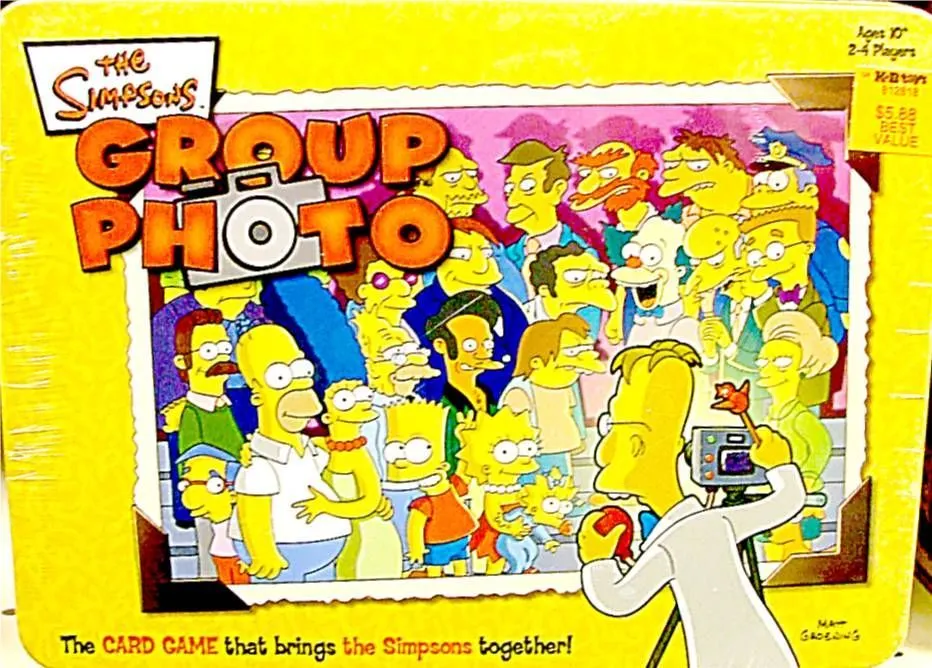
Ay caramba! Round up Bart and the rest of the Springfield townspeople for an entertaining card game full of laughs and surprises. The Simpsons Group Photo is the first card game where you match unique photos and hysterical ID cards of your favorite Simpsons characters to your Group Photo Card in a game that combines the familiar strategy of Gin with the luck of the draw. Each player is dealt a Group Photo Card and six playing cards. The first player to match the six cards in their hand (including at least two Photo ID Cards) to their Group Photo Card wins the game. Four different kinds of wild cards add some spice to the game, as you can make opponents start over. Packaged in a collectible tin! All new & original illustrations, hilarious ID cards, wild cards and 21 popular Simpsons characters make every game a blast! Characters include: Nelson Muntz, Bart Simpson, Principal Skinner, Santa's Little Helper, Waylon Smithers, Jr., Chief Wiggum, Groundskeeper Willie, Homer Simpson, Fat Tony, Comic Book Guy, Grampa Simpson, Edna Krabappel, Krusty, Apu, Marge Simpson, Mr. Burns, Maggie Simpson, Lisa Simpson, Milhouse, and Moe Szyslak. From game promotional materials
Laut Katalog unterstützt The Simpsons Group Photo 2–4 Personen. Diese Spanne entspricht der vom Verlag angegebenen Spielerzahl, das Spiel lässt sich also für jede Gruppengröße innerhalb dieser Spanne aufbauen. Aufbau, einzelne Regeln und Wertungsdetails können je nach Personenzahl trotzdem abweichen; prüfe daher die genaue Konfiguration in der Anleitung deiner Ausgabe.
Die angegebene Spieldauer für The Simpsons Group Photo beträgt 15 Minuten. Das ist die Schätzung des Verlags für eine vollständige Partie. Die tatsächliche Dauer hängt von der Gruppe, der Personenzahl und der Regelkenntnis ab: Erste Partien dauern meist länger, erfahrene Gruppen sind oft schneller fertig. Aufbau und Regelerklärung sind in dieser Schätzung nicht enthalten.
Im Katalog wird The Simpsons Group Photo ab 10 Jahren empfohlen. Das ist die Empfehlung des Verlags und berücksichtigt Leseanforderungen, Regelkomplexität und Kleinteile, nicht nur das Thema. Jüngere Kinder können oft mit Hilfe eines Erwachsenen mitspielen; beachte die Altersangabe deiner Ausgabe und die Brettspielerfahrung deiner Gruppe.
The Simpsons Group Photo hat bei BoardGameGeek eine Komplexitätswertung von 1,0 von 5 und gilt damit als leichtes Spiel. Die Wertung zeigt, wie viel Regelwissen, Planung und Entscheidungen eine typische Partie verlangt. Schwerere Spiele brauchen bei der ersten Erklärung mehr Zeit, daher hilft vor dem Spieleabend eine Vorbereitungsanleitung.
The Simpsons Group Photo gehört zu diesen Kategorien: Card Game, Movies / TV / Radio theme und Memory. Die wichtigsten Mechaniken sind Set Collection, Memory und Pattern Recognition. Kategorien beschreiben Thema und Setting eines Spiels, Mechaniken dagegen, was die Spielenden in ihrem Zug tatsächlich tun. Jede Mechanik führt zu einer Katalogseite mit ähnlichen Spielen, falls du etwas Vergleichbares suchst.
Im Katalog ist The Simpsons Group Photo als Grundspiel aufgeführt. Es lässt sich eigenständig mit dem Material aus der Schachtel spielen und benötigt keinen weiteren Titel. Erweiterungen, sofern es welche gibt, ergänzen neues Material oder neue Regeln und sind im Katalog separat mit einem Verweis auf dieses Grundspiel aufgeführt.